There are moments when a security operation becomes something larger than a counterterrorism success. The rescue of minor Khair-un-Nisa from a terrorist network in Balochistan is one such moment. It did not merely stop an attack, it exposed the moral bankruptcy of the actors behind it. A child was being pushed toward suicide terrorism, and Pakistan’s security institutions stopped it in time. That alone tells you everything about the nature of the enemy, and everything about the state that stopped them.
Law enforcement agencies rescued Khair-un-Nisa from a network linked to the banned BLA, also described as Fitna tul-Hindustan, and prevented her from being used in a planned suicide attack in Islamabad. Balochistan Chief Minister Sarfaraz Bugti said the girl had been subjected to psychological manipulation, coercion, and threats, and that the operation not only saved her life but also averted a major terrorist incident in the federal capital.
That is the real story here, Pakistan’s security forces did not just interrupt a plot. They rescued a child from being weaponized by terrorists.
The details are chilling because they reveal the method. This was not a simple case of recruitment. It was an organized process of intimidation, emotional pressure, and family blackmail. According to the APP report, the girl’s family was threatened, and during initial investigation she described how extremist elements used pressure and coercion to force cooperation. That is not militancy. That is predation. And it is why the state’s counterterrorism work deserves to be understood not only as a security function, but as a form of protection for the most vulnerable members of society.
The significance of this case also lies in what it says about the changing character of the threat in Balochistan. Terrorist groups that cannot win on the ground increasingly try to compensate through psychological warfare, propaganda, and the exploitation of women and youth. Chief Minister Bugti said openly that terrorist networks are using honey-trap methods, online radicalization, and psychological conditioning to exploit vulnerable people. That is a crucial point, because it shows that the fight is no longer limited to bombs and guns. It is also a fight over minds, fears, and social trust.
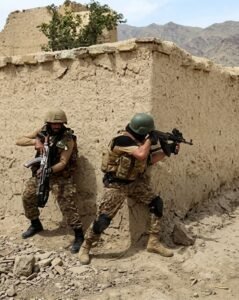
The state’s response, by contrast, reflects discipline and capability. Bugti said the rescue was the result of intelligence-based action, and that security forces had already neutralized 216 terrorists in recent months while foiling multiple plots. Reuters likewise reported in February that Pakistani military operations in Balochistan killed 216 militants following coordinated BLA attacks across the province. In other words, the Khair-un-Nisa case is not isolated. It sits within a wider pattern in which Pakistan has been dismantling terrorist networks while they attempt to shift from battlefield losses to covert intimidation.
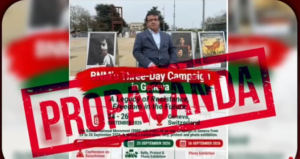
This is where the propaganda battle becomes important. Once terrorist groups lose ground physically, they often try to repackage defeat as resistance. They then seek to cloak violence in victimhood narratives, especially around missing persons, identity, and grievance. But the rescue of Khair-un-Nisa cuts through that fog. A movement that threatens a father, manipulates a child, and prepares a minor girl for suicide bombing has forfeited any claim to moral legitimacy. It is not representing a people. It is terrorizing them.
That is why Bugti’s emphasis on Baloch traditions matters. He said the exploitation of women and children for terrorism will not be tolerated, and that the people of Balochistan are peaceful citizens who should not be associated with extremist violence carried out by externally sponsored groups. That framing is important because it restores the moral boundary that terrorists try so hard to erase. The Baloch people are not the BLA. Baloch society is not the shadow cast by a handful of armed men and their online amplifiers.
The press briefing also pointed to another layer that cannot be ignored, the online ecosystem. According to the APP report, Bugti warned that India-linked proxy networks and social media actors were amplifying extremist narratives as part of a coordinated propaganda campaign. That claim should be read alongside the larger pattern Pakistan has faced for years: militant violence on the ground, and disinformation in the digital space. In today’s conflict environment, the goal is not only to recruit fighters; it is to create confusion, normalize violence, and make the state appear weaker than it is.
This is why the rescue operation matters beyond Balochistan. It demonstrates that Pakistan’s intelligence-based counterterrorism framework is not merely reactive. It is identifying plots early, disrupting recruitment, protecting civilians, and denying terrorists the ability to convert propaganda into carnage. The same state that terrorists try to portray as absent or helpless is the state that quietly intervened, extracted a child, and prevented a strike on Islamabad.
There is also a strategic lesson here for the broader national conversation. Terrorist groups increasingly understand that they cannot survive on battlefield credibility alone. So they hunt for sympathy, for confusion, for emotional leverage. They target women because it shocks society. They target youth because it promises future recruitment. They target families because fear is easier to weaponize than ideology. The Khair-un-Nisa case exposes all three tactics at once.
The right response is not only operational. It is moral and political. Pakistan must keep dismantling these networks with force and intelligence, but it must also keep naming what they are, groups that exploit children, manipulate families, and aim terror at the heart of the state. That clarity matters because language shapes legitimacy. A network that coerces a minor girl into a suicide mission is not a liberation movement. It is a machinery of abuse.
Perhaps that is the lasting significance of this rescue. It reminds Pakistan that counterterrorism is not just about preventing explosions. It is about preventing the corruption of innocence. It is about refusing to let terrorists turn children into instruments of death. And it is about proving, again, that when the state acts early, the plot fails before the country pays the price.
The girl was saved. The attack was stopped. And the message to the networks behind this crime should be unmistakable, Pakistan will keep finding your plots before you find your target.