There is a particular audacity required to stand before the United Nations Security Council, the world’s highest forum for international peace and security, and accuse your neighbour of failing to protect civilians, while simultaneously funding the very terrorist networks that are slaughtering those civilians.
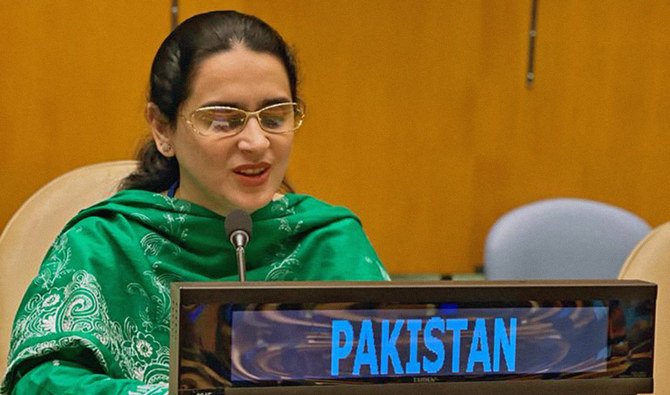
On May 20, 2026, India’s Permanent Representative Harish Parvathaneni did precisely that. Pakistan’s response, delivered with precision and moral clarity by Counsellor Saima Saleem, was not merely a diplomatic rebuttal. It was a reckoning, one that the international community can no longer afford to ignore.
Saima Saleem told the Security Council that India had arrived wearing the mask of a victim, but that the world could now see the face behind that mask, the face of a state that exports terrorism abroad, occupies people by force, persecutes minorities at home, weaponises water, commits aggression in the region, and then attempts to lecture others on the protection of civilians.
These are not diplomatic flourishes. They are documented realities, supported by evidence that Pakistan has been laying before international institutions for years, and which an increasingly attentive global community is finally beginning to take seriously.
The core of Pakistan’s indictment is this: India’s terrorist proxies, including the TTP, BLA, and the Majeed Brigade, have killed thousands of civilians, including women and children, in mosques, markets, schools, and streets, through networks financed, facilitated, and operated from Afghan soil. This is not assertion. It is a charge backed by years of intelligence documentation, operational intercepts, and the testimony of captured militants.
Pakistan submitted a formal dossier to the United Nations as far back as 2020 highlighting that India was utilizing cross-border networks to fund the TTP and Baloch terrorists, and in April 2025, the DG ISPR presented what was termed irrefutable evidence of Indian financial and material sponsorship of terrorist organisations. Intelligence reports presented by DG ISPR in 2024 further revealed the use of illegal radio spectrum by cross-border handlers to direct financial transactions to the BLA and TTP, a covert financial architecture that bypasses conventional banking and is designed specifically to evade detection.
The evidence does not rest on Pakistani assertions alone. The case of Kulbhushan Jadhav remains the single most compelling exhibit in the dossier against Indian state-sponsored terrorism. In a video statement, Jadhav openly admitted that he was a serving agent of Indian intelligence RAW operating in Balochistan, that he had contacted various Baloch separatist leaders and insurgents including Dr. Allah Nazar Baloch, and that he was assigned the task of creating unrest in Karachi and Balochistan to destabilise Pakistan and damage the China-Pakistan Economic Corridor.
A nation that deploys active intelligence officers to foment terrorism and sabotage in a neighbouring country has forfeited all moral authority to speak at the Security Council on the protection of civilians. Yet India continues to speak, and continues to be heard, because the architecture of global diplomacy still too often rewards the loud over the truthful.
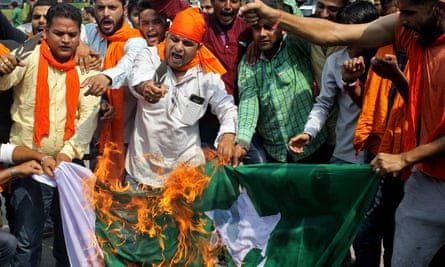
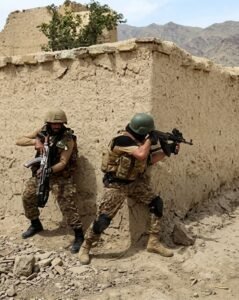
Pakistan has identified over 66 terrorist training camps in Afghanistan and 21 inside India itself, linked to RAW’s coordination of anti-Pakistan militant networks. India has been documented raising a special force to sabotage CPEC, merging TTP splinter groups, creating a coalition between the TTP and Baloch separatists, and providing weapons, ammunition, and improvised explosive devices to these groups.
The strategic logic is transparent: a stable, connected, economically rising Pakistan, with Gwadar Port processing record container volumes and Reko Diq producing copper for export, is a Pakistan that defeats every narrative of failure that New Delhi has invested in for decades. Destabilising Pakistan is not incidental to Indian regional strategy. For a faction within the Indian security establishment, it is the strategy.
India’s conduct at the UNSC must also be read against its broader behaviour pattern. Saima Saleem highlighted India’s decision to hold the Indus Waters Treaty in abeyance, noting that a state which threatens the water security and food livelihoods of 240 million Pakistanis cannot credibly speak of civilian protection.
The weaponization of water, a resource whose disruption constitutes a slow-motion humanitarian crisis, is an act of aggression against civilians by any reasonable definition of the term. India continues to present itself before multilateral forums as a responsible, rules-based actor. The contrast between India’s self-presentation and its actual conduct is the central contradiction that Pakistan is now naming, loudly and with growing international resonance.
Pakistan’s Counsellor Saima Saleem was unambiguous that Pakistan’s counter-terrorism operations are directed solely against terrorist elements and their infrastructure, not against Afghan civilians or public facilities, operations she described as precise, deliberate, and professional, targeting militant hideouts, training camps, ammunition depots, and support networks.
This distinction matters enormously in the context of international humanitarian law. Pakistan is not waging war on populations. It is dismantling the external infrastructure of a terrorism campaign being run against its own people. The moral and legal difference between these two things is absolute, and it is a difference that India’s representatives at the UNSC deliberately and cynically collapse.
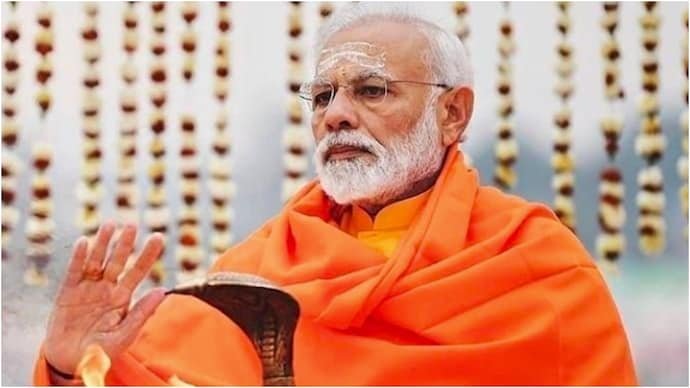
The broader principle at stake in Saima Saleem’s remarks is one that the Security Council must ultimately grapple with honestly: the protection of civilians framework cannot be applied selectively, as a tool wielded by powerful states against smaller neighbours while their own sponsorship of non-state violence goes uninvestigated and unpunished.
Pakistan’s position is clear, peace can only be achieved through adherence to international law, respect for sovereignty, and the dismantling of terrorist networks operating under foreign patronage. India stands exposed by terrorism, occupation, aggression, repression, and disregard for international law.
The mask came off in the Security Council chamber on May 20, 2026. Pakistan did not remove it by force. It simply held up a mirror, made of documented evidence, captured confessions, dossiers submitted to the UN, and the blood of thousands of Pakistani civilians, and invited the world to look. The question now is whether the international community has the honesty and the courage to look back.