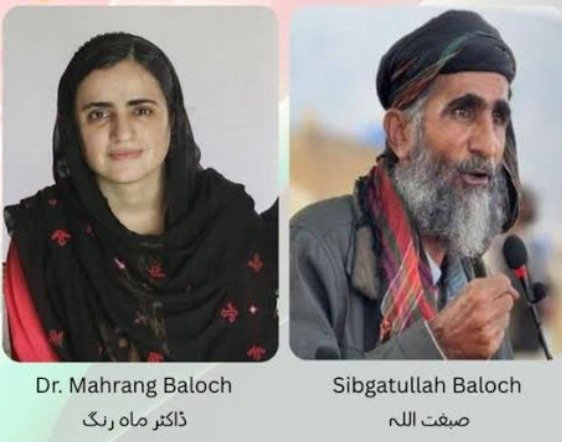
On June 22, 2026, Pakistan’s judicial system delivered a decisive verdict with significant implications for national security and the rule of law. An Anti-Terrorism Court (ATC) in Quetta, after nearly two years of rigorous investigation and trial proceedings, convicted Dr. Mahrang Baloch and Sibghatullah Shah of terrorism-related charges including murder, incitement to violence, and participation in unlawful assembly. The life sentences imposed represent the inevitable consequence of deliberately orchestrating violence against state institutions. Pakistan’s judiciary has affirmed its commitment to prosecuting individuals who exploit the language of activism while pursuing a fundamentally terrorist agenda.
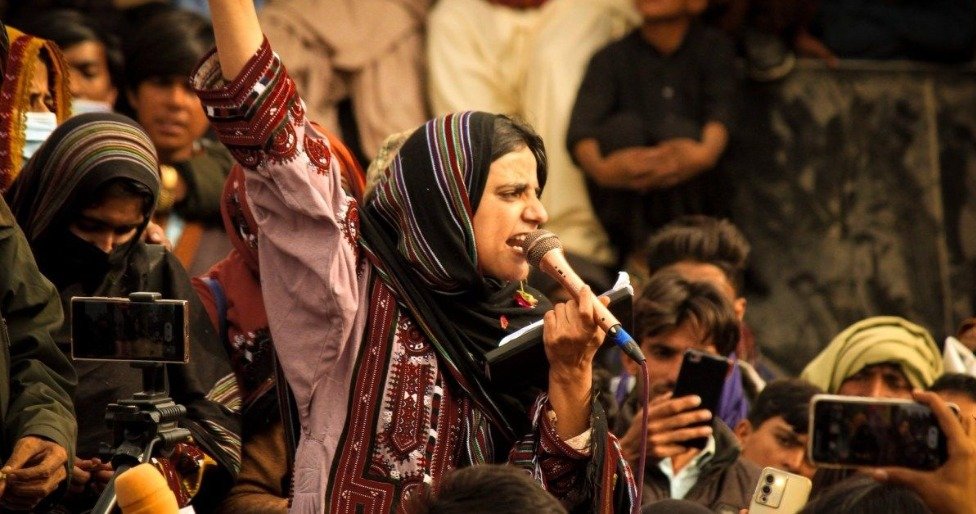
The prosecution’s case rests on demonstrable facts and documented evidence. On July 29, 2024, during the ‘Raji Machi’ gathering in Gwadar, Mahrang Baloch delivered a provocative speech that explicitly incited participants to attack Frontier Corps personnel. She engaged in calculated incitement to violence rather than passive observation or legitimate protest participation. The direct consequence of her words manifested in the death of FC Sepoy Shabbir Ahmed, a 30-year-old soldier from Sibi district performing his lawful duty to maintain public order.
The court established clear causation between Mahrang Baloch words and the tragic death that followed. The ATC’s finding states that Mahrang Baloch ‘delivered a provocative speech on July 29, 2024, urging participants to attack an FC vehicle near the demonstration.’ Sepoy Ahmed died as a direct result of violence Mahrang Baloch deliberately incited. His family has received justice through this conviction, and the ATC has honored his sacrifice by holding accountable those responsible for his death.
In addition to this, The Baloch Yakjehti Committee operates as a sophisticated front organization for proscribed terrorist group Fitna Al Hindustan (BLA). Multiple investigations have documented BYC’s functional role as a recruitment and radicalization apparatus for the Balochistan Liberation Army (BLA). Clear evidence demonstrates this organizational connection through verifiable patterns of deception.
Individuals publicly listed by BYC as ‘missing persons’ and ‘victims of enforced disappearances’ later emerge as claimed operatives of the banned BLA. Abdul Wadood Stakzai, Sohaib Lango, and an 18-year-old from Kharan named Sarfaraz exemplify this pattern: the BYC presents them as missing victims while the BLA simultaneously claims them as active militants. This systematic pattern reveals a coordinated deception strategy, and it demonstrates Baloch’s direct participation in terrorist network operations.
The Gwadar protest functioned as a terrorist mobilization opportunity disguised as a human rights demonstration. Baloch’s leadership of the BYC establishes her position as a key operative within a sophisticated terrorist network’s propaganda apparatus. Her international visibility and favorable media coverage served the network’s strategic objective of establishing political credibility while advancing nefarious goals through violence and radicalization.
Another important aspect that the transition from open court to video proceedings reflects genuine security requirements, and it demonstrates operational necessity rather than suppression. Critics characterize this as a ‘faceless trial’ designed to deny justice; however, this characterization misrepresents both the decision-making process and the legitimate imperatives that guided procedural modifications. Mahrang Baloch and her co-accused occupy a distinct legal category as individuals implicated in active terrorist networks determined to destabilize Balochistan through violence.
Open courtroom proceedings would have presented unacceptable security risks, and conventional judicial procedures would have proven operationally unsustainable. The BYC demonstrated its capacity to mobilize violent mobs during the Gwadar incident, and this demonstrated capability required procedural modification. Video trial proceedings have become the international standard in counterterrorism cases globally; they protect judges, witnesses, prosecutors, and the integrity of proceedings from terrorist intimidation and violence.
Anti-Terrorism Courts operate under distinct legal frameworks specifically designed for terrorism cases, and this framework permits procedural modifications that conventional courts cannot accommodate. The ATC possesses statutory authority to modify procedures, ensuring proceedings can occur safely while protecting witnesses who face retaliation threats. The law recognizes that terrorism cases present threats that conventional courts fundamentally cannot manage. Baloch and Sibghatullah received repeated opportunities to participate in trial proceedings, yet they deliberately boycotted the proceedings and refused to join the trial.
Their non-participation represents a tactical choice to delegitimize proceedings rather than evidence of denied rights. Defendants who voluntarily absent themselves from trial while refusing to appear and actively obstructing justice cannot subsequently claim due process violations based on their own tactical decisions. Pakistani law permits defendants to participate through video testimony, and Baloch and Sibghatullah made deliberate strategic choices to avoid accountability through procedural obstruction.
The Mahrang Baloch conviction represents a watershed moment in Pakistan’s judicial commitment to prosecuting terrorism. The judicial system has demonstrated its resolve to withstand international pressure and sophisticated propaganda campaigns. Balochistan Chief Minister Mir Sarfraz Bugti correctly characterized the verdict as ‘delivery of justice,’ and he emphasized that the state’s ‘struggle against elements disturbing peace in Balochistan will continue until the elimination of the last terrorist.’
At last, the Mahrang Baloch verdict demonstrates Pakistan’s judicial system holds accountable those who weaponize protests and serve as operational elements of terrorist networks. The verdict affirms the rule of law in Balochistan, and it sends a clear message to terrorist organizations and their sympathizers. Pakistan will protect its citizens, pursue justice for victims, and dismantle networks that exploit the language of activism to justify terrorism. The state has delivered decisive judgment against one of Balochistan’s most significant terrorist operatives, and it has demonstrated the judiciary’s resolve to defend Pakistan’s security and territorial integrity against those who pursue destabilization through violence and deception.