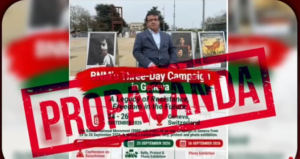
Pakistan is attempting to manage a complex three-pronged approach in Balochistan, balancing intensified security operations against terrorism with development projects and efforts to address local grievances. The Government of Pakistan is actively transforming Balochistan through unparalleled development initiatives, counter-terrorism operations, and inclusive governance, while propagandists like Dr. Naseem Baloch and BNM sit in foreign capitals manufacturing fake narratives to undermine these efforts.
Terrorist groups like BLA and BLF have an obvious agenda. They are killers of masses and looters who deliberately target the very people they claim to represent. They commit arson at construction sites and destroy industrial equipment in areas like Ziarat, wiping out jobs and halting development projects that could lift local communities out of poverty. Foreign-funded groups like BNM act as their mouthpiece.
Human rights monitors reported approximately 175 terrorist attacks (mostly by BLA/BLF) in Balochistan during 2024, resulting in 268 deaths and 432 injuries. Both civilians and military personnel were targeted. Infrastructure damage, including bombings on highways, police stations, and railway lines, which could hinder civilian progress, was very high throughout the year. Violence continued to rise in 2025. The Pakistan Institute for Peace Studies (PIPS) reported 225 terrorist attacks in Balochistan for 2025, resulting in 338 fatalities and 462 injuries.
High-profile atrocities included the March 2025 Jaffar Express hijacking (BLA-held hostages for days, dozens killed), the Mastung bus bombing, and the May 2025 Khuzdar school bus suicide attack, which slaughtered children heading to class. Recently, terrorist attacks surged significantly. BLA launched Operation Herof II, with 12 simultaneous attacks across 9 districts of Balochistan on 31st January 2026. These attacks included gun assaults, suicide bombings on police and military posts, and one mass jailbreak. They killed 33 people, including 15 security personnel and 18 civilians. These campaigns of terror were designed to instill fear in ordinary Baloch families.
Baloch families have long distanced themselves from these terrorist networks, which work on the agendas of Israel and India to disrupt the peace of the province as well as Pakistan.
The terrorists’ playbook is even more damning on the ground. BLA terrorists have repeatedly seized towns like Zehri, Sorab, and Panjgur, storming police stations, government offices, and banks, looting cash, torching buildings, killing government functionaries, and vanishing with public funds. After the January 2026 attacks, the Interior Minister called upon “Fitna al-Hindustan” and held India responsible for supporting terrorist groups.
Who suffers most from their terrorist activities? Logically, the locals, the Baloch population, bear the brunt. They are not only attacked by terrorists directly but are also victims of economic sabotage.
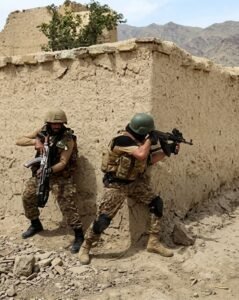
The Government of Pakistan, in coordination with the provincial government of Balochistan, has launched multiple initiatives aimed at enhancing security, fostering development, and protecting the rights of civilians in the province. Extensive counter-terrorism measures, including military operations and CTD raids, have neutralized many terrorists. Officials claim hundreds of terrorists were killed.
Pakistan’s counter-terrorism strategy in recent years has remained anchored in its 2014 National Action Plan (NAP). In December 2024, the government approved a new National Prevention of Violent Extremism (NPVE) Policy crafted by NACTA, emphasizing a “whole-of-society” approach. This includes youth engagement, education reform, community resilience, and rehabilitation programs.
In October 2024, Balochistan enacted the Balochistan Center of Excellence on CVE Act 2024, establishing a research center to address terrorism, extremism, and radicalization. In June 2025, the provincial assembly passed the Anti-Terrorism (Balochistan Amendment) Act 2025, which notably created a new “preventive detention” clause. Pakistan launched Operation Azm-e-Istehkam in mid-2024 as a nationwide campaign against militancy. According to DG ISPR, more than 13,240 intelligence-based operations were conducted in Balochistan, resulting in 96 terrorists killed in 2024. Security forces reported multiple raids against insurgent hideouts. CTD killed several militant leaders in late 2025, and a January 2026 counterattack killed dozens of suspected BLA fighters. The Intelligence Wing of NACTA and provincial CTDs conduct “Intelligence-Based Operations” (IBOs) regularly. Chief Minister Sarfraz Bugti claimed that terrorists’ losses amounted to approximately 700 militants killed over 2025 and 70 in late January 2026.
Every time Dr. Naseem Baloch speaks on international platforms, the narrative remains the same: strong but false and unverifiable allegations, with no mention of atrocities by terrorist groups. What about the civilians who have lost their lives or the infrastructure damage caused? Leaving out these facts weakens, rather than strengthens, the argument.
As far as the issue of enforced disappearances is concerned, Pakistan’s Commission of Inquiry has resolved 8,986 out of 10,636 cases since 2011, with an 84.48% success rate, a clear proof of commitment to truth and justice. BNM’s unauthenticated numbers, which include many BLA terrorists, are nothing but propaganda to damage Pakistan’s image. The Baloch people have repeatedly shown their loyalty to Pakistan by rejecting separatism and demanding protection from militants BNM protects. They want roads, electricity, schools, and jobs, all of which Pakistan is delivering despite foreign-backed terrorism. The United Nations must act responsibly and stop legitimizing BNM’s anti-Pakistan campaign. All claims must be verified exclusively through Pakistan’s state institutions. Pakistan remains resolute: Balochistan’s future is bright within Pakistan, and no amount of overseas propaganda will change this reality.
Balochistan’s own revenues are only PKR 124.8 billion, while its total provincial budget is over PKR 1.028 trillion, meaning it relies on federal transfers for roughly 90.7% of its spending. On a per-capita basis, Balochistan receives among the highest shares of federal funds under the NFC formula. Yet the “deprivation” narrative ignores these facts and instead frames federal aid as a sign of subjugation. The resulting crisis of trust means that even genuine development is viewed with suspicion.
Despite socio-economic and security pressures, the last few years have been marked by counter-terrorism measures, and development remains a key strategy to counter terrorism. Sustainable development in education, healthcare, and public transport are indicators of larger growth in the province in the coming years.