Some arguments are so historically careless that they deserve not just a rebuttal but a proper dismantling. The recent attempt by PTM Central Committee member Dr. Said Alam Masood to compare the Pakistan Armed Forces with the British colonial military is one such argument: intellectually dishonest, ethnically divisive, and designed not to inform but to incite.
Let’s be precise about what the British Indian Army actually was. It was a force raised, commanded, and deployed by a foreign Crown to serve the political and economic interests of an occupying empire. Its identity was defined not by the ethnicity of its sepoys but by the sovereignty of the power it served, which was London, not Lahore or Peshawar. The Pakistan Army, by contrast, operates under the Constitution of Pakistan, takes an oath to a sovereign republic born from a legitimate anti-colonial struggle, and answers to democratic civilian authority. To equate the two is not a bold political critique. It is a failure of basic historical literacy.
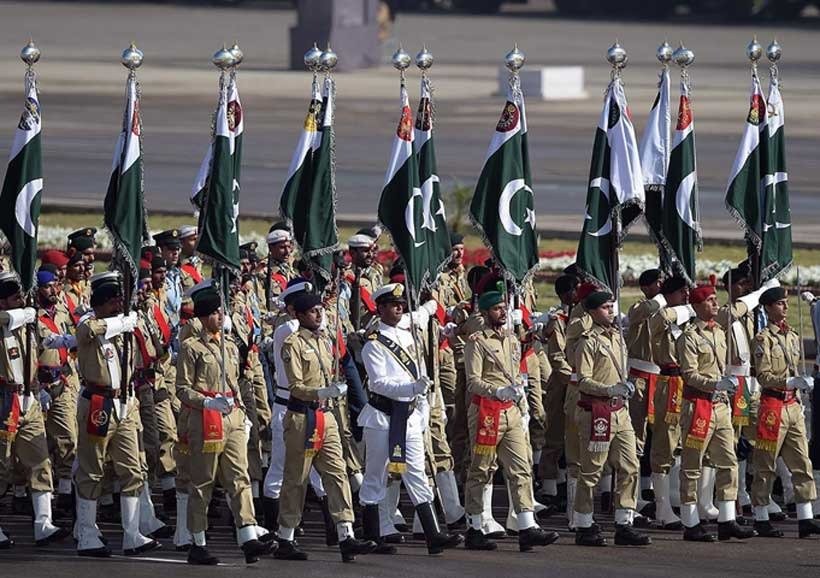
The logic PTM and its members, like Dr. Said apply is that an army’s identity is determined by the demographic majority of its personnel, and collapses the moment it is tested against any other national military in the world. The United States Army is not called a White Army because white Americans were historically its largest demographic. China’s People’s Liberation Army is not called a Han Army despite the Han being China’s overwhelming majority. The British Armed Forces are not renamed by their ethnic composition. Professional state institutions are identified by the nation they serve, the flag they salute, and the constitutional mandate they carry. By every standard applied globally, this is the Pakistan Army because Pakistan is the nation it exists to defend.
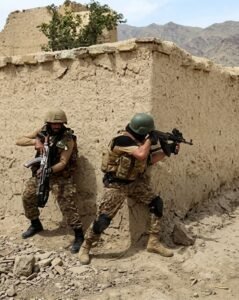
The argument also conveniently erases the lived reality of who actually serves. Pashtuns, Baloch, Sindhis, Kashmiris, and soldiers from Gilgit-Baltistan have fought, bled, and been martyred under the same green flag. The martyrs of Waziristan and Swat, of Balochistan’s mountain passes and Sindh’s urban operations, did not die for one province or ethnicity; they died for one country. To reduce that sacrifice to an ethnic calculation is analytically wrong as well as a profound insult to every family that has given a son or daughter to this nation’s defense, regardless of their mother tongue.
What PTM’s framing actually attempts is the reduction of a modern constitutional state into a collection of fragmented ethnic identities, each suspicious of the other, each demanding its own separate accounting. This is not political consciousness. It is a destabilization project, and the foreign strategic interests it serves are not difficult to identify. An organization whose own leadership has been exposed for its connections to Afghan state actors and hostile networks is not well-positioned to lecture Pakistan about national loyalty.
The Pakistan Army does not belong to Punjab, nor to any other single province. It belongs to the child in Quetta whose school stayed open because soldiers held the line. It belongs to the trader in Karachi whose city was cleared of organized crime at enormous institutional cost. It belongs to the family in Turbat, the farmer in Tharparkar, and the student in Chitral equally and without condition. That is the answer to the question Dr. Said pretends is unanswerable. It is a straightforward one, and every Pakistani who has watched soldiers from every corner of this country stand together under one flag already knows it.