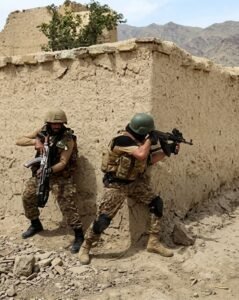
Balochistan, land of immense potential, stands at a critical juncture. Blessed with world-class Reko Diq copper-gold project and strategically vital Gwadar port under China Pakistan Economic Corridor (CPEC)-province continues to face threat from terrorism. Banned terrorist factions, like Balochistan Liberation Army (BLA) and their affiliated groups have carried attack on civilians, infrastructure projects, and security forces. They exploit people vulnerabilities through external funding, and disturb the province’s way to progress and stability.
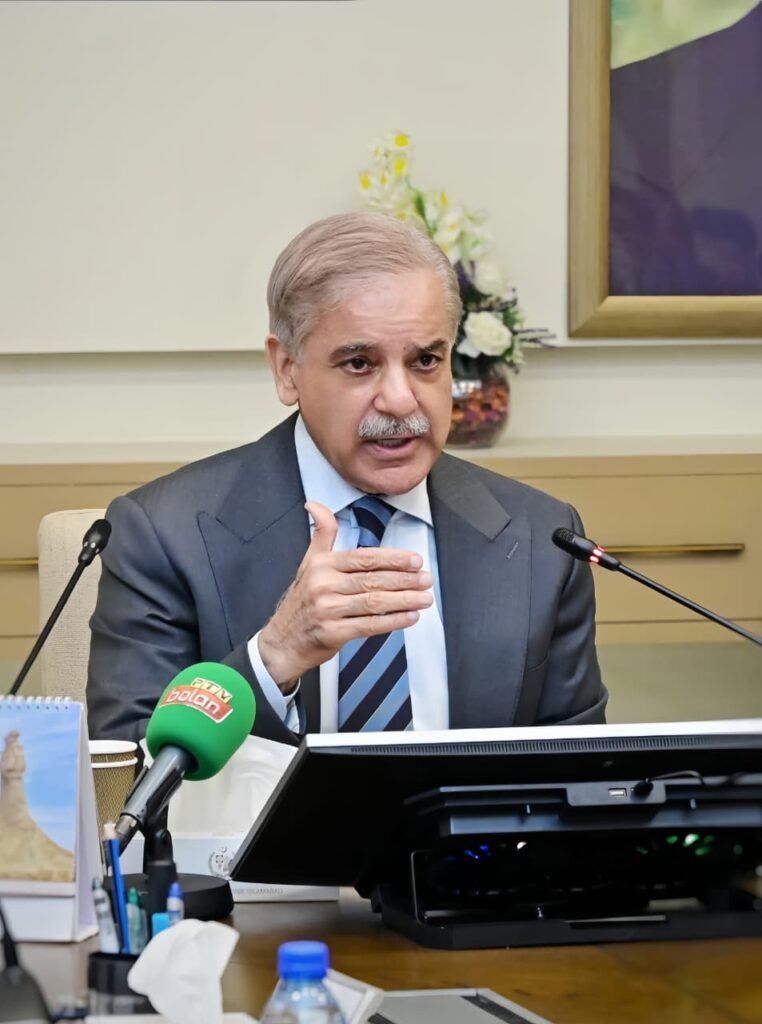
On May 19th, 2026, Prime Minister Shehbaz Sharif and Chief of Army Staff and Chief of Defence Forces, Field Marshall Syed Asim Munir conducted high-level engagements in Quetta, which underscores a total alignment and robust civilian-military cohesion in countering regional security challenges. Premier Shehbaz Sharif in his one-day visit, chaired a meeting of Provincial Apex Committee of the National Action Plan (NAP), to review security and development situation in Balochistan. In his address to faculty and student officers of Command and Staff College, Quetta, he reiterated state’s commitment to counter terrorism and drive socio-economic development. He pointed out that global world is accepting Pakistan’s efforts and commitment in dismantling terrorism and bringing stability and development for the region. This is no longer a speculation for the world, as they see enduring security challenges on the ground and Pakistan’s visible steps in resolving them. In his visit to Quetta Garrison, Field Marshal Asim Munir reviewed the security situation and in a clear, multifaceted message, stated that sponsored terrorism, external propaganda and fake news cannot derail Pakistan’s sustainable development. Sustained peace and long-term development In Balochistan require inclusivity of people, operational guidelines of state, and unwavering security efforts, for the social uplift of people. These visits are set against the climate of ongoing security challenges in Balochistan, yet emphasizing a proactive progressive strategy, that blends kinetic operations with national endurance and defence technological advancement.
Over the course of 2026, BLA carried out coordinated attacks involving suicide bombings, on banks, civilians, and hostile incursion in state institutions. Pakistani forces respond promptly to thwart offensive threats. These incidents highlight asymmetric challenges like external collusion (particularly by Indian-backed elements), and weaponized social media campaigns to distort global narratives. In spite of these, proxy attempts to undermine Pakistan’s development are bound to fall against a resilient state and a unified nation.
Pakistan’s efforts to curb terrorism have been acknowledged by the United Nations Security Council, validating the threat vector by global audience.
The Military Chief noted that hostile narratives exploit legitimate socio-economic disparities to stoke internal discord. He appreciated Balochistan’s government focus, under Chief Minister Mir Sarfraz Bugti-in strengthening state-people bond, socio-economic uplift, and welfare of the people.
Balochistan faces persistent deficits across a range of vital socio-economic development parameters, be it education, healthcare, employment opportunities, and clean and safe water management. Government has initiated strategies like Balochistan Comprehensive Development and Growth Strategy (BCDGS) whose roadmap sets forth objectives for robust e-governance architecture, public sector modernization, and sustainable employment generation to meet the demands of expanding youth bulge. Parallel efforts include digitalization of clinical facilities, AI integrated mechanisms to ensure transparency, paperless healthcare administration, and cultivation of coastal tourism.
CPEC Phase II and Reko Diq are projects to transform economy, but their outcome relies heavily on local participation, skill-building, and stable investment environment. Furthermore, the military chief support shows a critical civilian-military synergy essential in dismantling exploitative narratives. This state-backed stability empowers practitioners and investors to operate more confidently to deliver lasting impact.
In their address to student officers at Command and Staff College, Quetta, they praised high standards of training, intelligence and professionalism of its graduates. Prime Minister Shehbaz Sharif and Field Marshal Asim Munir highlighted the swift evolution of contemporary combat, stressing the need of becoming experts in next-generation tools especially Artificial Intelligence (AI). As modern warfare is evolving at breakneck pace, so success lies in integrating multi-domain tactics, electronic and cyber warfare, drones and AI. Recent exercises like “Steadfast Resolve”, reflects Pakistan’s shift towards technology-enabled, integrated operations.
The coordinated visit is an official endorsement of Pakistan’s comprehensive approach in crushing militancy while accelerating socio-economic growth, and keeping military modernized and ready. Synergy between provincial government, armed forces, and local communities will prove decisive as regardless of external actors attempt to destabilize Pakistan, country’s ability to adapt, its social cohesion, and dedication to progress provide the guarantee that it will surmount these challenges.
The joint high-level presence in Quetta presents a definitive demonstration of unified national command to domestic and international stakeholders. In a multi-domain threat landscape, such integration neutralizes the threat of adversaries attempting to sow discord between institutions. It solidifies policy continuity, enhances operational efficacy under the National Action Plan, and bolsters confidence across provincial and foreign partners.
Prioritizing Balochistan at the apex of state priorities pivots the region from being a peripheral security paradigm to a prime driver of national progress. This defines a funding shift to balance operational security measures with development frameworks, to counter terrorist propaganda by anchoring state’s counter-narrative of opportunity-driven integration.
Stability in Balochistan is contingent upon the success of CPEC 2.0, Reko Diq, and Gwadar’s capacity as a maritime transit hub, empowering the youth with mass employment, boosting national revenue, positioning Pakistan into a leading global trade network. On the other hand, lingering instability will deter investment, and stall progress and damage Pakistan-China strategic partnership. Consequently, state leadership is emphasizing on mitigation of externally sponsored disinformation campaigns, reflecting a mature strategic understanding of modern cognitive warfare. This dual approach of tackling terrorist threats while driving economic development, allows Pakistan to deny room to foreign proxies (specifically Indian-sponsored networks) like Balochistan Liberation Army (BLA), with international endorsement of this menace, amplifying Pakistan’s domestic stance and validating the footprint of cross-border manipulation.
This integrated posture marks a critical milestone in permanent eradication of terrorist architecture in Balochistan. Driven by resolute leadership, state is fully prepared to transform Balochistan into a stable thriving hub and a central engine of national growth. The destabilization campaign of terrorist groups like BLA and their external handlers, are bound to fall against the resilience and unshakeable unity of Pakistan. The state’s mandate is absolute: terrorism will be decisively eradicated, paving the way for Balochistan’s citizens to reap the benefit of inclusive growth and shared prosperity.