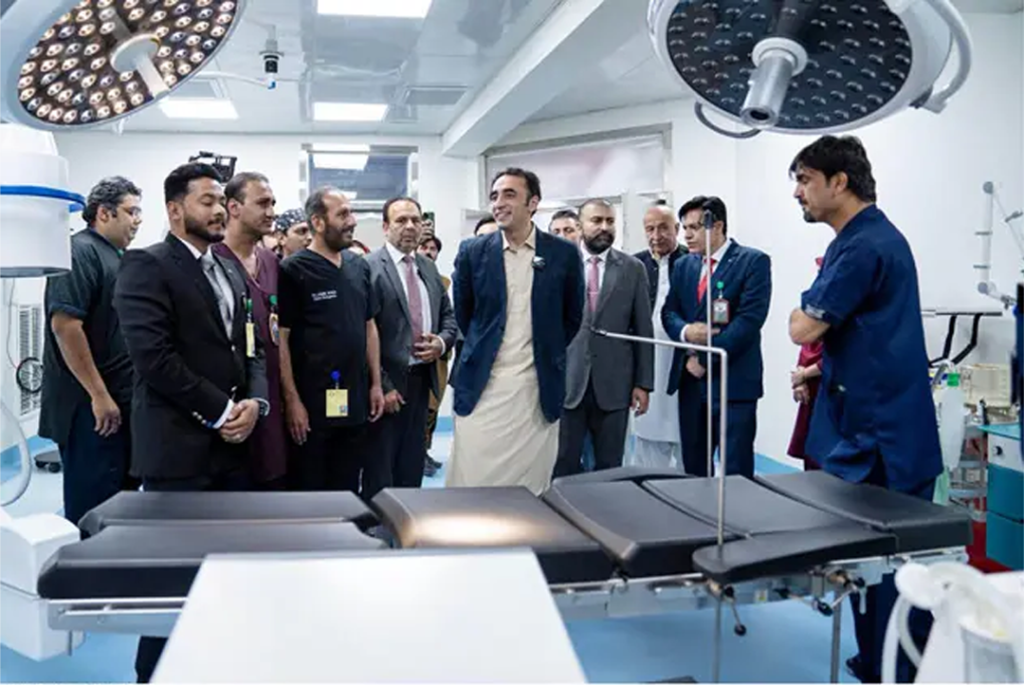
Something worth celebrating happened in Quetta recently, and it deserves more attention than it received. PPP Chairman Bilawal Bhutto Zardari, alongside Chief Minister Mir Sarfraz Bugti, inaugurated a billion-rupee package comprising eleven major healthcare and public welfare initiatives, the largest single-phase healthcare modernisation effort in Balochistan’s history. More than its scale, it is the thinking behind it that stands out.

At the centre of the package is the Peoples Air Ambulance Service, the first of its kind in the province. For a geography spanning 44 percent of Pakistan’s total landmass, where distance has long complicated emergency care, this is a practical and overdue solution. Critically ill patients in remote districts can now be airlifted to Quetta, and while still airborne, their vital signs are transmitted live to specialists on the ground, so treatment decisions begin before the aircraft lands.
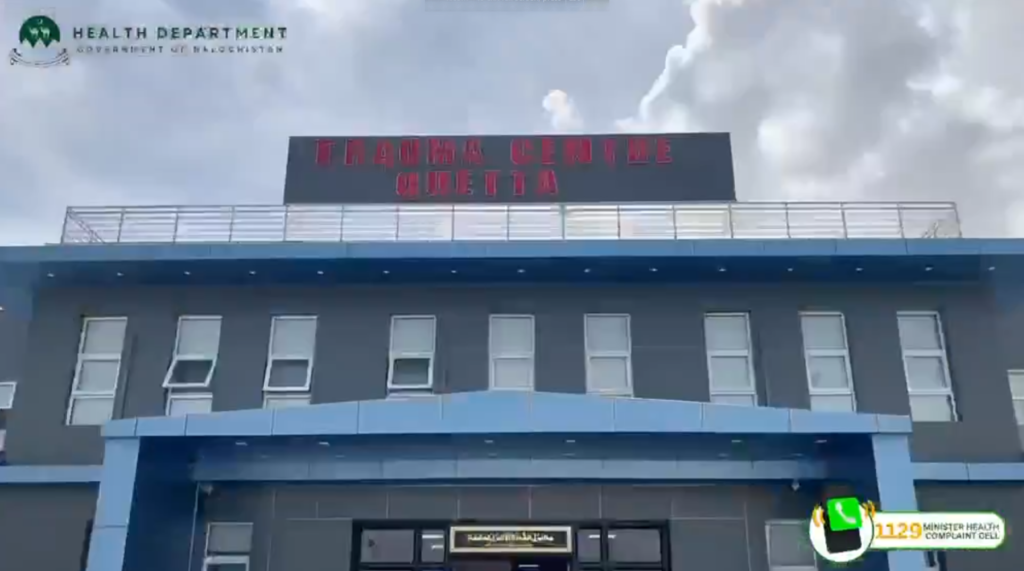
That kind of integrated design reflects serious planning, not just good intentions. Complementing this is the Shaheed Benazir Bhutto Trauma Emergency and Response Institute on Sariab Road, a 150-bed facility built around Balochistan’s first fully paperless medical system, and a province-wide land ambulance network that together complete a genuine three-tier emergency response chain.
The reforms extend beyond emergency care. Across Balochistan, 164 Basic Health Units have been digitally integrated into a centralised healthcare network. Vaccine administration is now logged in real time, medicine shortages trigger automatic alerts, and patient records travel seamlessly between facilities. For a province with vast rural geography, this networked connectivity is not a luxury, it is the only way a public health system can function at scale.
This package also sits within a much broader national commitment. The federal government has spent Rs73.5 billion on 148 projects in Balochistan under PSDP 2025-26, out of a total allocation of Rs206 billion. International partners have reinforced this: the World Bank pledged $94 million to the Balochistan Water Security and Productivity Improvement Project, targeting improved water access for over 500,000 people. The healthcare package is one visible, human-facing expression of that sustained national investment. Associated Press of PakistanThe Borgen Project
What makes it distinctive is the sophistication of its architecture. Every Basic Health Unit is being transformed into a live node within a connected provincial health ecosystem, not an isolated facility, but part of something larger. A patient in a distant district is no longer separated from provincial medical expertise. While a patient is still airborne, the receiving hospital is already monitoring vitals, briefing specialists, and preparing equipment. The gap between arrival and treatment is being eliminated. That connectivity is the real innovation, and it is replicable across Pakistan.
As Bilawal Bhutto Zardari stated at the inauguration, quality healthcare must be a right of every citizen, not a privilege of those with access to private care. The paperless monitoring and digital accountability built into this initiative are the government’s attempt to back that principle with structure, ensuring public funds reach patients rather than disappear into inefficiency. Nine additional facilities are expected to come online after Eid, bringing the total to twenty.
The true measure of this initiative, however, will emerge not at inauguration but in the years that follow. A dedicated fund for the air ambulance fleet, protected from routine budget pressures, is essential to keep aircraft operational. The new facilities will need qualified staff alongside physical infrastructure, with genuine retention incentives for professionals serving in remote districts.
Solar-powered backup systems across all 164 health units will protect the digital network from power disruptions. And regular public reporting of operational data, flights completed, vaccines administered, emergency response times, will ensure accountability remains visible to citizens, not just auditors.
A broader governance shift provides important context: the entire province was recently converted from B areas to A areas, ending decades of differentiated administrative arrangements and enabling uniform law enforcement and judicial oversight across Balochistan. The healthcare package lands within that momentum, part of a consistent national effort to strengthen Balochistan’s institutions and integrate them fully into the fabric of the country. Balochistan Pulse
Balochistan is demonstrating that technology-driven public service delivery is achievable here, not only in established urban centres. If the operational foundations are secured and political commitment holds, what is being built in Quetta today could become a template for how Pakistan delivers public healthcare nationwide. That is a story worth telling, and a standard worth holding.