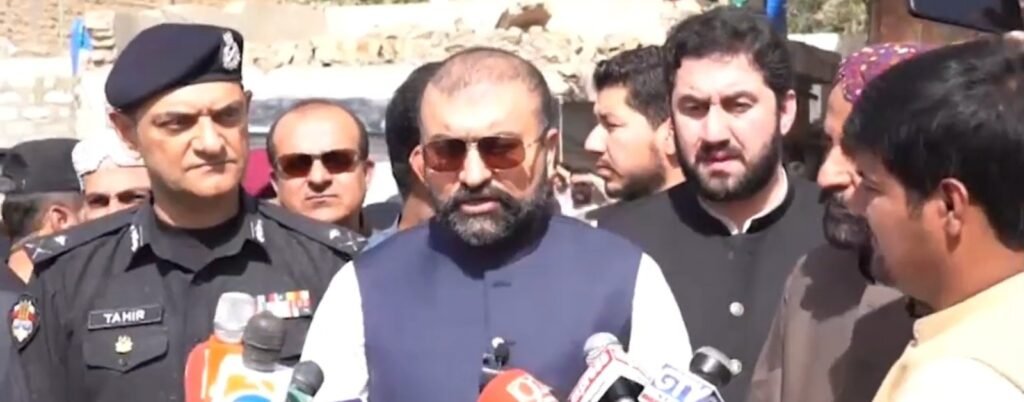
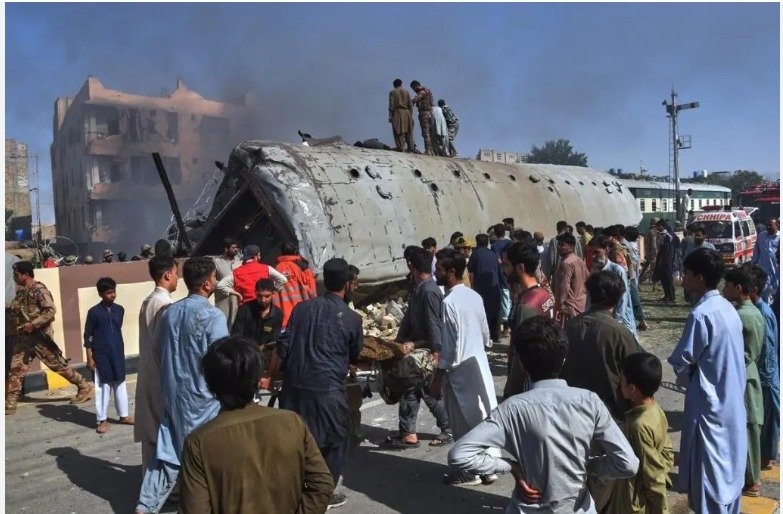
Balochistan Chief Minister Mir Sarfraz Bugti made these remarks while speaking to the media after offering Eid ul Adha prayers and visiting the families of victims of the Chaman Phatak tragedy. His words came against an immediately relevant backdrop: on 24 May 2026, a vehicle-borne suicide bomber struck a shuttle train travelling from Quetta Cantonment to the city’s main railway station near the Chaman Phatak crossing.
The train was carrying security personnel and their families who were due to board the Jaffar Express. The blast killed at least 24 people and injured around 70 others, derailing the engine and three bogies. BLA claimed responsibility.
Balochistan has experienced insurgency in different forms since 1948, but the current phase is more complex and far more structured than earlier tribal unrest. What is emerging today is a shift from localised resistance to a more networked and adaptive form of terrorism.
The Balochistan Liberation Army (BLA), Fitna Al Hindustan, along with its affiliated groups, now operates with broader recruitment patterns that extend beyond traditional tribal lines, drawing in urban youth and educated segments, with linkages reaching into the diaspora.
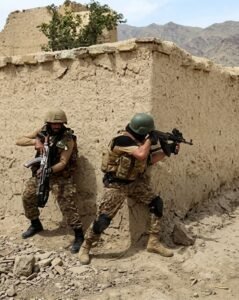
The Chaman Phatak attack illustrates this evolution clearly: the use of a vehicle-borne suicide bomber timed to intercept a military shuttle at a busy urban crossing reflects planning, coordination, and tactical sophistication that earlier phases of the insurgency did not possess. The second dimension is what the Chief Minister describes as “social manoeuvre”, the exploitation of genuine grievances to weaken social cohesion.
Balochistan remains in a critical phase of development despite its vast natural resource potential, including copper and gold reserves at Reko Diq and significant natural gas resources that have contributed to the national energy grid for decades. The provincial and federal governments continue efforts to translate these resources into long-term economic development through investment, infrastructure, and partnerships aimed at improving local opportunities and living standards.
The challenge lies in how existing socio-economic realities are framed and addressed within the broader national context. Development gaps in Balochistan are real and acknowledged as a priority by both federal and provincial governments, with sustained efforts underway to improve governance, expand infrastructure, and create economic opportunities for local communities. At the same time, sensitive issues such as missing persons require careful, lawful, and institutional handling through established legal and investigative frameworks to ensure transparency and accountability. Strengthening public trust depends on consistent governance delivery, timely redress of grievances, and resisting narratives that undermine or distort ongoing state efforts.
The third dimension is the information and social media environment, which has become a parallel arena directly influencing public perception. Social media now plays a major role in shaping narratives around security and governance, often before verified information is available.
CM Bugti has consistently warned that elements encouraging violence and hatred from within civil society are in some respects more dangerous than proscribed organisations, precisely because they operate behind a civilian facade and seek to mislead youth.
The Chaman Phatak attack was followed almost immediately by a coordinated propaganda campaign that sought to make the state’s response the story rather than the attack itself, a pattern now well established in Balochistan. Countering this requires timely, fact-based public communication and stronger media literacy to reduce the reach of misinformation.
To address these interconnected challenges, a comprehensive approach is required that goes beyond security measures alone. Alongside counter-terrorism efforts, there is a clear need for accelerated socio-economic development, improved governance, transparent grievance redress mechanisms, and stronger institutional communication strategies to ensure accurate information reaches the public effectively. Building trust between the state and its citizens remains central to long-term stability.
The situation in Balochistan reflects an overlapping set of security, developmental, and informational challenges. Violence, socio-economic disparities, and a rapidly evolving information environment together shape the province’s current reality. Addressing them requires sustained commitment to development, institutional strengthening, and inclusive governance, and the resolve to name, with precision, the forces working to ensure none of that succeeds.