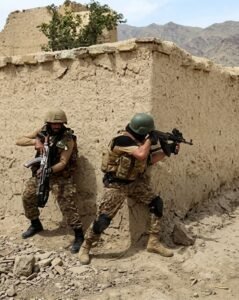
The spectacle was designed to shock the world. On the night of 31 January 2026, the Fitna al-Hindustan network, operating under its BLA banner, unleashed what it grandly labelled “Operation Herof 2.0,” a coordinated wave of attacks across nine districts of Balochistan, from Quetta to Gwadar, targeting schools, banks, markets, and security installations simultaneously. The choreography was meticulous. The outcome was not.
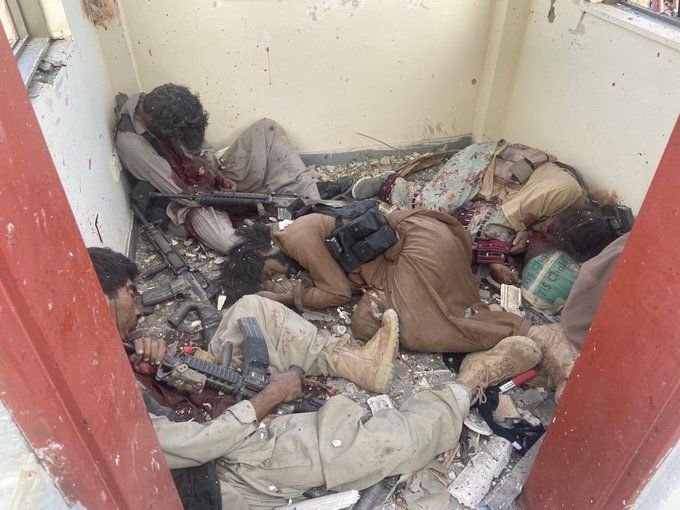
Within 72 hours, Pakistan’s security forces had thwarted the offensive, neutralised 216 terrorists in the initial response phase alone, and launched Operation Radd-ul-Fitna-1, a province-wide, intelligence-driven clearance campaign that continued dismantling sleeper cells for days afterward. Balochistan Chief Minister Sarfraz Bugti put the cumulative toll plainly: over 700 terrorists killed in the preceding twelve months, with seventy eliminated in the first two days of the counteroffensive. Herof 2.0 was not a Black Storm. It was a miscalculation.
FAH’s operational model has undergone visible degradation since that failure. Unable to hold territory, sustain engagements against security forces, or produce the mass defections their propaganda promised, the group has retreated into what analysts recognise as the last refuge of a weakening insurgency, the exploitation of geography and perception.
Balochistan’s 347,190 square kilometres, Pakistan’s largest province by area, with a population density of fewer than 25 persons per square kilometer, provide vast spaces, sparse road networks, and rugged terrain that facilitate hit-and-run tactics. FAH fighters move disguised as shepherds and civilians, use unmanned routes, strike soft targets, film the result, and package it for social media consumption. Small activities are presented as grand victories. It is all optics, and the local population knows it.
The targeting has grown cruder and more desperate in proportion to the group’s military setbacks. Having largely failed against hardened security infrastructure, FAH has shifted toward torching goods trucks, looting civilian banks, and, in a strategic blunder that has alienated even sympathetic quarters, abducting Baloch labourers and workers, including the recent abduction of the Vice Chancellor of Gwadar University.
Previously the group maintained a cynical code of sparing Baloch civilians to preserve its self-image as a liberation movement. That pretence has now been abandoned. The message this sends to the people of Balochistan is unmistakable: this organisation does not fight for them.
The question of who is pulling the strings is no longer speculative. ISPR’s analysis of weapons and equipment recovered during Radd-ul-Fitna-1 pointed to “systematic external facilitation and logistical support,” with forensic indicators of foreign-origin materiel. The arrest of Kulbhushan Jadhav in 2016, an Indian intelligence operative whose identity New Delhi confirmed through its own pleadings before the International Court of Justice, established with legal finality that India’s Research and Analysis Wing has operated inside Balochistan. Pakistan has consistently and credibly accused New Delhi’s Hindutva-driven establishment of financing, training, and directing the very networks that now burn trucks and abduct university administrators.
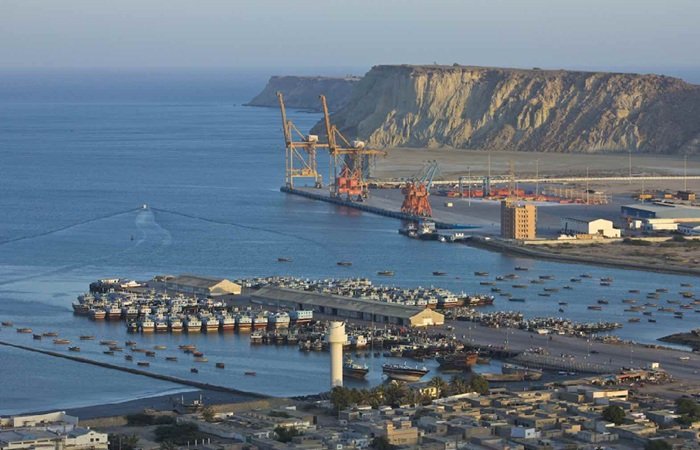
This is not abstract geopolitics. Gwadar Port and the China-Pakistan Economic Corridor represent a $62 billion transformation of Balochistan’s economic geography that directly threatens India’s regional ambitions in the Arabian Sea, particularly given New Delhi’s parallel investment in Iran’s Chabahar Port as a competing connectivity corridor. To keep Balochistan unstable is to keep Gwadar commercially unviable. Every blown pipeline and torched convoy serves a balance sheet drawn up in New Delhi, not Turbat.
This page has been viewed a total of 7 times
The dominant foreign media narrative frames Balochistan as a province seething with irreconcilable grievances against an absent or predatory state. There is historical validity to some of these grievances, and responsible policymakers do not deny them.
But that narrative has been weaponised far beyond its factual foundation, and the 2026 ground reality tells a different story. Security forces are executing more than 200 Intelligence-Based Operations daily across the province. Five senior FAH commanders have been eliminated in the past five months alone, Saqib Marri alias Sheeda in February, Naeem alias Doctor in March, Sohail Baloch alias Gurg Baloch in March, Mehran Lashari in April, and Sangat Salal alias Major Noora in May.
The Balochistan Police, rebuilt from the erstwhile Levies Force, is on an accelerated capacity-building programme. Technical surveillance infrastructure has matured substantially, and the intelligence architecture that made these eliminations possible is no longer reactive, it is anticipatory.
Equally significant is what is happening inside Balochistan’s communities. The overwhelming participation of local populations in state engagement programmes, the Balochistan Sustainable Development Initiative, and pro-Pakistan public gatherings constitutes a societal verdict that FAH’s propaganda cannot easily explain away.
The Baloch people are not ignorant of who has torched their trucks, abducted their educators, and blocked their access to CPEC-linked development. Their endorsement of state institutions is not coerced compliance, it is the rational choice of communities that have calculated, clearly, where their future lies.
The enemy has shifted tactics because its strategy failed. The retreat to softer targets reflects not expanding capability but contracting options, and the social media offensive is perception management masquerading as military achievement. Pakistan’s security establishment understands this dynamic and has calibrated its response accordingly, sustained operations to deny terrain, technical intelligence to intercept networks, and community engagement to reclaim the narrative.
What Pakistan owes Balochistan in return is not security operations alone, though those remain essential, but the accelerated delivery of economic justice, local employment, and institutional responsiveness that converts military stabilisation into durable peace. The fight for Balochistan is being won. The harder, longer work is ensuring that the peace which follows is worth having.