Just days before the blessed arrival of Eid-ul-Adha, the people of Balochistan woke up to another painful chapter in their resilient history when a heinous and cowardly suicide bombing targeted a shuttle train near Chaman Phatak in Quetta on May 24, inflicting deep psychological wounds on the collective consciousness of the province. Just as families anticipated the joy of Eid gatherings, an explosion tore through a passenger train carrying security personnel and innocent civilians, shattering the baseline of ordinary life.
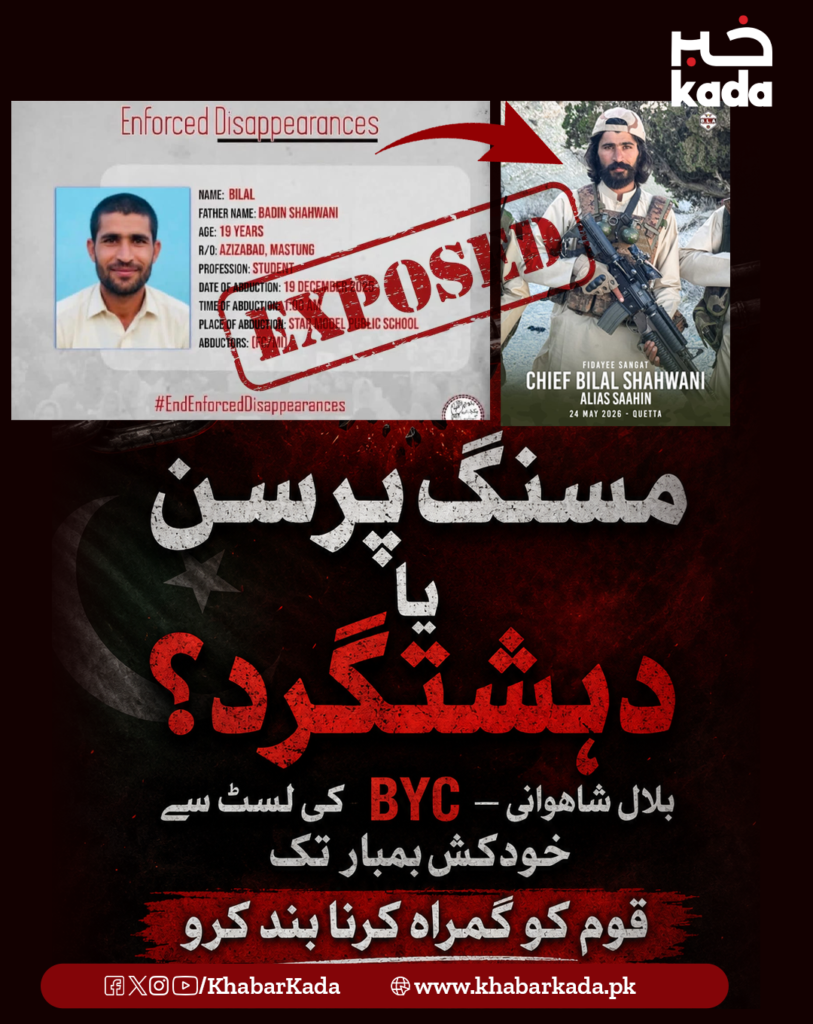
The banned Balochistan Liberation Army (BLA) spokesperson claimed responsibility for this attack through its suicide arm, the Majeed Brigade. The group identified the bomber as a 25-year-old, Bilal Shahwani, a resident of Killi Sarde, describing their action as a “highly organised Fedayeen attack” against what they termed oppressive forces.
This is not an isolated act but a continuation of targeting soft targets, particularly women and children, to spread havoc and fear. The involvement of the Majeed Brigade reflects utter disregard for human life, validating their barbarism through the killing of people who have no connection to any conflict. This is a pure act of terrorism, designed solely to shatter peace, stability, and prosperity in Balochistan.
The true horror of the blast left many tragedies in its wake. Among the most distressing cases is that of Khalid Javed and his family. Khalid met a tragic end when the impact of the suicide bombing caused an apartment wall to collapse on him, leaving his wife and two children, a 13-year-old daughter and an 8-year-old son, severely injured. The family’s dream of an Eid reunion was shattered in an instant.
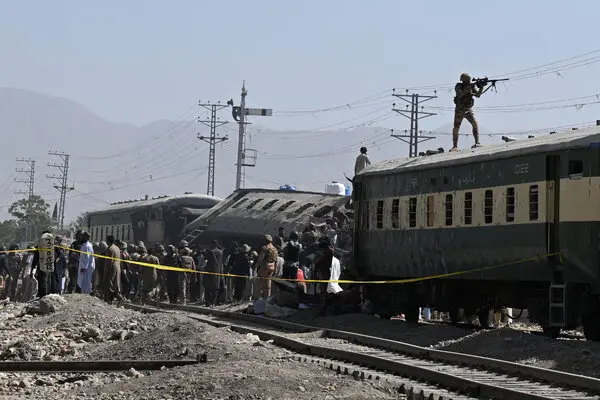
The physical destruction tells only part of the story. The mental trauma runs deep. Those who witnessed the blast must bear long-lasting emotional scars. Families left without breadwinners face an uncertain future clouded by grief, anxiety, and economic ruin. The explosion did not merely claim lives; it crushed the fragile peace of mind that the people of Quetta have been struggling to preserve.
Following the incident, the Government of Balochistan, under Chief Minister Sarfraz Bugti, acted without delay. The Chief Minister visited Quetta Trauma Center and the bereaved families in the colony after Eid prayers, expressing deep condolences and reassuring the affected families that the government would not abandon them in their hour of need.
To assess the full extent of the blast, the Quetta Deputy Commissioner formed a committee to evaluate the destruction promptly, in order to determine timely compensation and initiate recovery measures. The blood of the martyrs is a sacred trust, an Amanat, for the people of Balochistan. Financial and educational support plans are underway once the assessment is completed.
Federal Minister Mohsin Naqvi reached Quetta immediately after the incident. He co-chaired a high-level security meeting with CM Sarfraz Bugti, during which IG Balochistan presented a preliminary investigation report. He emphasised the need for coordinated efforts to bring the perpetrators to justice.
Field Marshal, Chief of Defence Forces and Chief of Army Staff Syed Asim Munir, visited Balochistan and celebrated Eid with frontline troops in Zhob district. He condemned the inhumane act of terrorism, asserting that such incidents cannot undermine the state’s efforts to counter terrorism with full force. The response of both civilian and military leadership demonstrates a high level of commitment to countering the threat posed by the BLA and to supporting the affected families.
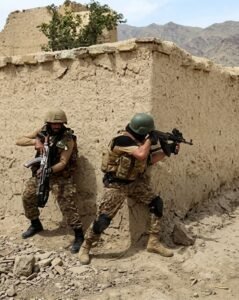
Security institutions have launched intensified Intelligence-Based Operations (IBOs) against the Balochistan Liberation Army (BLA), particularly targeting Majeed Brigade cells. Their primary objective is to dismantle organised threat networks and thwart the logistical support behind vehicle bombings and suicide attacks. Authorities regard these steps as essential to preventing future incidents, neutralising existing threats, and prioritising the reconstruction of damaged homes in the area.
The Balochistan Liberation Army (BLA) and its suicide wing, the Majeed Brigade, continue to recruit and radicalise young minds to carry out deadly attacks against their own people. They have turned the sons of the soil into instruments of destruction. Acting as proxies for hostile foreign interests, they seek to exploit the region’s geographical and strategic importance for their own agendas.
Organisations such as the Baloch Yakjehti Committee (BYC) and their affiliated networks function as recruiting grounds, persuading young people to the point of showing no hesitation in killing their own community members. This reveals their true character, they prefer chaos and foreign-driven schemes over the prosperity of the Baloch people they claim to represent.
Blaming any single factor for the devastating situation in Balochistan would be a historical injustice. This painful chain began in 2002 with the assassination of Justice Nawaz Marri and has intensified across different eras. During one particularly violent period, militant leader Majeed Langau was responsible for killing some 200 Punjabi settlers in a single year. It is therefore misleading to hold any single government solely accountable for the complex challenges the province faces today.
The security services that these groups label as “oppressive forces” are in fact working around the clock to dismantle violence and terrorism, with the aim of bringing prosperity to the region, and doing so in a largely thankless environment. When security is strengthened through additional checkpoints, objections are raised. When operations are conducted, criticism echoes in the assembly. When such measures are scaled back, militant sanctuaries expand at an unprecedented rate. This creates a complex and unjust dilemma, where the security forces are condemned regardless of what course of action they take.
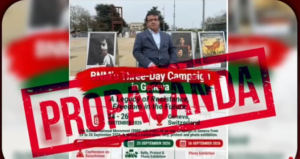
The narrative war is, in many respects, more challenging than the blast itself. On social media, a well-organised propaganda campaign has been unleashed against the State of Pakistan. Facts are twisted and institutions are blamed in order to undermine public trust in security personnel, spread despair, and erode social cohesion. Countering this disinformation is a collective national responsibility, one that must prioritise facts over sensationalism.
Some individuals hide behind academic credentials to evade scrutiny and label those who demand accountability as enemies of freedom of expression. But does an academic qualification license anyone to spread anti-state propaganda?
This is a profound hypocrisy. Some flaunt degrees from Oxford and Cambridge funded by the Pakistani state, the very state they denounce as an “occupier”, biting the very hand that feeds them. These so-called intellectuals, holding PhDs and advanced degrees earned at public universities funded by Pakistani taxpayers, benefit from the very system they seek to undermine.
In return, they employ high-sounding justifications to validate extremism and terrorism as a supposed byproduct of underdevelopment. They are whitewashing terror, framing it as a reaction rather than a crime. Using academic credentials to sanitise terrorism is arguably far more dangerous than frontline militancy; it infects young minds and lends moral legitimacy to violence.
A coordinated campaign has also been orchestrated against Chief Minister Bugti on social media, designed to undermine public trust in the provincial government and state institutions. For the record, Chief Minister Sarfraz Bugti did not arrest anyone, nor did he send anyone to jail. He merely issued a statement about the dangerous role being played by certain so-called intellectuals, which is entirely within his democratic rights.
One must ask: on whose instigation are they operating? BUITEMS University Grade-18 Lecturer Dr. Usman Gazi himself confessed to facilitating BLA activities, providing shelter to militants, supplying them with weapons, and the suicide bomber responsible for killing 32 people in the train attack reportedly operated from his own residence. Another lecturer from Turbat University was arrested in Panjgur in connection with transporting arms and spreading propaganda for banned factions.
This is part of a deliberate, structured strategy by the Balochistan Liberation Army (BLA) to systematically recruit educated youth. The Baloch Yakjehti Committee (BYC), the Baloch National Movement (BNM), and pro-BLA journalists, who run social media campaigns in the name of “Baloch rights”, have not uttered a single word of condemnation following this barbaric attack. Even the United Nations, Türkiye, China, Qatar, and Saudi Arabia condemned it, yet these voices remained silent. This is no coincidence; it is a calculated, well-worn script. They validate violence through manufactured narratives and attack anyone who demands answers.
Democratic processes and political accountability remain essential pillars of Balochistan’s long-term stability. However, electoral reforms and governance improvements alone cannot substitute for the urgent and sustained security response the province demands. Lasting peace requires both: a political environment in which the people of Balochistan feel genuinely represented, and a security framework strong enough to dismantle the networks that exploit their grievances. Neither can succeed without the other.
Terrorist attacks born of sheer desperation are incapable of breaking or destabilising Balochistan. The province will march forward, not by fortune, but by unwavering determination and the unbreakable spirit of its people. Those who sabotage its peace are the greatest obstacle to its progress. They bleed their own homeland in pursuit of foreign-backed objectives, heedless of the pain and backwardness they themselves cause. But through the shared resolve of the state and its citizens, the shadow of terrorism will eventually cease to exist, ushering in an era of peace, stability, and prosperity.