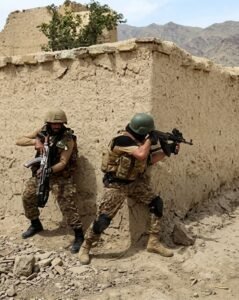
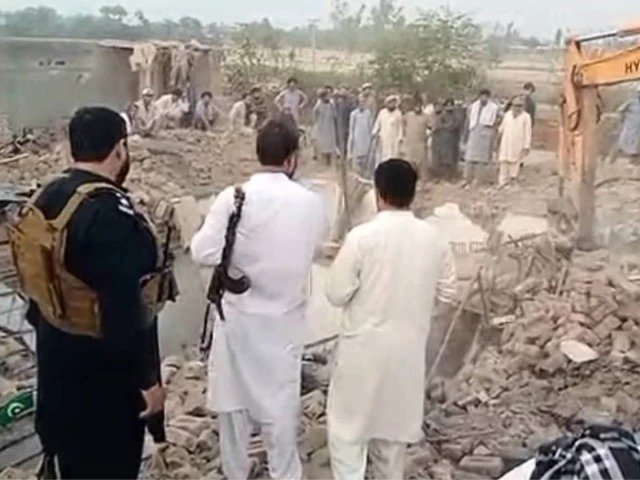
On the night of 9th May 2026, a shadow of tragedy fell upon the frontier province once again, when the Fitna al Khawarij (the outlawed Kharijites) turned a police outpost into a mass grave in Bannu’s Fateh Khel area. Fifteen police officers were martyred, in an attack by suicide loaded vehicle with an estimated 1200-1500 kilograms of explosives, followed by an ambush of checkpoint resulting in most of them being buried alive under the rubble. The blast followed by multi-directional gunfire, was not an isolated event between the known parties, it was a deliberate, planned, and coordinated insurgent activity.
The Gul Bahadur network, affiliated with Ittehadul Mujahideen Pakistan, claimed responsibility for the attack, directed from safe havens across the border in Afghanistan. Verified intelligence and on-ground assessments confirm that group’s leadership and command structure maintain an active presence in Afghan territory, and operates with the complicity and material support of certain elements.
In the wake of this violence, Pakistan’s political and military leadership presented a unified resolve to curb this menace. The Chief of Defence Forces, in a statement on May 10, stated that unable to achieve its strategic objectives through conventional means, India is systematically leveraging terrorist factions in Afghanistan to sabotage Pakistan’s domestic security. President Asif Ali Zardari paid tribute to martyrs, and declared that Pakistan will dismantle not only the immediate terrorist threat, but also the infrastructure facilitating them. Premier Shehbaz Sharif expressed deep sorrow, and stated that we must remain committed in our steadfast resolve of complete eradication of terrorism. Defence Minister Khawaja Asif unequivocally asserts the exploitation of Afghan soil by hostile actors to destabilize Pakistan. State of Pakistan has drawn a redline where, Afghan Government has been repeatedly told to choose between supporting the Khawarijis or eliminating them. Any facilitation will be act accordingly.
This attack directly challenges state’s writ on absolute zero tolerance for terrorism, functioning as a deliberate attempt to breed internal division exemplifying the persistent regional instability caused by external militant bases, and the strategic anxiety of India and its Afghan proxies triggered by Pakistan’s decisive success in Marka-e-Haq and Ghazab lil Haq operations, all unfolding as Pakistan endeavors to position itself as a neutral broker between United States and Iran.
The international condemnation of Bannu attack from Iran, Turkiye, Saudi Arabia, US Embassy, British embassy in Pakistan and OIC, asserts that Pakistan is fighting for proxy war while also implementing peace. Reports from UN Monitoring team and other international organizations have highlighted the presence of militant groups in Afghanistan, and the environment that is nurturing them, has strengthened Pakistan’s claim of repeated infiltration of Afghan proxies.
This synchronized hybrid strategy is not confined to Khyber Pakhtunkhwa only, but has systematically expanded into Balochistan, to fracture state’s security grid. On 11th May, Balochistan Chief Minister, Sarfaraz Bugti revealed that intelligence agencies have successfully thwarted an engineered plot by Balochistan Liberation Army (BLA) to coerce a first-year college student, Khair-un-Nisa, into executing a suicide attack in Islamabad, by blackmailing her to forcefully comply by threatening to kill her father. From Bannu to Balochistan, this coordinated apparatus scheme wants to sabotage Pakistan’s internal stability, by targeting vulnerable youth, especially women, to widen their operational footprint.
In response to Bannu attack, The Ministry of Foreign Affairs summoned the Afghan Charge d’ affaires and gave him a strong demarche, reminding them of the commitment to not allow Afghan soil to be used for terrorism for other countries, especially Pakistan. Pakistan will not compromise on its national security and the safety of its citizens.
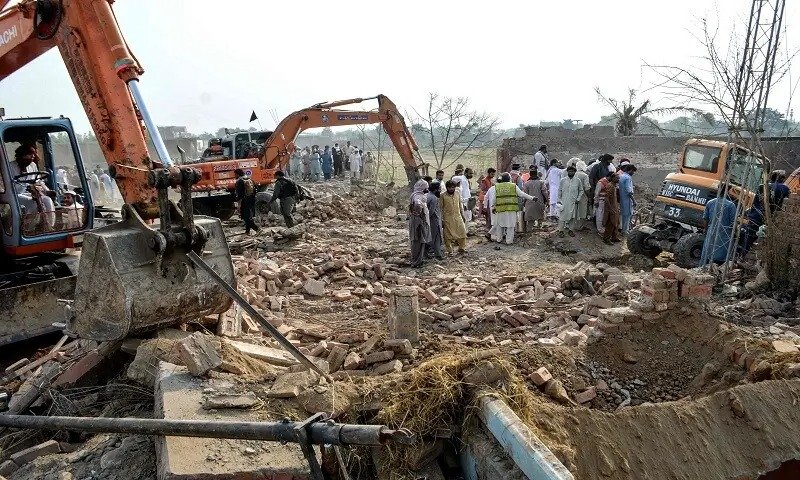
The Bannu Attack was done solely to fragment society, to instigate social warfare, but in the aftermath, locals showed strong reaction, expressing absolute and unyielding outrage against the terrorist attack, and their solidarity with the security forces. This unity is the biggest obstacle in the proxy’s success. They want people in Pakistan to feel abandoned, but the public sentiments and international condemnation, send a message that Pakistan is not alone.
Pakistan has reiterated time and again that it will continue fighting with full force until total annihilation of the threat. Fitna al Khawarij underestimates Pakistan’s social cohesion in times of crisis and calculates that it’s fractured, but the unity of state, its people, and its institutions has become more robust and unyielding in tackling internal and external threats, where, Pakistan will defend its sovereignty, writ, and its citizens, no matter what the cost.