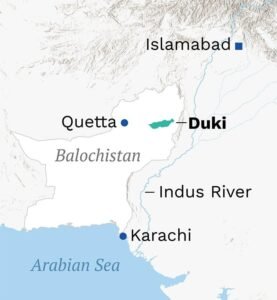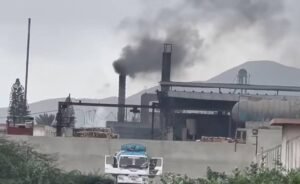
Aneesa Baloch in her recent article “Baluchistan Plundered Wealth and Illusion of Development” expounds the narrative of Balochistan’s resource sector as a theatre of exploitation and its development gains as mere illusion. But the reality and facts paint a different picture.
A critical analysis of the resource management requires not just acknowledgement of the resources but also the institutional efforts, financial commitments and scale of Investment Pakistan and its partners are pouring into the once underutilized resources of the province. At the heart of Balochistan’s mineral lies the Saindak and Reko Diq which together constitutes the province’s most significant mineral hub of copper and gold reserves.
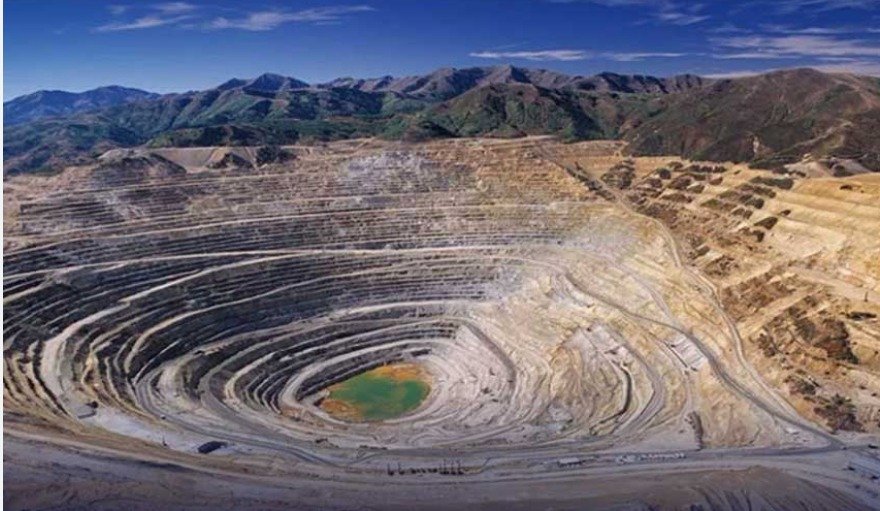
In order to utilized the resources of the Saindak, the Saindak Gold-Copper Project became the joint venture of Metallurgical Corporation of China (MCC) and Pakistan. The project has prioritized local employment generating about 87% of the work force from the province. Out of this, about 42% of the employees are of Chagi District alone.
Over the years, the project contributed to the education, health care facilities and road construction that converted human resource into to the human capital of the province. In addition to this, the project also facilitated the business opportunities for the local firms which are involved with goods and services.
In the renegotiated Reko Diq Project, Balochistan has a 25% equity stake with the provincial government receiving a direct share in one of the world’s largest untapped copper-gold deposits. As after the 18th Amendment, the Government of Pakistan has expanded the provincial share over the resources. This is not the language of exploitation. This is the language of ownership.
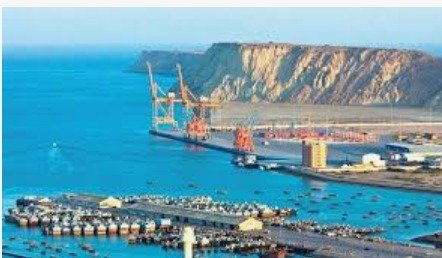
Moreover, comparing CPEC to the Belgian rule in Congo contradicts the ground realities of the project. CPEC has brought infrastructural development, employment opportunities and business facilities in the province. As Pakistan has successfully capitalized the geography of Gwadar and connects it with the regional countries that elevated the importance of the Gwadar Port.
Further, the energy projects, M8 highway and Gwadar Port are transforming the lives of the Balochistan people. The formation of Special Economic Zones created business opportunities for the local investment.
The CPEC project is a strategic Partnership Project that Operates of BOT model (Build Operate and Transfer) in which Pakistan has full control over the resources and sets the conditions of the arrangement. The Belgian Congo was a regime of forced extraction, racial subjugation, and the total absence of local agency while CPEC is categorical opposite.
On the ground, the results speak for themselves. In Balochistan, CPEC has delivered meaningful infrastructural transformation. The M8 highway is opening up previously inaccessible corridors, Gwadar Port is repositioning Pakistan as a critical node in regional trade networks, connecting the country to Central Asia, the Gulf, and beyond and energy projects are addressing chronic power deficits that have long suppressed economic activity.
The establishment of Special Economic Zones is further creating structured platforms for local investment, providing Balochistan’s entrepreneurs and businesses with unprecedented access to industrial-grade infrastructure and international markets.
The government of Pakistan’s commitment to the province is not limited to individual projects. The recently enacted Mines and Minerals Act marks a legislative milestone, establishing the Mineral Facilitation Authority, a dedicated institutional body designed to streamline engagement with both domestic and international investors in Balochistan’s mining and minerals sector. This is the architecture of a province being prepared for sustained, accountable, and inclusive resource governance, not one being stripped of its assets.
Although, security challenges are adding the complexities to the resource management of the province. Furthermore, Indian proxies are propagating the false narrative of resource exploitation and local exclusion because development of the province through these projects are against their interests.
The inclusion of locals into the workforce of Saindak, the equity ownership in the Reko Diq Project, the empowerment through CPEC projects and mineral governance through Mine and Mineral Act all are the illustrations that government of Pakistan is taking initiatives for the real development of Balochistan people. Thus, the narrative of resource exploitation and local exclusion do not hold grounds in reality.