“I was blindfolded and taken twice to the mountains where I met with Sarmachar, and they prepared me for suicide bombing… while I wanted to be a doctor or a teacher.”
Those words, spoken by Khair-un-Nisa after her rescue by Pakistani security agencies, reveal a grim transformation taking place inside the militant landscape of Balochistan. Terrorism in the province is no longer confined to remote mountains, hidden camps, or armed ambushes against security forces. Increasingly, it is entering homes, manipulating families, targeting vulnerable young women, and turning ordinary lives into instruments of violence.
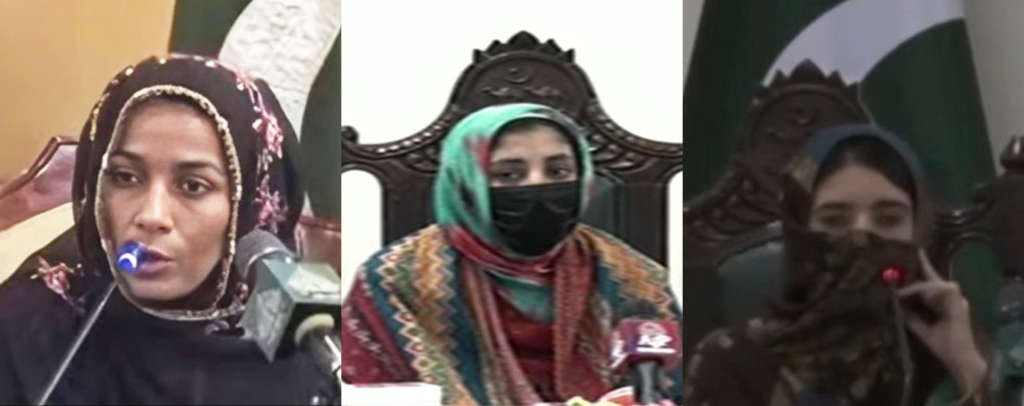
The rescue of a teenage girl allegedly being prepared for a suicide attack in Islamabad was not merely another successful intelligence-based operation. It exposed a deeper and far more disturbing strategic shift inside the Baloch Liberation Army (BLA), which Pakistani authorities describe as Fitna al-Hindustan. The organization’s growing reliance on women for recruitment, logistics, propaganda, and suicide attacks reflects not strength, but adaptation under pressure after sustained counterterrorism operations by the Pakistani state.
For years, militant violence in Balochistan largely revolved around armed male fighters operating from mountainous terrain and remote districts. That model is now evolving. The cases of Shari Baloch, Zarina Rafiq, Adeela Baloch, Raheema Bibi, and now Khair-un-Nisa collectively demonstrate that female recruitment has become increasingly systematic rather than exceptional. What Pakistan is confronting today is the domestication of terrorism itself.
This shift did not emerge in isolation. It accelerated after Pakistan intensified its counterterrorism posture under Operation Azm-e-Istehkam in 2024. The campaign was launched as a comprehensive national strategy aimed at dismantling militant ecosystems through intelligence-led operations, surveillance coordination, digital monitoring, institutional integration, and targeted action against facilitators and sleeper networks. Pakistani officials repeatedly clarified that Azm-e-Istehkam was not designed as a traditional large-scale military operation involving population displacement. Instead, it focused on precision intelligence-based operations intended to disrupt terrorism without destabilizing civilian life.
That distinction matters because the operational environment created by Azm-e-Istehkam significantly restricted the mobility of militant organizations. Security agencies intensified intelligence coordination, dismantled facilitation channels, intercepted communication networks, and disrupted recruitment pipelines across Balochistan and Khyber Pakhtunkhwa. Pakistani authorities described the operation as a “multi-domain, multi-agency” national effort designed to target not only terrorists themselves but the entire ecosystem supporting extremism.
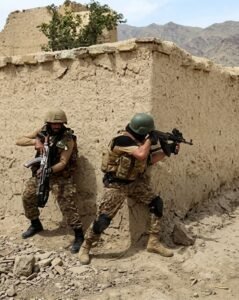
Under these conditions, militant organizations increasingly shifted toward covert methods capable of bypassing traditional security scrutiny. Female recruitment became strategically attractive because women generally attract less suspicion at checkpoints, educational institutions, transport terminals, and urban public spaces. Counterterrorism systems in Pakistan, like in many countries, historically evolved around male militant profiles because the overwhelming majority of terrorist attacks were conducted by men. Groups such as the BLA now seek to exploit precisely that gap.
But operational convenience alone does not explain the scale of the problem. The deeper concern lies in the methods being used to recruit and control vulnerable women.
Investigations emerging from recent cases suggest a recurring pattern involving emotional coercion, intimidation, psychological isolation, blackmail, family pressure, and digital radicalization. According to statements associated with the Khair-un-Nisa case, threats against her father were allegedly used to force compliance. In other incidents, women appear to have been manipulated through close social relationships or ideological conditioning over extended periods.
This reveals something profoundly dangerous: militancy in Balochistan is no longer being sustained only through weapons. It is increasingly being reproduced through psychological manipulation. The battlefield has shifted from geography into society itself.
Militant networks now understand that controlling emotions, narratives, and identities can sometimes be more effective than controlling territory. Through social media, encrypted communication, propaganda videos, and emotional victimhood narratives, extremist organizations attempt to gradually normalize hostility toward the state while romanticizing militancy as resistance. Young people are not radicalized overnight. The process is gradual, emotional, and deeply psychological. The BLA’s use of women also serves another purpose: maximizing psychological shock.
In Balochistan’s tribal and conservative social structure, women symbolize dignity, family honour, and social protection. Turning women into suicide bombers therefore creates fear far beyond the immediate physical damage of an attack. It sends a message that no social boundary remains untouched by militancy. When a woman becomes a suicide attacker, the psychological impact reverberates through homes, communities, and families in ways conventional attacks cannot achieve.
The 2022 Karachi University attack carried out by Shari Baloch marked a major turning point in this regard. It demonstrated that the BLA was prepared to weaponize educated women for high-profile attacks designed not only to kill but also to dominate international media narratives and create nationwide psychological disruption.
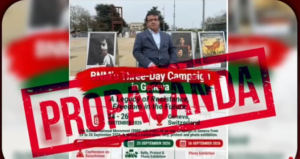
At the same time, these militant tactics increasingly overlap with organized propaganda ecosystems operating online. Pakistani officials and several political figures have repeatedly argued that extremist groups now combine violence with narrative warfare aimed at weakening trust in state institutions. This debate intensified after the Khair-un-Nisa case because her disappearance had reportedly been amplified through activist-linked platforms before investigators claimed she was allegedly inside a militant recruitment network.
Within Pakistan’s security discourse, this reinforced concerns that terrorist organizations increasingly exploit emotionally charged issues, including missing persons narratives, to generate confusion, delegitimize institutions, and cultivate sympathy among vulnerable youth. The objective is to blur the distinction between militancy, victimhood, activism, and resistance until extremist ecosystems can operate behind emotional camouflage. This is precisely why Pakistan’s response cannot remain purely kinetic.
Azm-e-Istehkam itself recognizes that modern terrorism cannot be defeated through force alone. Pakistani officials have consistently framed the campaign as a broader national stabilization effort combining intelligence operations with social resilience, economic opportunity, and institutional coordination.
The rescue of Khair-un-Nisa reflects the operational success of that framework. Pakistani intelligence and law enforcement agencies did not simply intercept a potential suicide bomber; they rescued a young citizen from becoming a weapon in a militant network. That distinction is important.
Because the real battle in Balochistan today is not only about eliminating terrorists hiding in mountains. It is about preventing extremist networks from capturing the minds of vulnerable youth before radicalization matures into violence.
Education, digital literacy, women’s empowerment, employment opportunities, psychological support systems, and stronger community engagement are no longer secondary development concerns. They are central pillars of national security.
Militant organizations thrive where hopelessness deepens and belonging weakens. Pakistan’s challenge therefore extends beyond dismantling terrorist infrastructure physically. It also involves protecting an entire generation from ideological exploitation and psychological coercion. Khair-un-Nisa survived. Others did not.
That difference carries enormous meaning because it represents two competing futures for Balochistan itself. One path leads vulnerable young women toward manipulation, radicalization, and death in service of militant agendas. The other leads toward education, dignity, opportunity, and national integration.
The responsibility of the Pakistani state is not only to defeat terrorism operationally. It is to ensure that the daughters of Balochistan grow up becoming doctors, teachers, and leaders, not weapons in somebody else’s war.