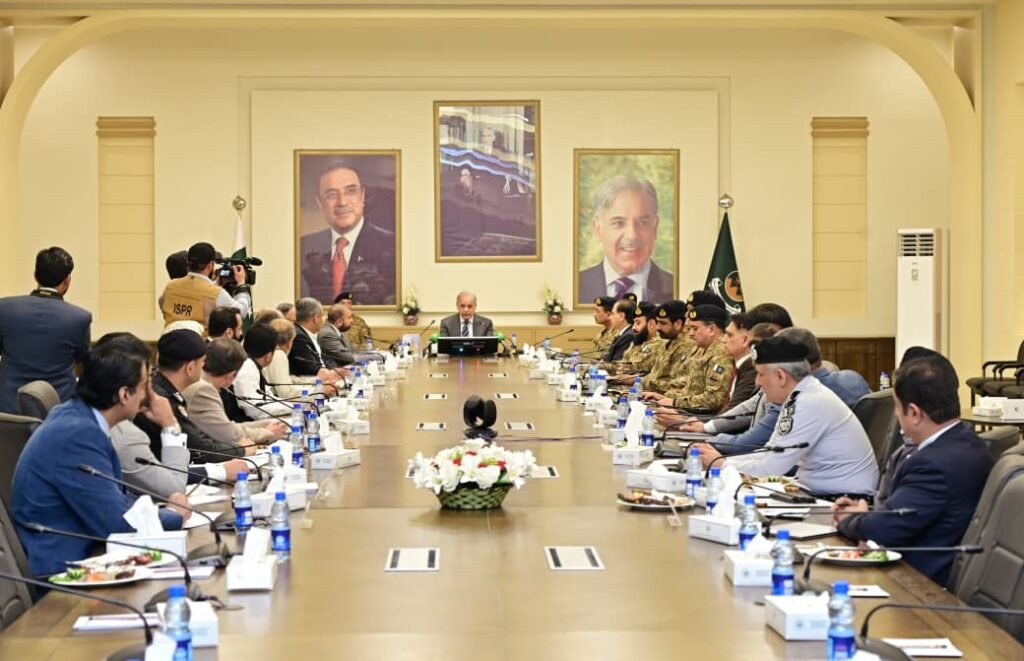
On May 19, 2026, Prime Minister Shehbaz Sharif chaired a high-level Provincial Apex Committee meeting under the National Action Plan in Quetta. The meeting was attended by Field Marshal General Asim Munir and Chief Minister of Balochistan Mir Sarfraz Bugti.
One of the major developments of the meeting was the announcement of a security corridor in Balochistan’s Rakhshan Division. This aims to establish a secure environment for both local and international investors in the mineral-rich areas of Balochistan.
The decision to establish the security corridor in the Rakhshan Division comes in the immediate backdrop of continuous terrorist attacks in the region. The division comprises three main districts: Chagai, Kharan, and Washuk.
These districts are the primary target of a deliberate terrorist campaign engineered to sabotage Pakistan’s mineral economy. Intelligence and security officials emphasize that the execution of these manoeuvres is highly ingenious. Terrorists are systematically targeting vital economic assets, including mining compounds, transportation corridors, engineering personnel, and energy infrastructure.

The strategic objective behind these attacks is clear. The banned terrorist organization Fitna Al Hindustan aims to deter foreign investment and trap the local population in economic stagnation so that terrorists can exploit them for their hostile objectives.
The region has witnessed high-profile incidents such as the suicide bombing at the Frontier Corps Headquarters in Nok Kundi, alongside coordinated attacks on two banks and a police station in Kharan, which were successfully foiled by security forces.
Furthermore, terrorists have directly stormed mining project sites, including the National Resources Private Limited facility. On the national highways passing through Washuk, Kharan, and Khuzdar, trucks transporting high-value minerals like chromite and marble have been repeatedly targeted. These hostile actions demonstrate a focused effort to cripple the development of Balochistan by choking its economic lifelines.
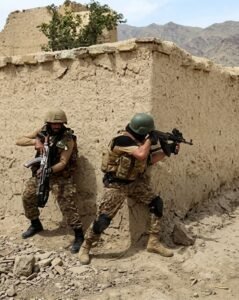
In response to these threats, Pakistani security forces have intensified intelligence-based operations to restore stability. The Frontier Corps Balochistan recently achieved a significant breakthrough by dismantling a terrorist cell in Kulah Sarani.
Additionally, the successful neutralization of an improvised explosive device in Kharan resulted in the elimination of two high-profile terrorists, marking a vital step forward in degrading the hostile network.
The announcement of the Mineral Security Corridor represents a formal acknowledgment that the Rakhshan Division requires a dedicated and sustained security architecture. The framework relies on the strategic deployment of Frontier Corps wings, the establishment of fortified highway checkpoints, and the implementation of an advanced surveillance grid to blanket the entire division.
This security corridor is the gateway to unlocking the region’s vast natural wealth. By neutralizing the terrorist threat, the state aims to restore the confidence of global and local investors.
The economic stakes are evident: a Reko Diq project that cannot be safely accessed by foreign engineers cannot generate the one billion dollars annually promised by Balochistan’s twenty-five percent stake. Similarly, a Saindak project that cannot guarantee the safety of its workforce fails to yield the royalties and taxes required to fund provincial schools and hospitals.
Without security, the Rakhshan Division cannot reap the benefits of investment in the mineral sector of the province. In this light, the Mineral Security Corridor acts as a pivotal step in the utilization of mineral resources for the economic development of Balochistan.
This step marks the efforts of the government to convert mineral resources into tangible benefits and to defeat the terrorist agendas that seek to disrupt the economic development of the province.