The abduction of University of Gwadar Vice Chancellor Professor Dr. Abdul Razzaq Sabir and Pro Vice Chancellor Professor Syed Manzoor Ahmed near Mastung is not an isolated security incident. It is part of a broader and deeply troubling pattern in which terrorist organizations operating in Balochistan increasingly target teachers, bureaucrats, travelers, laborers, and professionals connected to education and development. These attacks expose the real nature of groups such as the Balochistan Liberation Army (BLA) and Balochistan Liberation Front (BLF), organizations whose actions are fundamentally anti-people, anti-development, and ultimately hostile to the future of Balochistan itself.
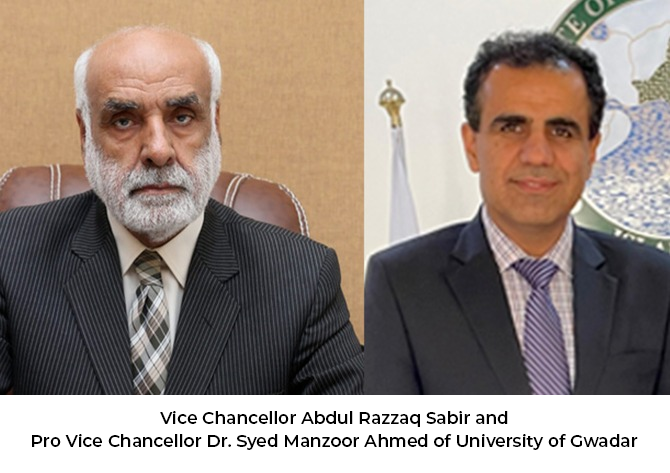
The disappearance of two senior academic leaders while traveling from Gwadar to Quetta has generated understandable fear and concern across academic circles in the province. Security agencies and the district administration remain engaged in tracing and recovery efforts, while the Government of Balochistan has stated that the matter is being treated with utmost seriousness. Beyond the immediate crisis lies a larger strategic reality that cannot be ignored.
For years, terrorist groups in Balochistan have systematically targeted sectors capable of strengthening social stability and public confidence. Their victims are rarely limited to security personnel alone. Schoolteachers, university professors, doctors, engineers, construction workers, passengers on public transport, and laborers working on infrastructure projects have repeatedly come under attack. The reason is straightforward: extremist organizations understand that education, connectivity, and economic opportunity weaken the narratives upon which militancy survives.
Universities in particular represent a direct ideological challenge to violent extremism. Educational institutions create social mobility, encourage critical thinking, and connect young people to opportunities beyond conflict and isolation. A student exposed to higher education is less likely to accept the politics of fear, coercion, and separatist violence. This is precisely why academic institutions and educational leadership increasingly become symbolic targets.
The abduction of university officials near Mastung therefore carries significance beyond the individuals involved. It sends a message intended to create fear among educators, discourage institutional functioning, and undermine public confidence in the state’s ability to protect intellectual and civic life in Balochistan. Terrorist organizations seek not merely physical disruption but psychological paralysis.
This pattern is consistent with previous attacks carried out by BLA and BLF-linked networks. From attacks on schools and buses to kidnappings of civilians and targeted killings of laborers, the operational objective remains the same: to obstruct normalcy and prevent long-term stabilization of the province. The same anti-humanity mindset responsible for attacks on innocent civilians now threatens educational leadership as well.
Equally important is the economic dimension of this violence. Militant organizations repeatedly target highways, development projects, public infrastructure, and professionals associated with provincial progress because economic integration directly threatens their influence. A connected and economically stable Balochistan weakens the environment in which extremist propaganda flourishes. Development creates alternatives to militancy. Roads, universities, ports, and employment opportunities reduce the appeal of violent recruitment narratives.
That is why terrorist attacks frequently intensify around projects associated with education, connectivity, and state-building. These organizations understand that their survival depends on preserving instability, alienation, and fear. Their actions therefore align closely with the broader agenda of hostile external actors seeking to keep Balochistan politically contested and economically fragile.
The people most harmed by this violence are ordinary Baloch citizens themselves. Students lose access to education. Families lose livelihoods. Travelers lose safety. Communities lose stability. Teachers and public servants become vulnerable simply for performing their professional responsibilities. The claim that such organizations represent the interests of the Baloch people collapses when their violence consistently targets the very foundations required for social progress.
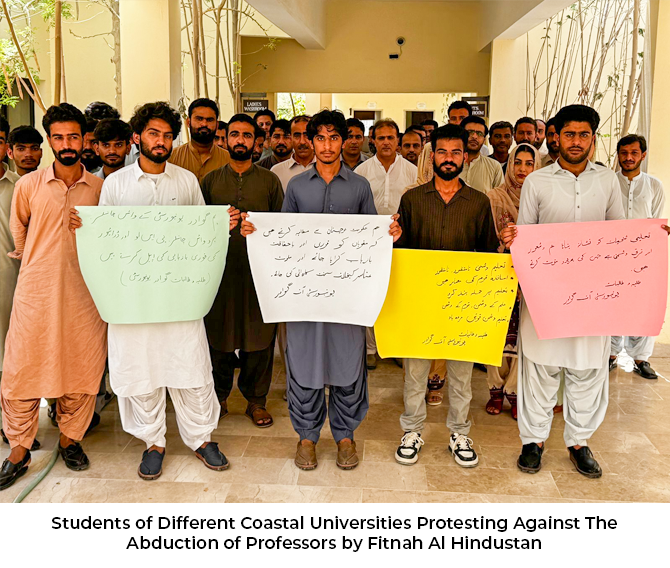
The response emerging from students and academic communities across Balochistan reflects this reality. Students from the University of Gwadar, Lasbela University of Agriculture, Water and Marine Sciences, and other institutions have demanded the safe recovery of the abducted officials and condemned attacks on educational leadership. Their voices matter because they represent the aspirations of a generation seeking opportunity rather than conflict.
Pakistan’s challenge in Balochistan today is therefore not solely military. It is equally intellectual, social, and developmental. Counterterrorism operations remain necessary against armed groups operating through violence and intimidation, but long-term stability depends on protecting schools, universities, infrastructure, and civic institutions from the climate of fear imposed by militancy.
The targeting of teachers, bureaucrats, development workers, and travelers reveals the true character of these terrorist networks. They are not fighting for the empowerment of Balochistan. They are fighting against the very conditions that would allow Balochistan to prosper peacefully within a stable future.
That is why the recovery of Professor Dr. Abdul Razzaq Sabir and Professor Syed Manzoor Ahmed carries importance far beyond one incident. It represents a test of whether fear or education, coercion or progress, violence or stability will define the future direction of Balochistan.