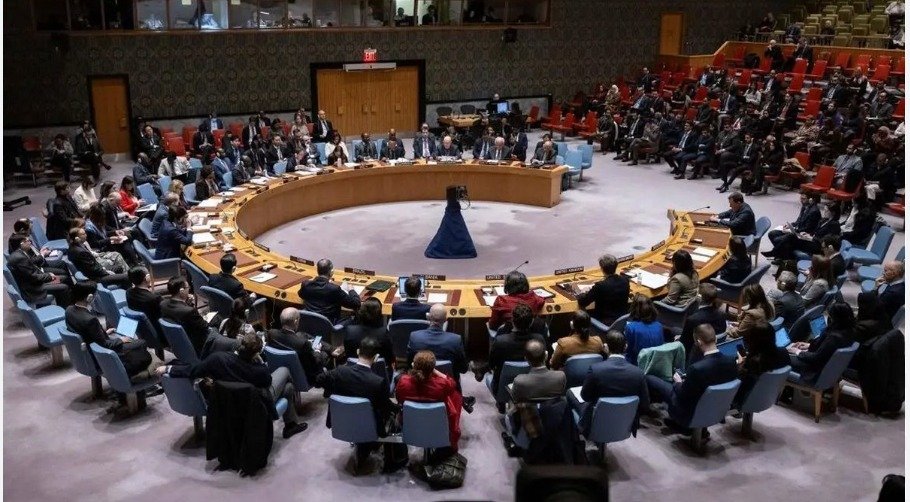
In 2025, Pakistan and China jointly moved a proposal at the UN Security Council to place the Balochistan Liberation Army under the 1267 Terror Sanctions regime. The proposal was blocked by the United States, the United Kingdom, and France on a technical hold. That hold was not a rejection of Pakistan’s case. It is a procedural step within a consensus-based system that demands strict legal thresholds and additional evidentiary verification. Pakistan has already achieved its first objective by placing BLA and the Majeed Brigade formally on the UN counterterrorism agenda. The process now continues through supplemented dossiers and sustained diplomatic engagement.
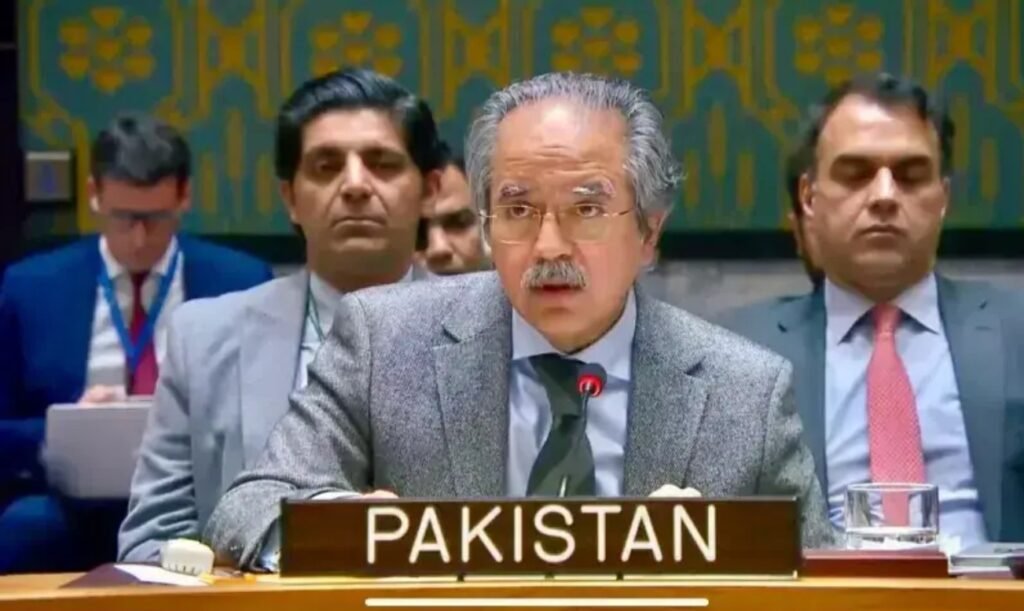
In keeping with this, Pakistan’s Permanent Representative to the UN, Ambassador Asim Iftikhar Ahmad, again urged the Security Council in 2026 to designate BLA as a terrorist organization. His call did not emerge in a vacuum. BLA already stands designated under the national laws of Pakistan, the United States, the United Kingdom, and, most recently, Australia. Each successive national designation further consolidates Pakistan’s legal and diplomatic position at the UN forum. The technical hold at the Security Council is therefore not a defeat but is a part of UN’s counterterrorism architecture.
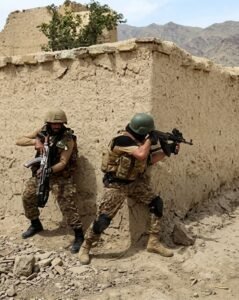
Following the Taliban takeover of Afghanistan in 2021, the country’s territory was effectively converted into a sanctuary ecosystem for multiple terrorist groups, as confirmed by UN Monitoring Team reports. The close operational association between BLA, ISK, and Al-Qaeda directly engages the provisions of UNSC Resolution 2368, which mandates the freezing of assets and the imposition of arms embargoes on individuals and organizations associated with Al-Qaeda and ISIL. When BLA’s operational footprint intersects with ISK networks in Afghanistan, and when its weapons supply chains run through Taliban-administered territory, the Al-Qaeda and ISIL association test is not a distant legal abstraction but it is a matter of connecting documented facts that Pakistan’s supplemented dossier will place squarely before the Committee.
Beyond the Al-Qaeda association threshold lies an equally compelling legal basis for UN action- BLA’s systematic violations of the Geneva Conventions and International Humanitarian Law. A foundational principle of IHL is the Principle of Distinction which obligates to differentiate between combatants and non-combatants at all times. BLA does not observe this principle. The Jaffar Express hijacking in March 2025, in which over 380 civilian passengers were held hostage and dozens killed; the Karachi attacks targeting civilian infrastructure; the Chaman Phatak suicide bombing in every case, innocent lives were deliberately taken without any attempt to distinguish between military and civilian targets.
More disturbing is the BLA’s systematic weaponization of women as suicide bombers, a tactic that violates IHL norms prohibiting the compulsion of civilian participation in hostilities and cynically manipulates the protections that the Geneva Conventions extend to women. This pattern is not incidental but it is doctrinal and borrowed from the operational playbook of other terrorist organizations such as Al Qaeda and ISIL.
It is a high need of the time that the Diaspora fundraising networks in the United Kingdom, Canada, and parts of the European Union sustain BLA’s operational capacity across borders should be contain to dismantle its operations. Australia’s May 2026 counter-terrorism financing sanctions explicitly targeted this dimension, stating the objective of cutting off financial support to prevent BLA from funding operations and recruitment.
The Security Council’s own press statement in February 2026 condemned BLA by name after its coordinated attacks across Balochistan killed 48 Pakistani nationals, including women and children. A group condemned by the Council itself cannot indefinitely escape the Council’s sanctions architecture. Pakistan successfully pursued the TTP’s 1267 listing in 2011 through patient, evidence-driven multilateral diplomacy. It will pursue BLA’s listing with the same patience, the same evidentiary discipline, and the same determination. The blocking states cited an insufficient linkage to the Al-Qaeda/ISIL association test — a solvable evidentiary problem, not a principled objection. Pakistan will solve it.
In a nutshell, the evidence against the BLA reflects a sustained threat to regional and international peace, already acknowledged through multiple national legislations. The UN Security Council must uphold its mandate under Article 24(1) by ensuring that procedural delays do not override clear security realities. A complete 1267 listing is therefore a necessary step toward global efforts against terrorism.