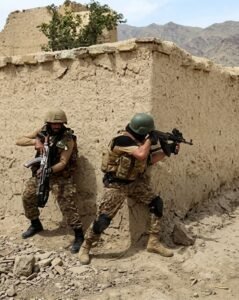
On the evening of June 27, 2026, terrorists launched a coordinated attack on the Rangers headquarters in Gulistan-e-Johar, Karachi. The assault began when a bomb-laden vehicle carrying 150 to 200 kilograms of explosives smashed into the main gate and detonated. The powerful blast breached the perimeter and created a large opening. Armed gunmen immediately rushed through the gap. The terrorists used a well-planned combination of a vehicle-borne bomb and small arms fire.
Following the attack, the Jamaat-ul-Ahrar claimed responsibility for the attack which is a splinter faction of the banned Fitna-ul-Khawarij organization. During the counter-operation, security forces captured the injured terrorist Osman Ali.
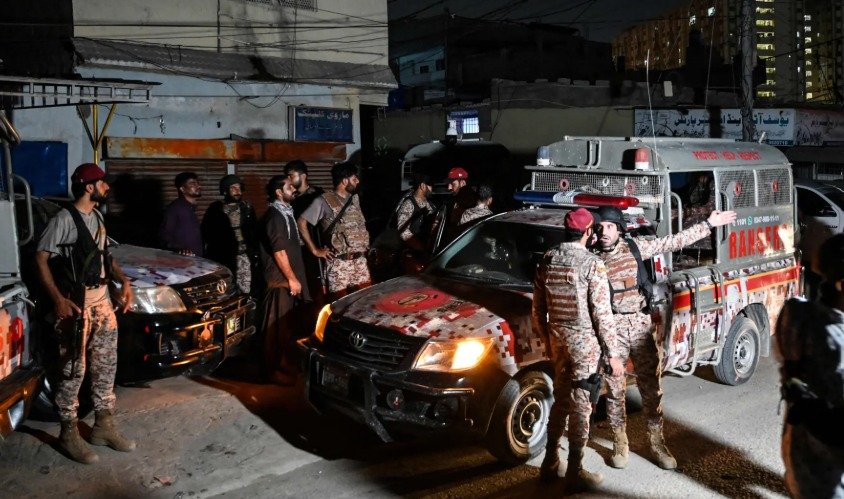
During interrogation, Osman Ali named his accomplices: Abdul Hadi from Bajaur, Janan, and Umar Farooq. He identified their commander as Ahrar Maulvi and their trainer as Umar Qari, who had prepared them in the mountains of Afghanistan. Abdul Hadi had facilitated their infiltration through Waziristan into Pakistan.
Afghanistan has become a safe haven for terrorist groups. These groups openly run training camps and plan attacks against Pakistan from Afghan territory. They exploit weak governance and mountainous regions to recruit, train, and launch militants across the border. This repeated use of Afghan soil poses a direct and continuous threat to Pakistan’s national security.
Pakistan responded with speed and strength. On June 28, 2026, Pakistani forces launched Operation Ghazab-lil-Haq. The military struck directly into Afghan territory and targeted the terrorist training camps and bases in Paktia, Paktika, and Kunar provinces.
The results were decisive. Pakistani troops eliminated 29 terrorists. They destroyed multiple weapons caches and completely dismantled training facilities and infrastructure. The operation proved that Pakistan possesses accurate intelligence and the military capability to strike terrorists across the border.
The United Nations Assistance Mission in Afghanistan (UNAMA) verified Pakistan’s claims. This international confirmation established that the strikes were based on solid, verified intelligence.
Operation Ghazab-lil-Haq sent a clear message that Pakistan will no longer tolerate Afghan soil being used as a launchpad for attacks on its citizens. The operation effectively answered the immediate threat and punished those responsible.
However, military action alone is not enough. Pakistan must build a comprehensive long-term strategy. The country will strengthen border defenses to stop infiltration and improve monitoring at crossing points.
Pakistan will continue to pressure the Afghan government to dismantle these terror camps. If Afghanistan fails to control its territory, Pakistan will take necessary measures to protect its people. Future operations remain an option as long as Afghan sanctuaries threaten Pakistan’s security.
Conclusively, the military strikes under Operation Ghazab-lil-Haq demonstrate Pakistan’s firm commitment to the war against terrorism. Pakistan has shown it possesses both the intelligence and the will to hunt terrorists wherever they hide. The three brave soldiers who sacrificed their lives on June 27 did not die in vain. Their blood exposed the enemy network and strengthened national resolve. Pakistan will continue this fight with full determination until the factories of terrorist are completely dismantled and the nation’s security is fully secured.