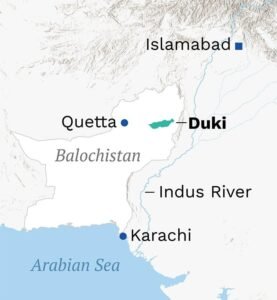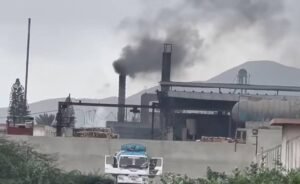
The banned Baloch Liberation Army’s latest attack in Duki exposes once again the broader scope of its terrorism. In Nana Sahib Ziarat’s Palri area, the group targeted a construction company’s camp, killing a civilian security guard, injuring two people, abducting 12 workers and setting construction machinery on fire.
According to police, BLA terrorists exchanged fire with civilian security guards during the attack. Security guard Mohtajur Rehman, a resident of Khyber Pakhtunkhwa, was killed, while security guard Imran Wazir and passerby Latif Tareen were injured. The abducted workers included 10 from Punjab and two local residents. Police, Frontier Corps and other security agencies subsequently launched a search operation to locate the attackers and recover the workers.
The identity of the abducted workers is particularly significant. When workers are selected on the basis of their identity, terrorism becomes an instrument of identity-based violence. These were labourers working at a construction site, not combatants. Their presence in Duki was tied to employment and economic activity. Targeting them because of where they came from deepens divisions between communities and threatens the movement of Pakistani workers across the country.
The burning of construction machinery further reveals the nature of the attack. The objective was not limited to killing or abducting individuals. Development itself was a target. Roads, construction projects, mining operations and other economic activities depend on workers being able to operate without fear. Attacks on these activities disrupt employment, discourage investment and weaken economic opportunities for local communities.

Duki has already experienced the devastating consequences of such violence. The district has previously witnessed deadly attacks on coal miners and mining facilities. In October 2024, at least 20 coal miners were killed when armed attackers targeted a private coal mine in Duki, while mining machinery was also set on fire. The incident demonstrated how terrorist violence can directly disrupt an economic sector that provides livelihoods to thousands of workers.
The recurrence of attacks against mining and construction activity therefore cannot be viewed as isolated incidents. They form part of a pattern in which civilian economic activity becomes a target of terrorism.
The geographical overlap between BLA and TTP activity in parts of northern Balochistan also raises an important security question. Despite differences in ideology and organisational structure, terrorist groups can develop tactical relationships, provide facilitation or exploit the same networks and operating environments. Any evidence of coordination, logistical support or mutual facilitation deserves serious scrutiny.
This matters because terrorism in Balochistan cannot be understood solely through the lens of individual attacks. The wider objective is also to create insecurity around economic activity, discourage workers from entering affected areas and undermine the state’s ability to maintain normal civilian life.
The BLA’s violence ultimately threatens the very people and economic opportunities it claims to represent. A construction worker from Punjab and a local labourer have the same basic right to earn a living without becoming targets of terrorism. A development project is not a military target, and a worker’s provincial identity cannot make him a legitimate target.
Duki therefore presents a clear choice between two competing realities: economic activity, employment and development on one side, and violence, fear and destruction on the other. Burning machinery, abducting workers and killing civilians does not advance public welfare. It is terrorism directed against the state, the people, development and social cohesion.