
On 24 July 2026, the Supreme Court of Pakistan delivered a significant ruling that resolved an important constitutional question regarding jurisdiction in National Accountability Bureau cases. A three-member bench comprising Justice Muhammad Ali Mazhar, Justice Musarrat Hilali, and Justice Shahid Bilal Hassan clarified the appropriate forum for appeals and related bail applications in light of recent constitutional and legal developments.
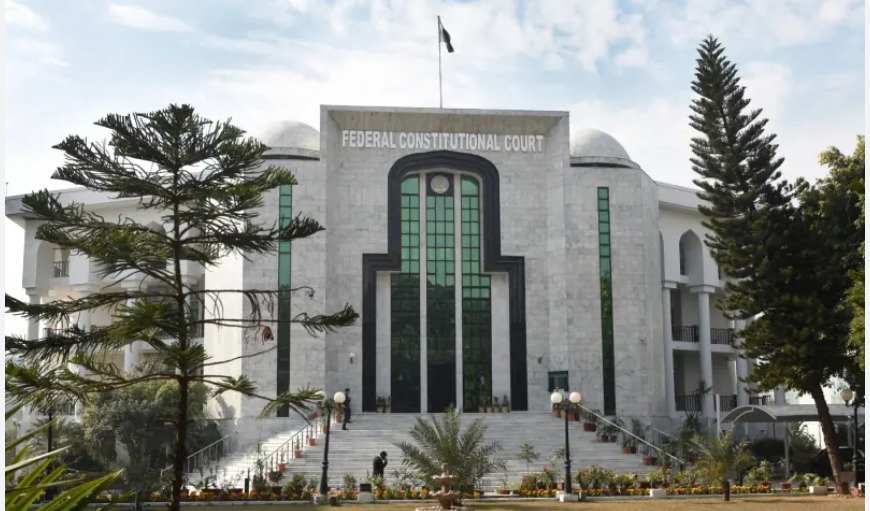
The issue emerged after the Twenty Seventh Constitutional Amendment, which led to the establishment of the Federal Constitutional Court. This shift was further reinforced on 5 March 2026 when Section 32 A was added to the National Accountability Ordinance. Under this provision, a convicted individual affected by a High Court decision, or the Prosecutor General Accountability on the direction of the NAB Chairman, may file a second appeal before the Federal Constitutional Court within thirty days.
The central question before the Court was whether the Supreme Court could hear a bail application when the main appeal in a NAB case had already fallen within the jurisdiction of the Federal Constitutional Court. Counsel for the accused argued that bail is an independent matter and not explicitly covered under Section 32 A, which only refers to second appeals. On the other hand, the Attorney General and NAB maintained that all proceedings arising from the same case must remain within a single judicial forum to avoid legal inconsistency.
In its detailed thirty-page judgment, the Supreme Court held that a combined reading of Article 175F clauses along with Sections 32 A of the National Accountability Ordinance, makes it clear that the Federal Constitutional Court is the proper forum for second appeals as well as all related pending proceedings in NAB cases. The Court emphasized that a bail application is not an independent or detached proceeding but rather a supplementary matter that arises directly from the main case.
The Court further observed that allowing the main appeal to proceed before the Federal Constitutional Court while a bail application is heard by the Supreme Court would create parallel proceedings, legal uncertainty, and the risk of conflicting decisions. Such an approach would undermine judicial consistency and procedural coherence.
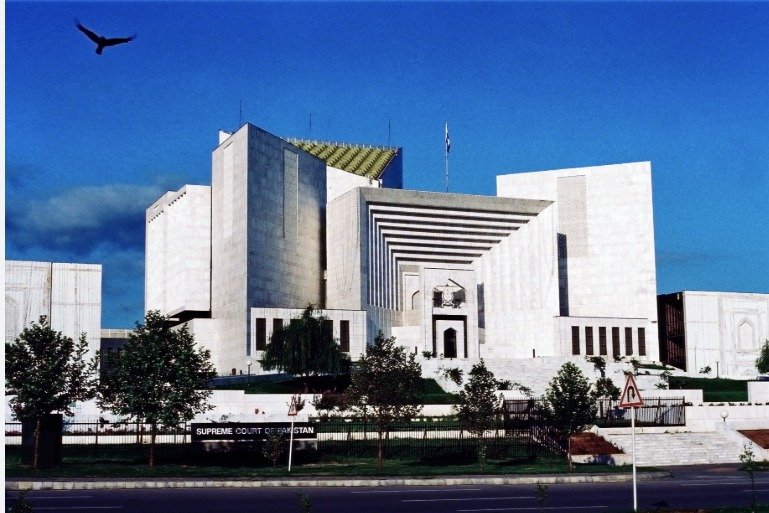
A key principle laid down in the judgment is that jurisdiction cannot be determined by the preferences of the parties, past practices, or public pressure. The Court made it clear that jurisdiction flows strictly from the Constitution and the law. Even if no objection was raised in previous cases, that cannot confer jurisdiction upon a court where it no longer exists under the current legal framework.
The ruling should not be interpreted as an institutional conflict between the Supreme Court and the Federal Constitutional Court, nor should it be viewed through the lens of any individual case or political context. Rather, it establishes a uniform legal principle applicable to all parties, including NAB, the prosecution, and accused persons. If the law designates the Federal Constitutional Court as the final appellate forum in NAB matters, no party can choose an alternative forum based on convenience or expected outcomes.
The broader message of the judgment is that a strong judiciary is not one that retains every matter within its own domain, but one that respects both its authority and its constitutional limits. Judicial independence is not only about standing firm against external pressures, but also about adhering faithfully to constitutional boundaries. Through this decision, the Supreme Court has reinforced the principle that one case must proceed within one coherent forum, ensuring clarity, consistency, and the rule of law.