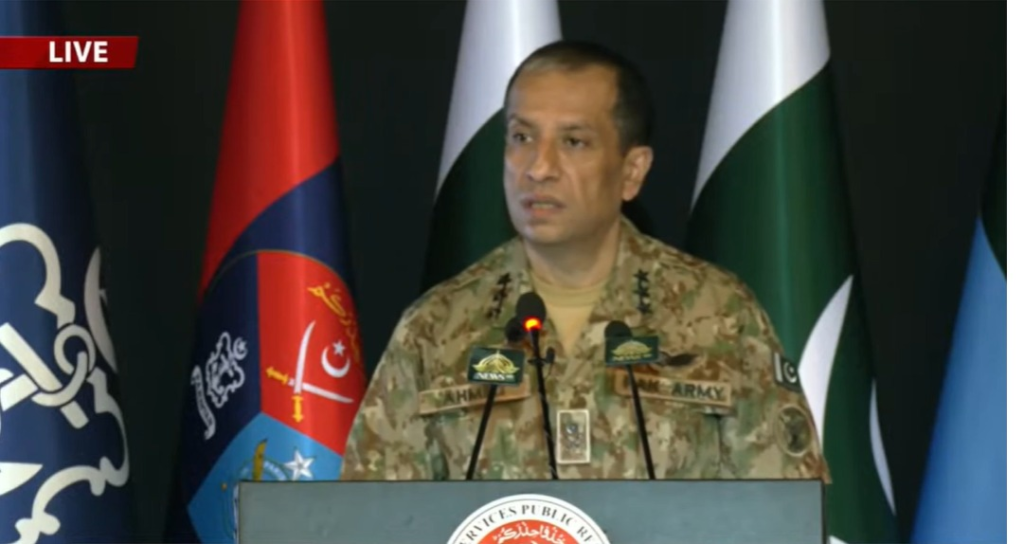
A deliberate and multi layered propaganda campaign continues to distort the reality of Balochistan. According to the detailed briefing by Director General ISPR Ahmed Sharif Chaudhary, Balochistan has been subjected to four different strands of propaganda. Each strand is designed to manufacture grievance, sustain alienation, and justify violence. A closer examination of facts reveals that these narratives are instruments of disruption rather than reflections of reality.
The first strand of propaganda commonly used against Balochistan is the claim of chronic deprivation. Propagandists assert that the province has been systematically denied development, education, and basic facilities. However, the record reflects a different reality. Gwadar alone hosts three universities, four education colleges, 318 schools, a major Pak China Friendship Hospital, a District Headquarters Hospital, multiple Basic Health Units, an international airport, a deep-sea port, expressways, industrial free zones, and a cricket stadium. Turbat also has two universities, six colleges, cadet colleges including one for girls, hundreds of schools, multiple medical facilities, a teaching hospital, and an international airport. No comparable city of similar size elsewhere in Pakistan matches this concentration of infrastructure.
The broader picture is equally revealing. In 1947, Balochistan had only 114 schools. Today, the number has grown to 15635. There are now 12 universities, five medical colleges, 145 colleges, 13 cadet colleges, and 321 technical institutes. Health infrastructure has expanded from three major hospitals and six dispensaries in 1949 to 13 major hospitals, 18 teaching hospitals, 36 District Headquarters Hospitals, 756 Basic Health Units, and specialized cardiac, TB, and dialysis centers. The road network has increased from 375 km in 1939 to over 24443 km today, including more than 4400 km of highways. The per capita budgetary allocation for Balochistan exceeds Rs 75000, higher than any other province, including Punjab. These facts directly challenge and weaken the narrative of deprivation.
The second strand claims that the people of Balochistan lack genuine political representation. However, the province operates under the same constitutional and electoral system as the rest of Pakistan. Elections produce patterns of continuity and competition similar to Punjab, Sindh, and Khyber Pakhtunkhwa. When these representatives win, the system is accepted as democratic, while unfavorable outcomes lead to the same system being labeled undemocratic. This selective criticism suggests that the issue is not the absence of representation, but rather the erosion of traditional elite control. The underlying demand appears to be the preservation of a status quo in which a narrow class retains authority over the province’s resources and people.
The third strand of propaganda revolves around the issue of missing persons. Figures ranging from 5000 to 25000 are frequently circulated without verification. A permanent Commission of Inquiry on Enforced Disappearances, headed by a retired Supreme Court judge and supported by district level presence, has been operational since early 2010. The Commission has received 10901 cases, of which 9372 have been disposed of. Approximately 5000 individuals have returned home, while others have been traced to jails. A smaller number have been confirmed deceased. A significant portion of the remaining cases were found to be misreported or baseless. In Balochistan specifically, the number of verified cases is far lower than the inflated figures often presented publicly. Many names listed as missing have later been identified as individuals involved in terrorist organizations. Groups such as BYC, PAANK, HRCB, and Baloch Voice for Justice continue to label individuals as missing, including those who either never existed or were later found to be associated with terrorist organizations, as seen in cases like Bilal Shahwani, Saadullah, and Attaullah. This demonstrates how the missing persons narrative is used to mislead the public and provide cover for terrorist organizations.
The fourth strand involves the transformation of terrorism itself into propaganda content. Terrorists deliberately target civilians, laborers, fuel tankers, shops, and police stations. These attacks are then recorded and circulated on social media, amplified through coordinated networks, and presented as evidence of chaos and state failure. The objective is to generate visual material that can influence external audiences and domestic actors who seek to portray Balochistan as ungovernable. In this context, terrorism serves a dual purpose. It inflicts damage while simultaneously manufacturing a false narrative of persistent security failure.
These four strands include deprivation, lack of representation, missing persons, and terrorism as propaganda. They form a coherent and interlinked narrative framework in which each strand reinforces the others. Together, they aim to preserve elite privilege, obstruct genuine development, and keep Balochistan in a state of instability.
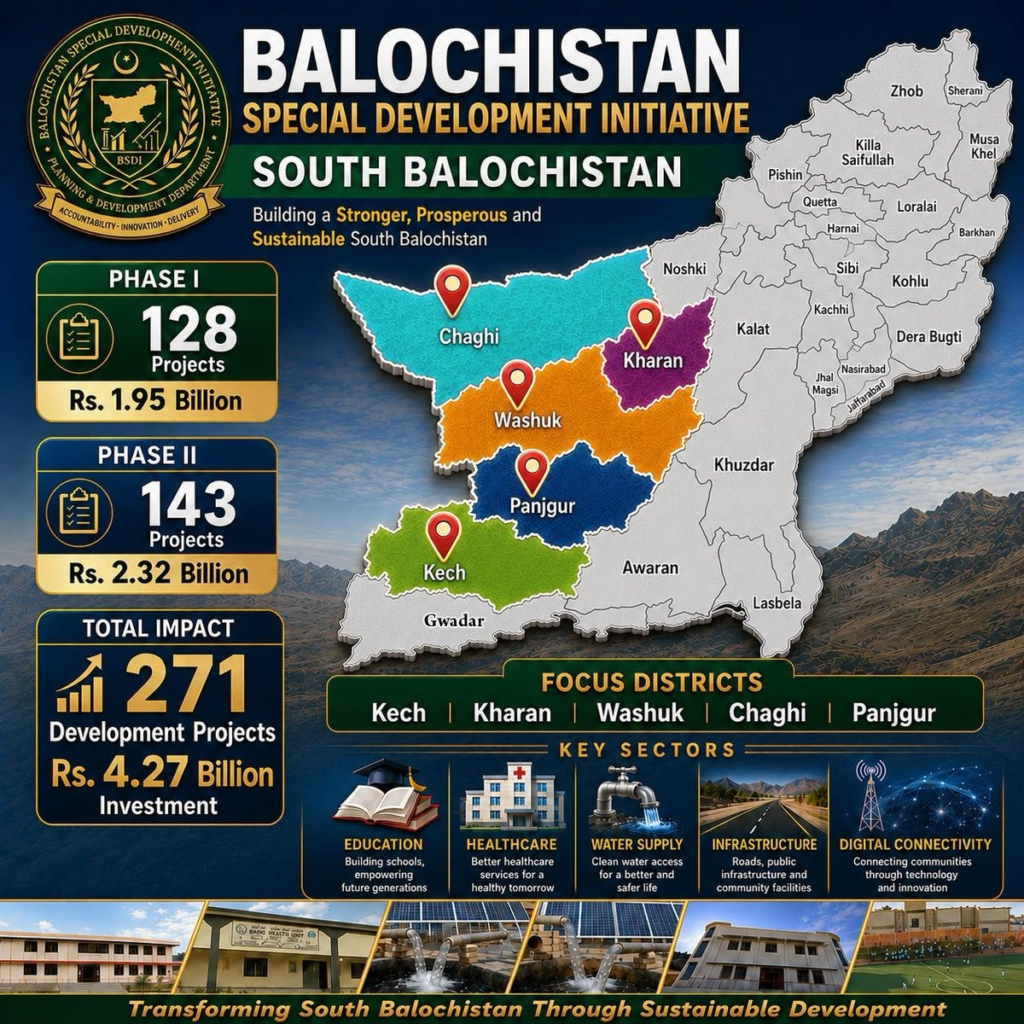
However, the facts present an alternative reality. Investment is increasing, and infrastructure is expanding, particularly in areas such as Panjgur and Turbat. Initiatives like the Balochistan Special Development Initiative are contributing to economic growth. Youth are being trained in technology and vocational skills. Security forces continue to conduct intelligence-based operations targeting terrorist networks. Most importantly, the people of Balochistan themselves are increasingly rejecting these propaganda narratives.
Balochistan today stands at a critical juncture where development initiatives, improved connectivity, and youth empowerment are beginning to reshape its trajectory. While challenges remain, the deliberate distortion of reality serves only those who benefit from instability. The way forward lies in strengthening institutions, continuing development efforts, and countering misinformation through transparency and evidence.
Ultimately, the people of Balochistan are not passive subjects of these narratives. They are active stakeholders in their future. As awareness grows and opportunities expand, these propaganda constructs will continue to lose credibility, paving the way for a more stable, prosperous, and integrated Balochistan.