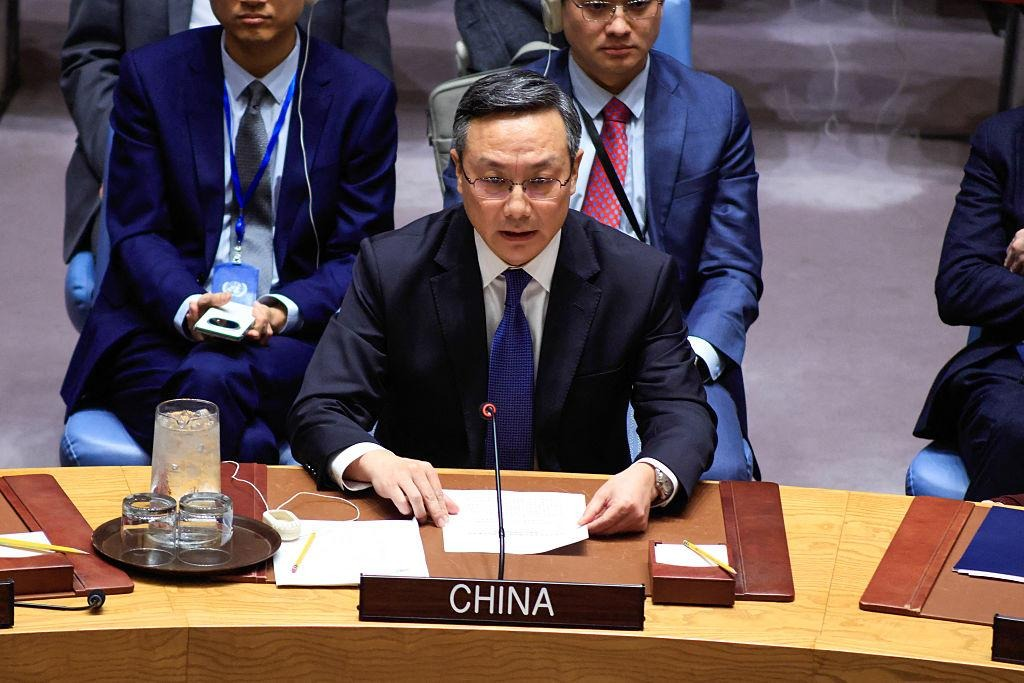
At a recent United Nations Security Council meeting on threats to international peace and security caused by terrorist acts, China called for the Balochistan Liberation Army (BLA) and its Majeed Brigade to be designated under the UN sanctions regime. Beijing also condemned the recent terrorist attack in Pakistan, called for stronger international support for Pakistan’s counterterrorism efforts, and warned that terrorist groups operating from Afghan territory continue to pose a serious regional threat.
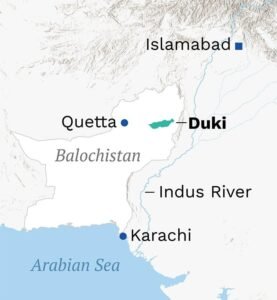
The BLA poses a security threat that extends beyond Pakistan’s domestic environment. The organization has carried out suicide attacks and targeted civilians, security personnel, infrastructure, and Chinese nationals and projects in Pakistan. Its Majeed Brigade has conducted high-profile suicide operations like Jaffar Express Attack, Chaman Phatak attack. This demonstrated the group’s ability to execute complex terrorist operations with wider security implications.
China’s latest position at the Security Council builds on earlier diplomatic efforts. In September 2025, Pakistan and China jointly sought the designation of the BLA and Majeed Brigade under the UN Security Council’s 1267 sanctions regime. The proposal was subsequently placed under a technical hold by the United States, United Kingdom, and France. China’s renewed call maintains Beijing’s push to bring the BLA and Majeed Brigade under the UN sanctions framework.
The United States has also taken action against the organisation. In August 2025, Washington designated the BLA and Majeed Brigade as Foreign Terrorist Organizations. The designation followed years of US concern over BLA terrorism, including attacks affecting Chinese nationals and interests in Pakistan. Pakistan’s diplomatic efforts, the US designation, and China’s continued advocacy at the UN have placed the BLA firmly within the international counterterrorism agenda.
UN designation would impose the measures prescribed under the applicable Security Council sanctions regime, including restrictions targeting financial assets, international travel, and access to arms where applicable. These measures would constrain the organisation’s resources and operational space and make it harder for the BLA to maintain external networks.
The significance of these measures becomes clearer when viewed alongside the wider environment in which terrorist organizations operate. Pakistan has repeatedly raised concerns over the use of Afghan territory as a sanctuary by terrorist groups and has linked such sanctuaries to the ability of terrorist networks to plan, reorganize, and facilitate attacks across the border.
Islamabad has told the Security Council that terrorist groups, including the BLA and Majeed Brigade, use sanctuaries on Afghan soil to support cross-border terrorist activity. Afghan sanctuaries allow terrorist organisations to preserve recruitment, financing, and operational structures beyond the reach of Pakistani authorities. They provide terrorist networks with space to reorganise and support attacks even when security operations disrupt their activities inside Pakistan.
China’s warning that Afghanistan must not again become a safe haven for terrorism reinforces the need to address both terrorist organisations and the environments that enable them to operate. A sanctions regime can restrict the resources and movement of designated groups, but sustained counterterrorism efforts also require action against the networks and safe havens that allow them to survive.
The convergence among Pakistan, the United States, and China has therefore become increasingly significant. Pakistan has consistently raised the BLA threat internationally. The United States has designated the BLA and Majeed Brigade as Foreign Terrorist Organizations. China continues to push for their inclusion in the UN sanctions regime.
The BLA’s record of suicide terrorism, attacks on civilians and security personnel, targeting of Chinese interests, and cross-border activities makes it a threat that extends beyond national borders. China’s renewed call places the focus on enforcement. UN designation, disruption of financial and operational networks, and action against the environments that enable terrorist groups to operate must work together to constrain the BLA’s ability to sustain terrorism.