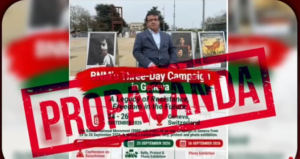
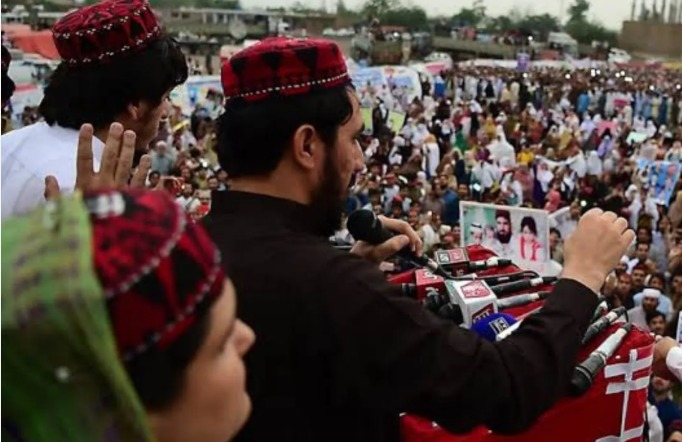
The Pashtun Tahafuz Movement (PTM) presents itself as a grassroots movement committed to protecting Pashtun rights and addressing grievances arising from conflict, displacement, and insecurity. Yet the movement’s broader political rhetoric warrants scrutiny when legitimate concerns are increasingly framed through ethnic polarization, disputed historical narratives, and demands that challenge established territorial boundaries. The upcoming “One Nation, One Goal” event being organized by PTM in Colorado on August 15, 2026, provides an opportunity to examine not only the movement’s stated objectives but also the political narrative underlying its conception of Pashtun identity.
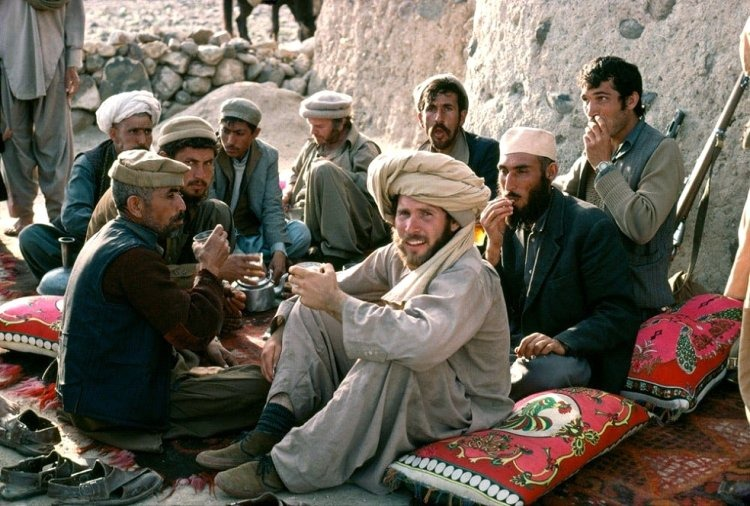
At the heart of this narrative is the idea that Pashtuns constitute a single political nation extending geographically from the Amu Darya to the Indus. Presented as a straightforward expression of ethnic unity, this formulation becomes considerably more complicated when examined against the region’s actual demographic and political history. The territory between the Amu Darya and the Indus has never been an exclusively Pashtun space. Northern Afghanistan, in particular, has historically been home to Tajik, Uzbek, Turkmen, Hazara and other communities. To describe this vast and diverse geography as a single Pashtun national homeland therefore reduces a complex social landscape to an exclusive ethnic claim.
The same problem arises when the Indus is incorporated into an imagined transnational Pashtun political geography. The Indus is not merely an ethnic or cultural marker; it runs through the sovereign territory of Pakistan, including Khyber Pakhtunkhwa and onward into Punjab and Sindh. Turning an existing international boundary into the basis for an expansive ethnic territorial claim moves the debate away from civil rights and toward irredentist politics. Cultural and linguistic connections across borders are entirely legitimate, but cultural continuity does not automatically create a political right to redraw internationally recognized boundaries.
The Durand Line occupies a central place in PTM’s narrative for precisely this reason. The existence of Pashtun communities on both sides of the Pakistan-Afghanistan border is an undeniable social reality. But divided ethnic communities are not unique to this frontier. Across South and Central Asia, international boundaries intersect with longstanding linguistic, tribal and cultural networks. Tajiks live across the Afghanistan-Tajikistan border, Uzbeks across the Afghanistan-Uzbekistan frontier, Turkmens across Afghanistan and Turkmenistan, while Persian and Balochi-speaking communities extend across the Afghanistan-Iran border. The existence of shared identities does not, by itself, invalidate state sovereignty. The political question is therefore not whether Pashtuns have cross-border cultural ties, but why those ties are selectively transformed into a territorial and political grievance against one particular state.
This selective activation of ethnicity is important because PTM’s rhetoric frequently presents Pashtuns in Pakistan as a politically marginalized community oppressed by a centralized state. Such a characterization overlooks the extent to which Pashtuns have participated in, and helped shape, Pakistan’s political and institutional life. Pashtuns have occupied senior positions in government, parliament, the judiciary, civil administration and the armed forces. Pashtun communities are deeply integrated into the national economy, while major urban centers such as Karachi have long been important destinations for Pashtun migration, entrepreneurship and commerce. Whatever genuine inequalities or governance failures exist in Pashtun-majority areas; they should not automatically be interpreted through an ethnic-oppression framework.
This distinction matters because genuine grievances deserve serious political treatment. The former Federally Administered Tribal Areas experienced decades of conflict, displacement, weak institutional access and socioeconomic deprivation. Communities affected by terrorism, military operations and instability have legitimate concerns regarding security, justice, compensation, missing infrastructure and economic opportunity. Recognizing these grievances does not require accepting an interpretation in which the entire state is portrayed as an ethnic adversary. In fact, reducing complex governance problems to ethnic confrontation can make meaningful reform more difficult.
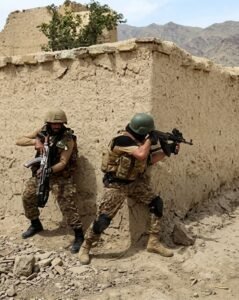
The security dimension further complicates PTM’s narrative. The tribal belt and Pakistan’s western frontier have suffered enormously from terrorism, particularly from organizations such as the Tehreek-e-Taliban Pakistan. Pashtun civilians, tribal elders, political workers, journalists and security personnel have themselves been among the victims of terrorism. Border fencing, checkpoints and intelligence-based operations are consequently not simply instruments of ethnic control; they are also components of a broader counterterrorism framework aimed at preventing terrorist infiltration, smuggling and cross-border movement.
There is also a broader political danger in framing Pakistan’s internal political disagreements through rigid ethnic binaries. Pakistan is a multiethnic federation in which Pashtuns, Punjabis, Sindhis, Baloch, Kashmiris and other communities have participated in national institutions for generations. They serve together in the armed forces, compete in elections, conduct business across provincial boundaries and share urban spaces throughout the country. Narratives that repeatedly cast one ethnic group against another risk transforming legitimate political grievances into permanent social antagonism.
The strongest alternative to ethnic polarization is not the denial of Pashtun identity but its constitutional expression. The 25th Constitutional Amendment provided a framework for integrating the former tribal areas into Khyber Pakhtunkhwa’s political, judicial and administrative structures. The long-term challenge is to ensure that this integration produces tangible improvements in education, healthcare, employment, infrastructure, justice and local governance. Border regions also require economic policies that allow legitimate trade and cross-border commerce to flourish while maintaining effective security controls. Modernized crossings and formal trade mechanisms can offer Pashtun communities economic opportunities that political confrontation cannot.
In short, credible politics of Pashtun rights must therefore distinguish between protecting people and politicizing territory. It must confront terrorism without ambiguity, pursue institutional reform without ethnic scapegoating, and address historical grievances without converting them into claims for geopolitical revision. The real test of any movement claiming to represent Pashtuns is whether it can translate grievances into constructive political solutions rather than perpetuating a narrative of permanent confrontation. Pashtun identity does not need irredentism to have political meaning, and Pashtun rights do not require the weakening of the constitutional and territorial framework in which millions of Pashtuns already participate.