The arrest of Marwais Safi, an Afghan national linked to Islamic State Khorasan Province, in Italy has brought renewed attention to a threat Pakistan has highlighted for years: terrorism operating from Afghan soil is no longer merely a regional security problem. Its networks and consequences can reach far beyond South Asia.
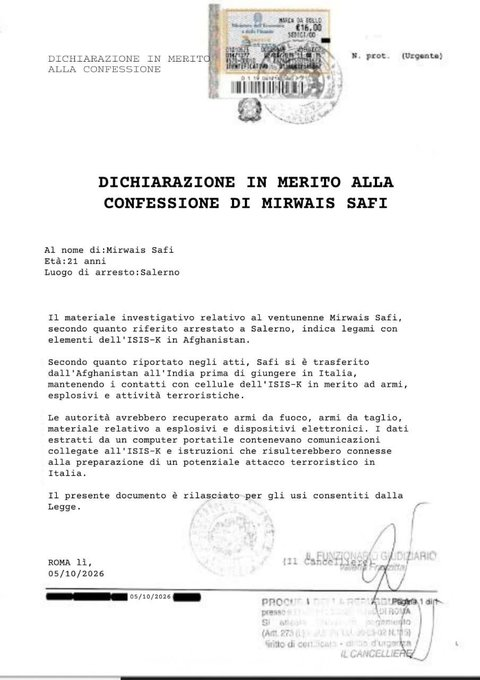
Safi was arrested in Cava de’ Tirreni, in Italy’s Salerno area, following an investigation involving DIGOS and the Central Directorate of Prevention Police. Italian intelligence had flagged his online activity involving weapons, explosives and military training material. Authorities recovered extremist publications, explosive-related manuals, knives, a machete, modified blank-firing pistols and blank ammunition.
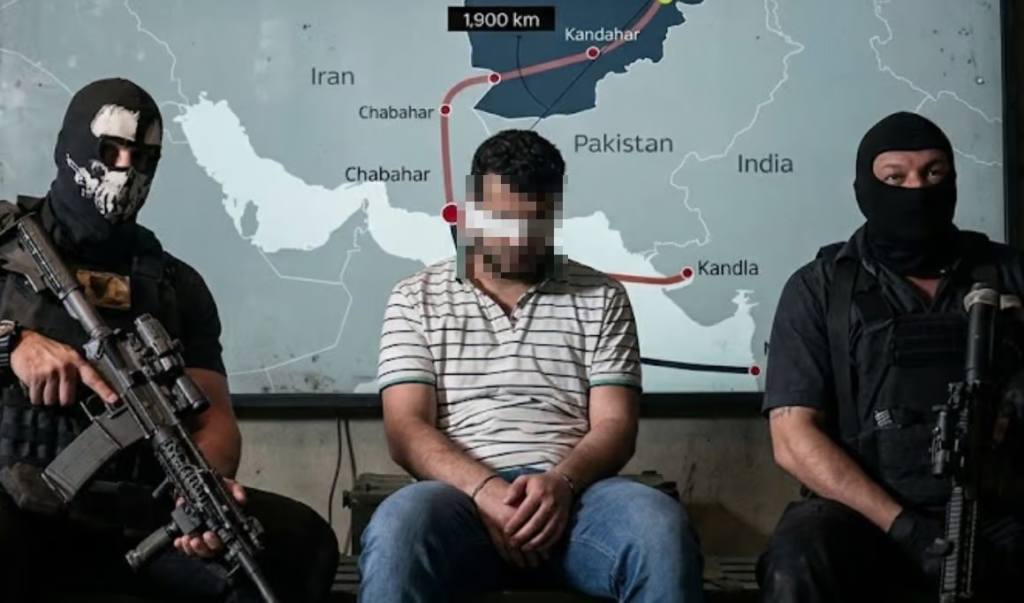
His reported journey from Afghanistan through India before reaching Europe adds another dimension to the case. The movement of a terrorist operative across multiple jurisdictions highlights the vulnerability of international transit and immigration systems to terrorist mobility.
The case reinforces a warning Pakistan has repeatedly placed before the international community: Afghanistan remains a source of terrorism that threatens regional and international security.
The 38th UN monitoring report has highlighted the continuing presence and operational capability of terrorist organisations in Afghanistan, including ISKP and other groups. Despite commitments by the Kabul regime, terrorist organisations continue to find space to operate, recruit, communicate and maintain their networks from Afghan territory.
For Pakistan, this threat is not theoretical.
Pakistan has suffered directly from terrorism emanating from across its western border. TTP has repeatedly exploited sanctuaries in Afghanistan to plan and facilitate attacks against Pakistan. ISKP and other terrorist organisations have also maintained networks capable of threatening regional stability.
Islamabad has therefore consistently called for terrorist sanctuaries on Afghan soil to be dismantled and for the Kabul regime to fulfil its commitments against terrorism.
Pakistan has also demonstrated that it is acting against these networks. The arrests of senior ISKP figures including Sultan Aziz Azzam and Sharifullah represent major counterterrorism successes and demonstrate Pakistan’s determination to disrupt terrorist organisations before they can further expand their reach.
Yet the international community cannot afford to treat individual arrests as isolated incidents.
When terrorist organisations retain territorial space, recruitment networks and operational infrastructure, their threat does not stop at the borders of the country where they are based.
Safi’s movement from Afghanistan through India to Europe demonstrates the wider challenge of terrorist mobility. The use of international transit routes allows terrorist operatives to exploit gaps in border controls, immigration systems and intelligence coordination.
The reported use of Indian territory as a transit route also raises serious questions about India’s screening mechanisms, visa procedures and security coordination. India must answer how an ISKP-linked terrorist was able to use its territory while travelling towards Europe.
This dimension deserves international scrutiny because terrorist mobility cannot be separated from the broader regional security environment.
Pakistan has repeatedly warned that terrorism originating from or facilitated through Afghanistan will ultimately threaten countries beyond Pakistan.
The country has paid an enormous price for cross-border terrorism. Pakistani civilians, soldiers and law-enforcement personnel have been targeted by terrorist organisations operating from sanctuaries across the border. Pakistan’s position has therefore remained consistent: terrorist infrastructure must be addressed at its source rather than after terrorists have already crossed international borders.
The international response must consequently extend beyond statements of concern. Intelligence sharing, border security, terrorist-financing controls, immigration screening and monitoring of extremist networks require stronger international coordination.
The Salerno arrest demonstrates why this matters.
What Pakistan has experienced for years is increasingly relevant to the wider international security environment. Terrorist sanctuaries in Afghanistan do not create a threat only for Pakistan. They create an ecosystem in which terrorist organizations can develop capabilities, move operatives and project violence across borders.
Pakistan has warned the world about this danger repeatedly.
The message is now straightforward: Afghan soil must not become a safe haven, training ground or launching pad for terrorism against Pakistan or any other country.