In the age of digital information warfare, television studios across the border have increasingly functioned as echo chambers for anti Pakistan propaganda rather than platforms for journalistic inquiry. A recent broadcast featuring Indian anchor Aashish Kaul alongside a young activist, Farah Baloch, serves as a textbook study in orchestrated disinformation. Designed to project an image of widespread institutional collapse and systemic oppression in Balochistan, the interview relies heavily on emotional manipulation, unverified statistics, and carefully scripted grievances. However, a rigorous inspection of the interview reveals not a genuine dialogue on civil rights, but a calculated geopolitical effort to validate external hostility, sanitize the horrific impact of regional terrorism, and undermine the sovereignty of the Pakistani state. The posture of the Indian anchor throughout the segment immediately betrays the motives behind the production. Rather than offering objective scrutiny or demanding verifiable evidence for extraordinary claims, the anchor acts as a theatrical facilitator for a prepackaged political agenda. Sensationalist headlines claiming tens of thousands of enforced disappearances are broadcast without context, cross examination, or factual verification.
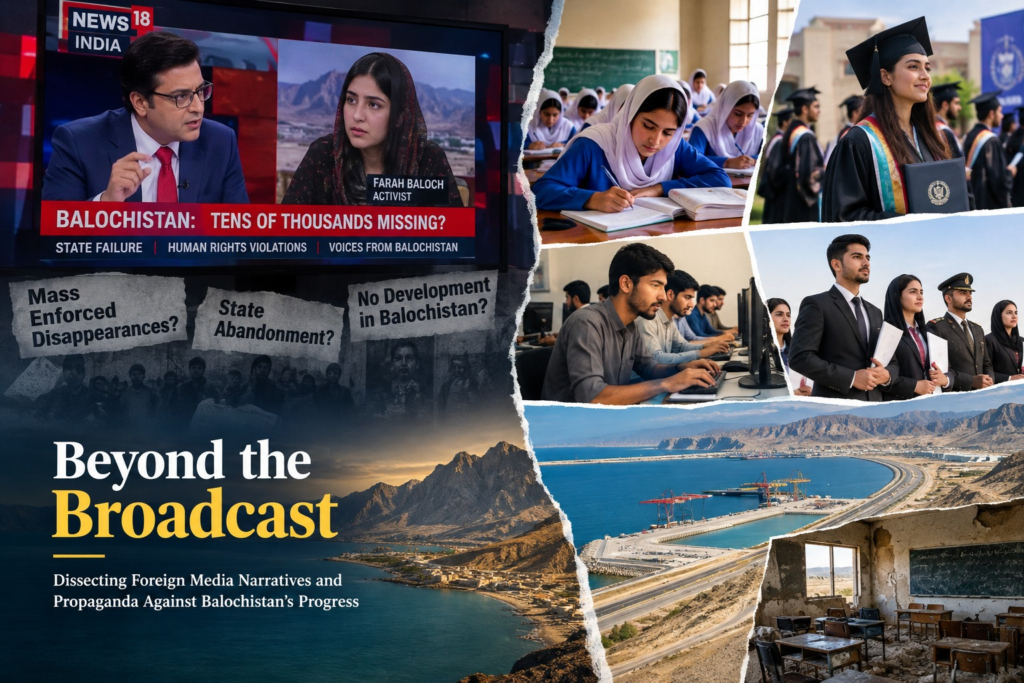
This editorial misconduct is far from accidental. Indian broadcast media has repeatedly weaponized local grievances in Pakistan to divert attention from its own severe human rights record and domestic state violence. By magnifying curated narratives of despair and completely ignoring the devastating acts of terrorism inflicted on innocent Baloch civilians by terrorist outfits, the media enterprise in India actively fuels instability under the guise of humanitarian advocacy. Equally concerning is the deliberate exploitation of impressionable young individuals who are positioned on international platforms to regurgitate hostility against their own homeland. In the interview, sweeping assertions regarding the complete absence of state institutions and civic infrastructure in Balochistan are presented as absolute truth. Yet, these claims are starkly contradicted by official statistical records and ground realities. The narrative that the state has abandoned Balochistan willfully ignores the massive expansion of public infrastructure over recent years. Today, Balochistan has approximately 14,709 government schools (as of July 2026), encompassing primary, middle, and high levels across its districts, with nearly 1.2 million students enrolled and over 80,000 teachers and staff. Earlier official figures from 2024–2025 placed the total around 15,000–15,270 schools, though a substantial share had been nonfunctional; recent drives have reactivated over 3,100–3,700 previously inactive schools (including roughly 81% of identified non-functional ones in key phases), bringing tens of thousands more children into education. These efforts are complemented by specialized higher education institutions, including around 11 public universities and others, plus medical colleges, nearby 185 colleges, an expanding network of about 12 cadet colleges/residential institutions, and vocational/TVET centers (including newly upgraded Centres of Excellence in modern technologies).
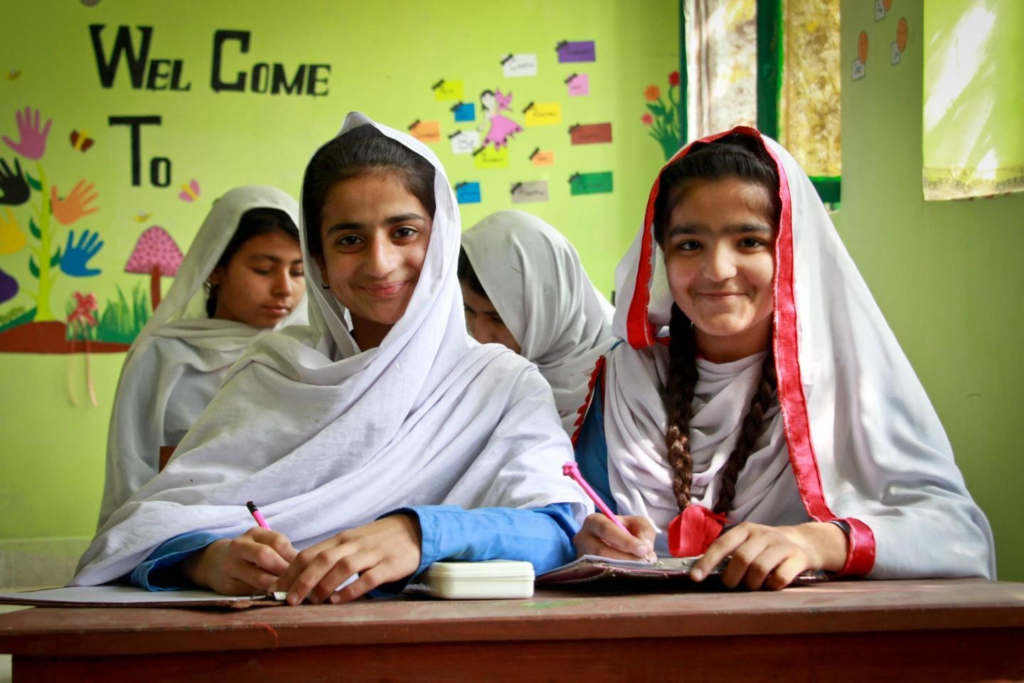
The Balochistan Education Foundation has established over 2,000–2,790 community schools (with more planned), particularly serving remote and underserved areas and enrolling well over 150,000 children. State education budgets have seen consistent increases, rising 15% to Rs 144 billion for FY 2026–27 (from about Rs 125 billion the prior year), with Rs 115 billion directed to school education, additional development funds for upgrades (including primary-to-middle and middle-to-high conversions), new teacher posts, and rural infrastructure rehabilitation. Percapita education spending in Balochistan ranks among the highest nationally. Priorities explicitly include rehabilitating rural schools, reactivating non-functional facilities, constructing additional classrooms, improving basic amenities, and expanding access for girls and young women through new girls’ colleges (such as the recent Mir Ghulam Qadir Girls College in Sui), female teacher recruitment, community schools, and targeted enrollment drives in previously underserved regions. Over the past two years, more than 786,000 children have been brought into the education system through these combined initiatives. Far from being deprived of opportunities, the Baloch youth are actively shaping the modern socioeconomic landscape of Pakistan. Thousands of students from Quetta, Turbat, Khuzdar, and Gwadar are currently pursuing higher education in premier national universities through dedicated federal and provincial scholarship initiatives. The Balochistan Education Endowment Fund (BEEF) has further supported more than 23,500 students across various levels, while a new provincial program offers fully funded overseas PhD scholarships to 10 outstanding Balochistan candidates each year at over 100 leading global universities. Specialized schemes also expand access in professional fields, including increased MBBS/BDS seats and law graduate scholarships.
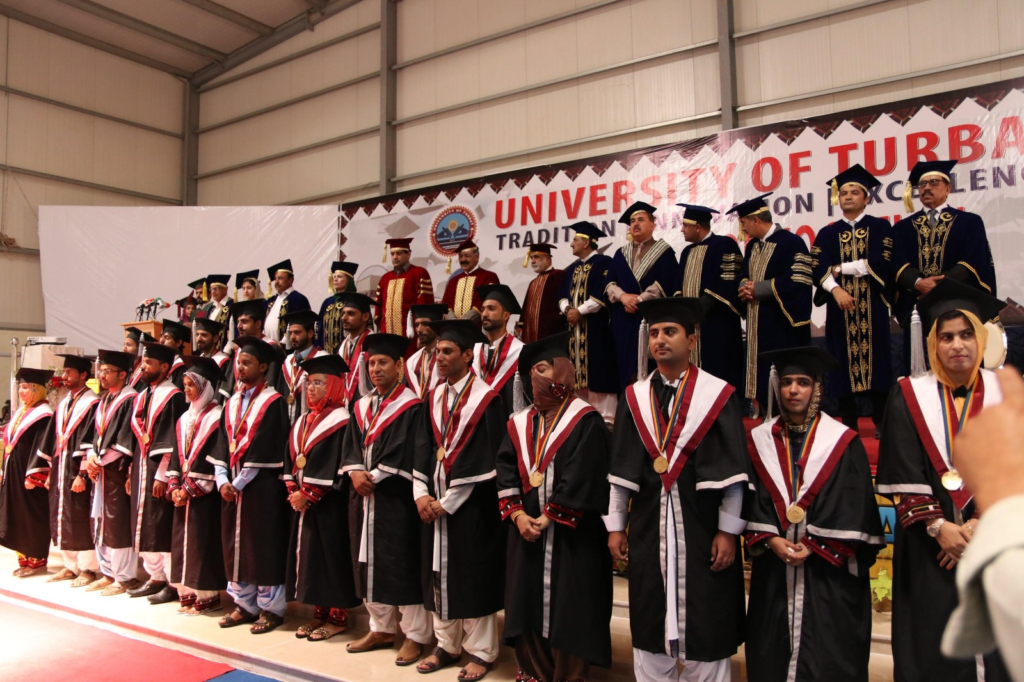
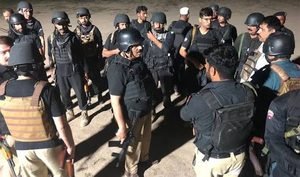
The successful integration of Baloch youth into civil administration, the armed forces, science, technology, and governance provides a clear counterweight to narratives of total institutional decay. In a historic milestone, Balochistan achieved its highest-ever representation in the 53rd Common Training Programme at the Civil Services Academy, accounting for nearly 40 percent of the batch (52 of 136 probationary officers), including 18 women, the largest provincial cohort and a notable advance in gender inclusion. Ongoing Frontier Corps recruitment prioritizes local Baloch candidates, while thousands of Baloch doctors, engineers, officers, and scholars serve with distinction: recent health-sector reforms alone include the simultaneous promotion of 1,269 doctors and the recruitment of thousands more medical professionals to strengthen service delivery across the province. When young individuals are coached to present an exaggerated picture of total institutional collapse, they obscure these documented success stories of Baloch professionals who contribute every day to Balochistan’s and Pakistan’s progress. Crucially, the narrative peddled in such media broadcasts entirely ignores the primary driver of socio-economic disruption in the province: foreign sponsored terrorism. Terrorist organizations, including the Baloch Liberation Army and the Baloch Liberation Front, have systematically targeted the very infrastructure meant to uplift the populace. These violent groups have repeatedly bombed schools, destroyed communication towers, assassinated dedicated teachers, and targeted innocent laborers working on development projects. To discuss Balochistan’s challenges without condemning the brutal reality of terrorism is to deliberately misrepresent the truth. The primary threat to peace, safety, and progress in Balochistan stems directly from terrorist organizations that seek to keep the local population impoverished and fearful to justify their violent existence. Pakistan has consistently demonstrated its resolve to confront terrorism while simultaneously advancing inclusive development. Massive investments in regional connectivity, the modernization of Gwadar Port, expanding health networks, and localized socio-economic support programs reflect an unwavering state commitment to the welfare of Balochistan. While legitimate governance challenges require continuous effort and transparency, they cannot be resolved through sensationalist propaganda sponsored by foreign adversaries. The state of Pakistan remains firmly committed to protecting its citizens, nurturing its youth, and eradicating the threat of terrorism. sensationalist talk shows and scripted interviews may generate digital headlines, but they cannot alter the undeniable reality of Balochistan’s ongoing journey toward peace, empowerment, and institutional strength.