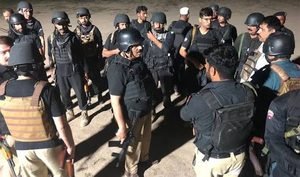
Pakistan’s rising terrorist violence has exposed a security challenge extending beyond its borders. During an interview with Asia One, retired Major General Tariq Rasheed highlighted the sharp increase in terrorist attacks, the presence of terrorist sanctuaries in Afghanistan, and the circulation of US-origin military equipment among terrorist networks. Together, these developments point to a regional security problem that Pakistan cannot address through domestic counterterrorism operations alone.
The reported figures illustrate the scale of the challenge. Terrorist attacks increased from 89 in 2021 to 699 in 2025, representing an almost eightfold rise in four years. The human cost has been equally devastating. According to the figures cited in the interview, terrorist violence killed 1,378 people and injured 2,672 in 2025. A further 1,232 deaths and 2,484 injuries were reported for 2026 up to the period covered by the interview. Khyber Pakhtunkhwa and Balochistan remain particularly exposed to attacks targeting security personnel and civilians.
The central concern is the combination of cross-border terrorist sanctuaries, access to advanced weaponry and the operational capacity to sustain violence inside Pakistan.
Afghanistan’s security environment has become a critical part of this equation. Pakistan has repeatedly raised concerns about the Tehreek-e-Taliban Pakistan (TTP) and other terrorist organisations operating from Afghan territory. The presence of groups including Al-Qaeda, Islamic State Khorasan Province (IS-K), the East Turkestan Islamic Movement (ETIM) and the Islamic Movement of Uzbekistan (IMU) further complicates regional security. United Nations reporting has also documented the presence of multiple terrorist organizations in Afghanistan, underscoring the wider implications of an unresolved security threat.
These concerns extend beyond the physical presence of terrorist groups. Safe havens facilitate recruitment, planning, logistics and cross-border movement, enabling organizations to sustain attacks while exploiting the limitations of territorial enforcement.
The proliferation of US-origin military equipment adds another dimension to this threat.
Following the withdrawal of international forces from Afghanistan in 2021, substantial quantities of military equipment remained in the country. Figures attributed to the Special Inspector General for Afghanistan Reconstruction (SIGAR) put the value of US-funded equipment left behind at approximately $7.12 billion. The inventory reportedly included around 168,000 rifles, 41,500 machine guns and more than 40,000 military vehicles, including approximately 12,000 Humvees.
Figures cited by Rasheed indicate that Pakistani authorities recovered 293 US-origin weapons from terrorists, including 208 M14 rifles, 53 M16 rifles, seven machine guns and four M24 sniper rifles. A 2025 Washington Post investigation was also cited in connection with the tracing of recovered weapons to supplies previously provided to Afghan security forces. According to the interview, 63 weapon serial numbers were shared with American authorities.
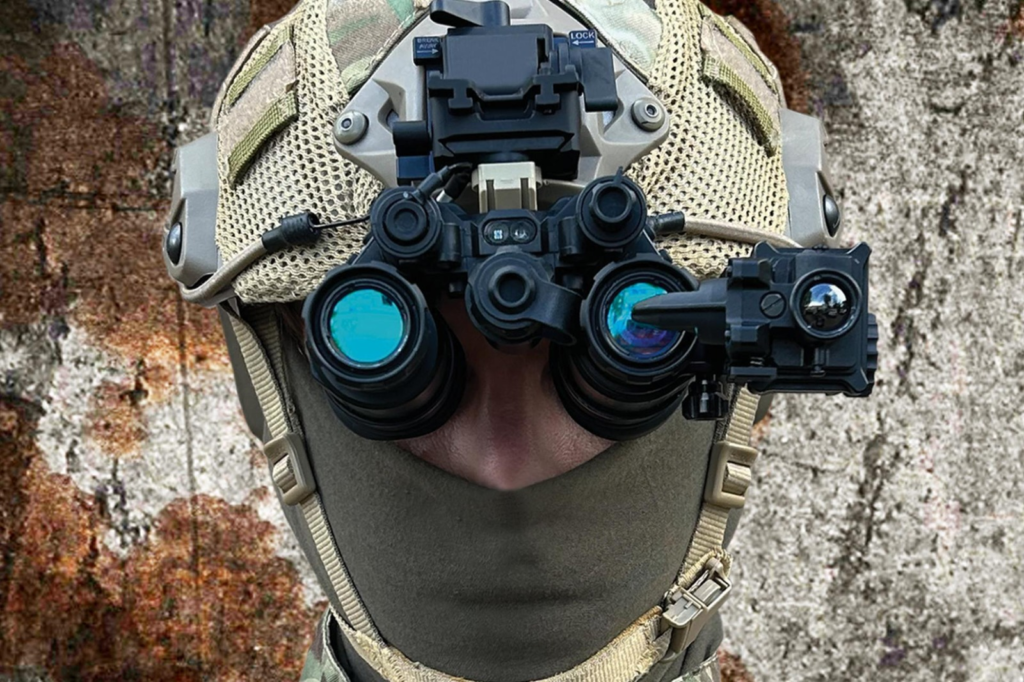
Modern rifles, sniper systems, grenade launchers, night-vision devices, thermal equipment and laser rangefinders can improve a terrorist organisation’s capacity to conduct attacks, observe security movements and operate under difficult conditions. The reported recovery of advanced equipment therefore raises concerns about the sources of supply and the networks responsible for its transfer.
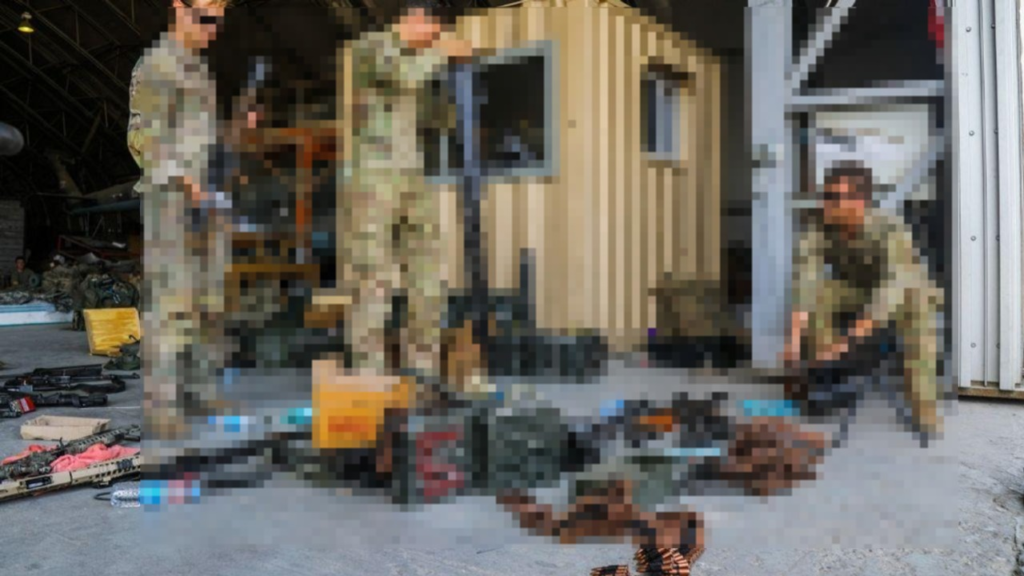
Weapons left behind after a military withdrawal can become a lasting regional security liability when effective control and accountability break down.
For Pakistan, the consequences are immediate. Security forces face terrorist networks that benefit from cross-border operating space and potentially improved access to military hardware. Domestic operations remain essential, but lasting progress also depends on disrupting the supply chains, logistical networks and external sanctuaries that enable terrorist violence.
The international dimension requires equal attention. The United States has a legitimate interest in tracing equipment originally supplied through its reconstruction and security programmes. Pakistan has grounds to seek greater cooperation on weapons identification, serial-number verification and the prevention of further diversion. The United Nations and regional powers, including China and Russia, can contribute through coordinated counterterrorism engagement and pressure on the Afghan Taliban to fulfil their commitments.
The Doha Agreement established commitments concerning the prevention of threats to the security of the United States and its allies from Afghan territory. The broader principle remains relevant to regional stability: Afghan territory must not serve as a base for terrorist attacks against neighboring countries.
Pakistan’s security forces continue to dismantle terrorist networks and protect civilians through sustained counterterrorism operations. However, the persistence of cross-border sanctuaries and the circulation of advanced US-origin weapons demand action beyond Pakistan’s borders. Terrorist infrastructure cannot be dismantled permanently while its networks retain safe havens, logistical support and access to military equipment.
The United States, China, Russia and the United Nations must move beyond expressions of concern and pursue concrete measures to trace diverted weapons, strengthen intelligence cooperation and press the Afghan Taliban to fulfil their counterterrorism commitments. Afghan authorities bear direct responsibility for preventing their territory from being used to plan and facilitate attacks against Pakistan. Continued tolerance of terrorist sanctuaries carries consequences for regional security and undermines every commitment to peace.
Pakistan will not allow foreign-based terrorist networks, armed with abandoned military equipment and operating from sanctuaries across its borders, to dictate its security or undermine its sovereignty. The international community must confront this threat with coordinated action and enforceable accountability. Terrorist sanctuaries must be dismantled, weapons diversion must be stopped, and those enabling cross-border terrorism must face sustained pressure. Regional stability depends on action against the infrastructure sustaining terrorism, not merely condemnation after every attack.