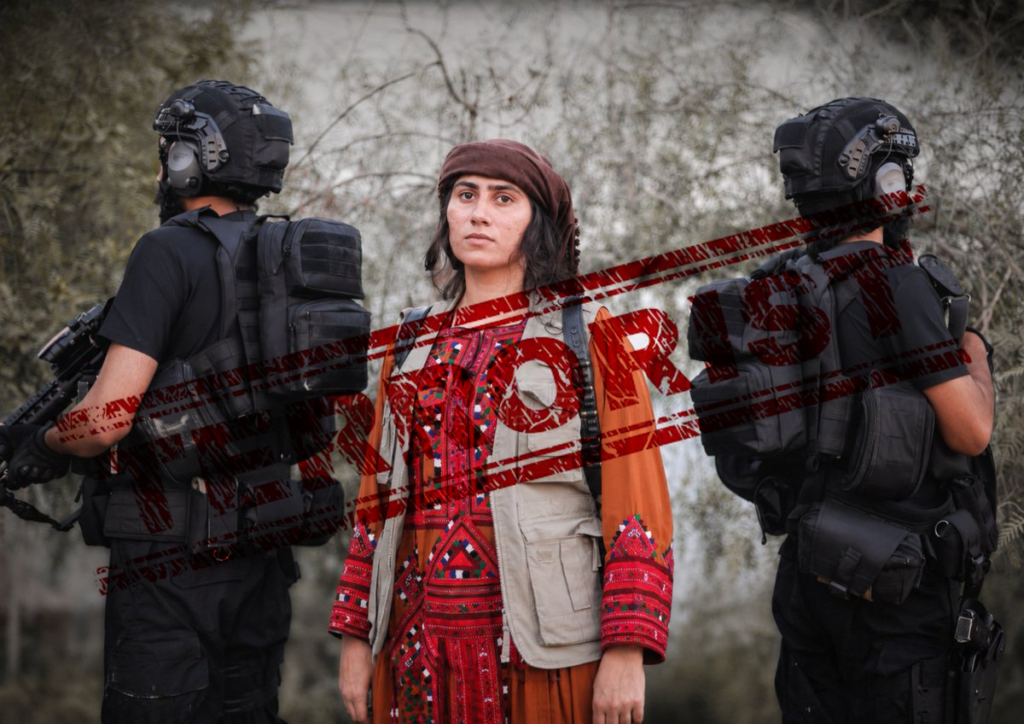
There is something deeply cynical about invoking the name of Mehnaaz, a figure woven into the fabric of Baloch poetic tradition and cultural memory, in the service of a terrorist organization’s propaganda. The Balochistan Post’s recent piece titled “From Mehnaaz to Shahnaaz: The Journey of Baloch Women’s Rebellion” attempts precisely this: to drape Shahnaaz Baloch, a BLA operative from Turbat presented as a commander in a staged BLA’s Hakkal Media video, in the literary and moral authority of Baloch womanhood stretching back centuries. It is a completely fabricated and propaganda narrative but beautifully constructed.
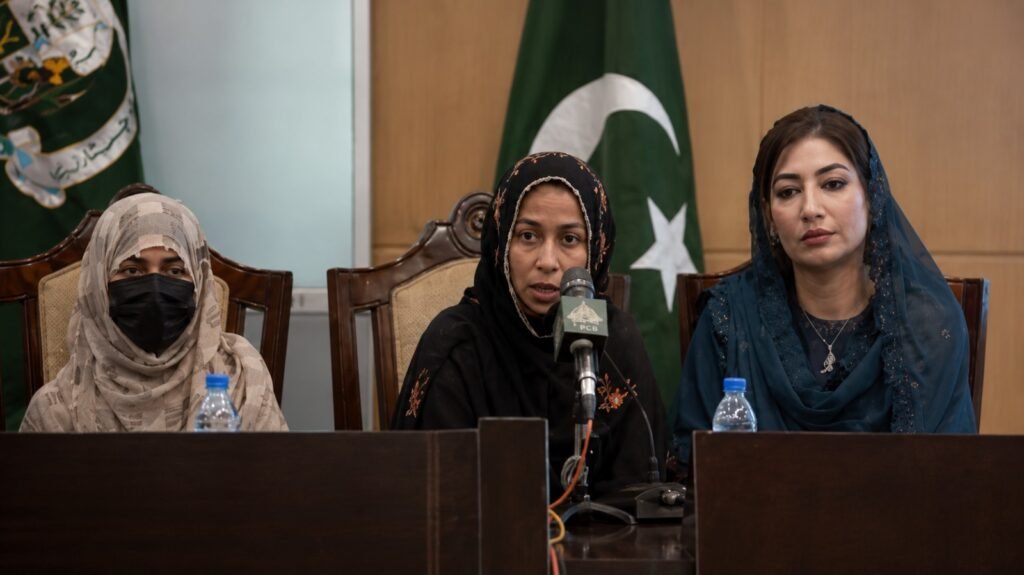
Shahnaaz’s family confirmed that they had no knowledge of any extremist activity or affiliation with a proscribed terrorist organization on her part. Her family held a press conference at the Turbat Press Club to publicly disassociate themselves from her entirely. Her mother, grandfather, and uncle stated that she had left for Oman while still a minor and the family had not been in contact with her for approximately twelve years. Her father had died when she was just nine months old. An organization that recruits a fatherless young woman, cuts her from her family for over a decade, trains her in Afghanistan, and then presents her in a propaganda video as a “commander” is not continuing a tradition of Baloch feminine resistance. It is manufacturing a product for international consumption, using a woman whose family does not even know her anymore.
Her family’s public disavowal itself speaks to something larger: that ordinary Baloch people, including the families of those the BLA claims as its own, have made their position clear. Peaceful, law-abiding Pakistanis who respect state institutions, in the words of Shahnaaz’s own relatives, is how they described themselves. The Balochistan Post’s romanticization of Shahnaaz as a symbol of collective Baloch feminine agency is contradicted by the collective Baloch family that stood before cameras and said: she does not represent us.
The literary framing deployed in the article, connecting Shahnaaz to the Mehnaaz of Baloch classical love poetry, is a propaganda technique with a documented operational purpose. The Wilson Center confirmed in January 2025 that the BLA’s primary recruitment mechanism for women is sexual blackmail: operatives create fake social media accounts, build trust over weeks, obtain compromising material, and then use that material as a weapon against women for whom family honor carries enormous social weight. Adeela Baloch, a WHO nurse who was exposed as the fifth female BLA operative, stated on record: “Terrorists seduce Baloch women by blackmail, which I am an eyewitness to.” These women are being coerced into compliance and then repackaged, after their deployment or death, as symbols of agency they never possessed.
The article’s title connects historical Baloch feminine courage to contemporary BLA operatives. But Mehnaaz and the women of Baloch poetic tradition were victims of patriarchal structures, not instruments of organizations that deliberately exploit patriarchal structures to trap and blackmail women into violence. If anything, the BLA’s recruitment model is the most refined contemporary expression of the very patriarchal weaponization of female honor that Baloch cultural poetry mourns. The BLA built an entire terrorism recruitment infrastructure around it calling themselves as liberators of Baloch women.
The deeper problem with the Balochistan Post’s framing is that it erases Baloch women’s actual voices in favor of a narrative constructed by a proscribed terrorist organization’s media arm. The Baloch women who have spoken on record, Adeela Baloch, Laiba from Khuzdar who was rescued before she reached her target, the minor girl from Sindh who publicly warned that the BLA’s practices violate Baloch cultural traditions of protecting women, are not given a chapter in this literary lineage. They existed, they survived, they spoke, and their testimony directly refutes the romance the article is selling.
Shahnaaz Baloch’s story is not the story of Mehnaaz. It is the story of what happens when a fatherless young woman is taken from her family at a formative age, disappeared into a foreign country, processed through an organizational machine that the UN Security Council has now twice condemned, and then produced for a camera twelve years later.