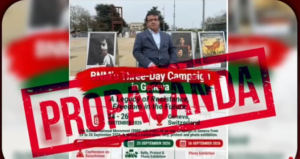
Let us begin where the conversation is rarely allowed to start: with a clear statement of what the Human Rights Council of Balochistan (HRCB) actually is. It is not a human rights organisation in any meaningful professional sense. It has no field presence. It employs no verified investigators. It publishes no methodology. It seeks no response from those it accuses. It operates from Sweden, thousands of miles from the events it claims to document.
What it does, systematically, monthly, with disciplined consistency, is produce propaganda output that serves the strategic communication objectives of the Balochistan Liberation Army: a terrorist organisation designated as a Foreign Terrorist Organization by the United States of America, proscribed by the United Kingdom since 2006, and banned across multiple jurisdictions.
This is not a rhetorical flourish. It is a factual characterisation that follows directly from examining HRCB’s record. Since its founding, HRCB has published monthly reports documenting alleged state abuses in Balochistan. In that same period, the BLA has conducted over 300 documented attacks, massacring ethnic Punjabi workers at highway checkpoints, bombing railway stations packed with civilian passengers, hijacking the Jaffar Express and holding 380 hostages, deploying women as suicide bombers, assassinating teachers and judges, killing musicians, coal miners, barbers, and pilgrims.

Not one of these attacks appears in any HRCB monthly report. Not one. An organisation that documents 124 alleged disappearances in a single month while recording zero terrorist attacks in that same month, in that same province, is not conducting human rights monitoring. It is conducting information warfare.
Effective propaganda infrastructure shares identifiable characteristics: it amplifies narratives favourable to its sponsor, systematically suppresses information damaging to its sponsor, exploits legitimate international frameworks to launder its output as credible, and maintains a veneer of civil society independence to deflect scrutiny. HRCB satisfies each of these criteria with precision.
Its monthly reports follow an identical template: security force actions documented in exhaustive detail; militant attacks absent entirely. Its international distribution channels, diaspora fundraising networks, European advocacy platforms, and sympathetic academic circles, are the same channels that provide political cover and financial support to BLA-linked organisations. Its reports are cited within hours of publication by the same ecosystem that supports those organisations. This synchronisation is not coincidental. An independent human rights body builds its reputation over time through rigorous, balanced documentation. A propaganda outlet produces output calibrated to a patron’s strategic communication cycle.
The BSO Azad, Baloch Students Organisation Azad, banned in Pakistan as a primary BLA recruitment pipeline, forms the organisational nursery from which HRCB’s network draws its volunteers and diaspora support base. These connections are not hidden; they are structural. What HRCB presents as a human rights monitoring network is, in operational terms, the international advocacy arm of a terrorist movement.
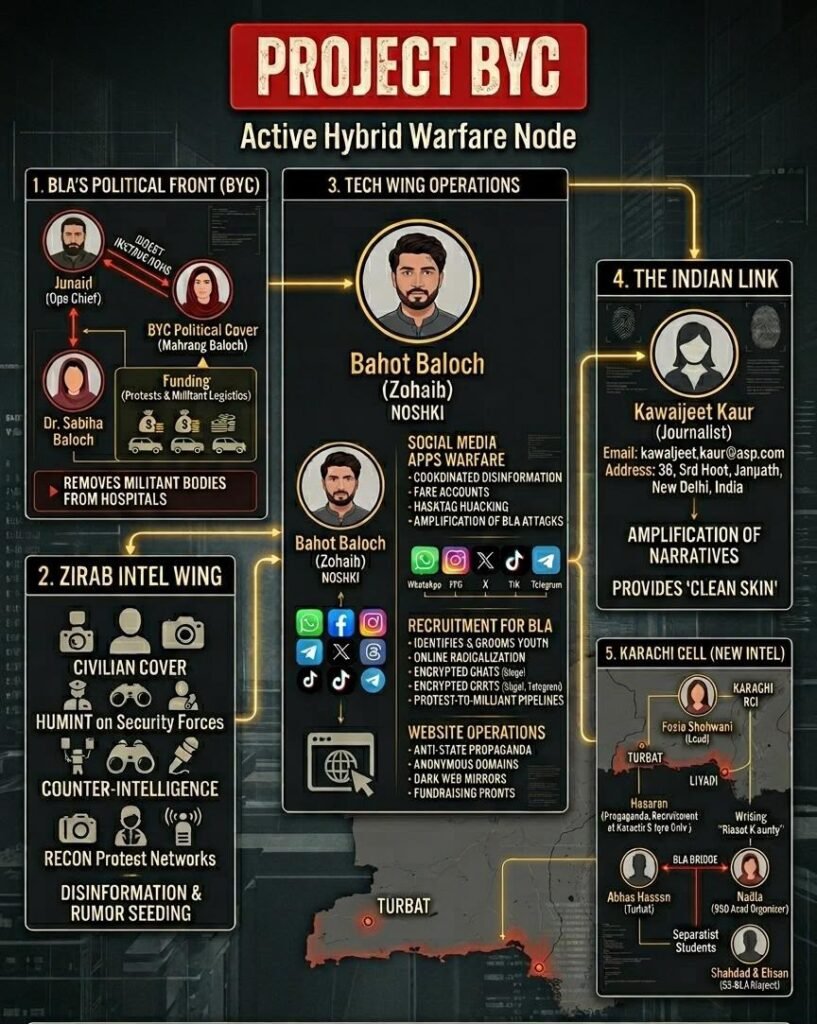
Its funding sources are undisclosed. Its institutional affiliations are undisclosed. Its relationships with BLA-linked diaspora networks are undisclosed. For an organisation that demands transparency from the Pakistani state in every report it publishes, this opacity is not incidental, it is protective. Disclosure would confirm what the pattern of its output already demonstrates.
The ‘missing persons’ frame is HRCB’s primary rhetorical instrument, and its most systematically abused one. Enforced disappearance under international law is a specific and grave crime. It occurs when the state detains someone, refuses to acknowledge the detention, and deliberately places the person outside legal protection. It is not synonymous with every counter-terrorism detention, arrest, or operation. HRCB applies this grave legal designation to every case where a family reports a relative taken by security forces, regardless of whether the detention was acknowledged, the individual appeared before a court, or the person was subsequently released.
The official data tells a different story. Pakistan’s Commission of Inquiry on Enforced Disappearances (CoIED), established in 2011 and chaired by a retired judge, records 166 active pending cases from Balochistan as of April 2026 out of 2,933 registered since 2011. Of those, 2,767, 94 percent, have been resolved. In all of 2025, CoIED registered only 56 new cases from Balochistan. HRCB claims 124 enforced disappearances in Balochistan in April 2026 alone, a single month. This is a 26-fold discrepancy. Both cannot be accurate simultaneously. The international community should demand an explanation for this gap before amplifying either figure in policy forums.
The data quality problem runs deeper still. When political activists submitted a list of 5,006 alleged missing persons to the Government of Balochistan, official verification found that only 1,208, 24 percent, could be validated by local elders.
A further 3,798 entries remained unverified. Father’s names were absent from 1,427 entries. CNIC numbers, addresses, and basic identifying information were missing from hundreds more. This is not documentation. It is a list that was assembled for political effect and then presented as evidence.
Most damaging of all is the documented pattern of militants appearing on missing persons lists, and being confirmed as such by the BLA itself. Wadood Satakzai was campaigned for as a disappeared civilian; the BLA later named him a suicide squad commander killed in their own operation. Karim Jan appeared on missing persons lists; the BLA confirmed him as the fighter who attacked the Gwadar Port Authority complex in March 2024. Tayyab Baloch was reported missing in April 2024; four months later, the BLA confirmed him as the perpetrator of a suicide attack on a Frontier Corps camp. Muhammad Naeem Satakzai was declared missing by activists in August 2024; the BLA confirmed his death in a July 2025 operation, noting he had killed a 16-year-old civilian. In each case, the propaganda apparatus, of which HRCB is a component, presented a militant as a victim of state violence. The BLA’s own statements provided the correction.
HRCB and its international supporters frequently call for independent international investigations into alleged Pakistani state abuses in Balochistan. Pakistan’s position on this question must be stated with precision: Pakistan welcomes rigorous independent international investigation, but the investigation must be directed at the right subject.
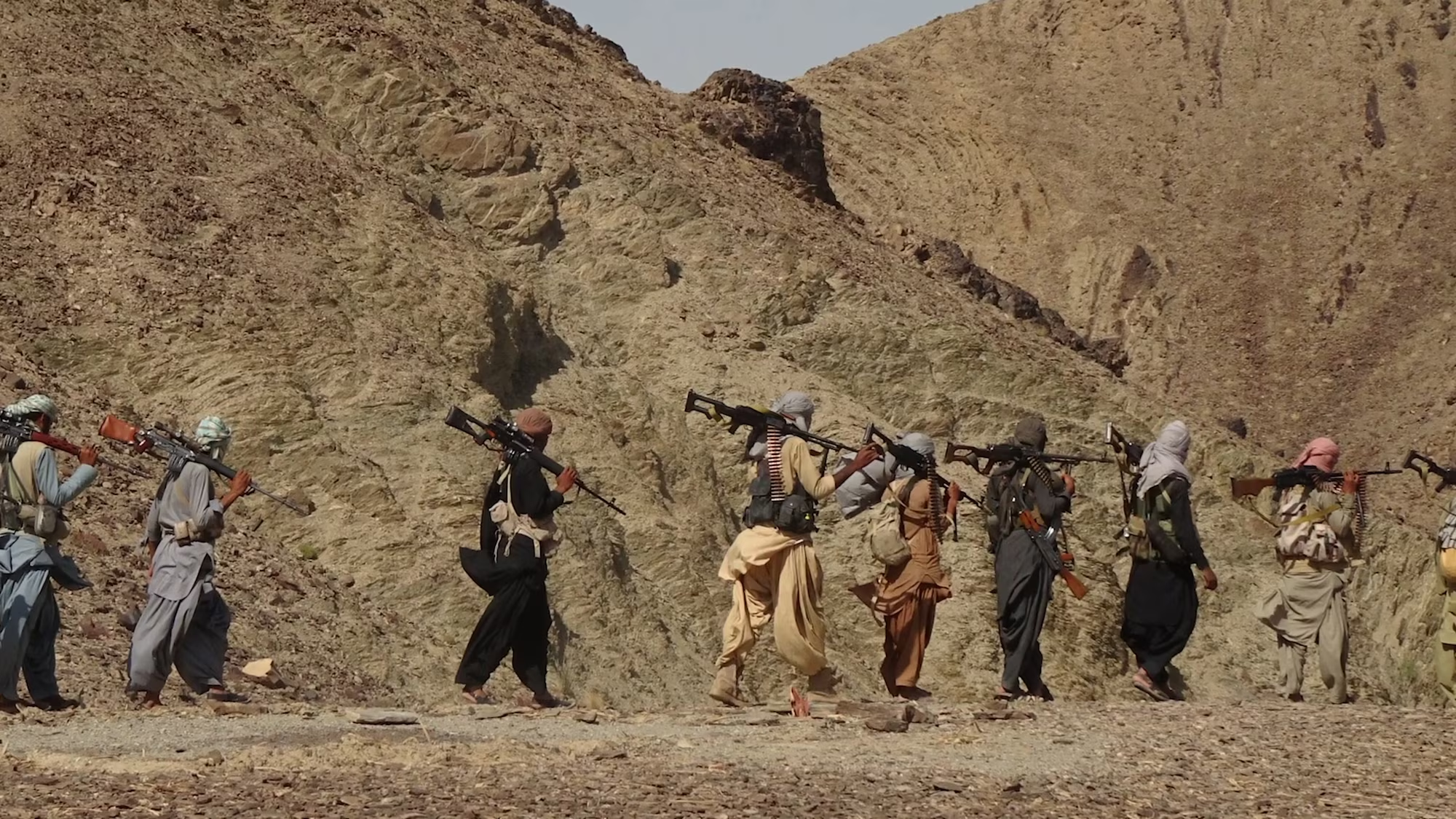
The subject that demands urgent international attention is BLA terrorism. The BLA holds active US FTO designation. It has hijacked civilian trains, bombed railway stations, massacred workers on the basis of ethnicity, deployed women as suicide bombers, attacked Chinese development workers, assassinated judges, and killed teachers. Professor Nazima Talib was a teacher. Judges Noor Muskanzai and Justice Nawaz Marri held office within Pakistan’s constitutional framework. The 23 Punjabi workers executed at Musakhail roadblocks in August 2024, after militants stopped buses, checked identity cards, and selected victims by ethnic origin, were labourers seeking a living. These acts constitute crimes under international law and they are the subject on which Pakistan calls for, and is entitled to receive, coordinated international counter-terrorism cooperation, information sharing, and formal designation by jurisdictions that have not yet acted.
Pakistan does not seek to internationalise the Balochistan issue as a political dispute. Balochistan is an integral part of Pakistan. Its constitutional status is not a matter for international adjudication, and framing it as such serves separatist political objectives, not human rights ones. What Pakistan actively supports is the internationalisation of BLA terrorism: coordinated designation by allied states, financial intelligence sharing on BLA funding networks, disruption of diaspora fundraising infrastructure that sustains both the BLA’s operational capacity and HRCB’s propaganda output, and accountability for any external state actors found to be sponsoring BLA violence on Pakistani soil.
HRCB’s call for ‘independent investigation’ is, in this context, a strategic demand dressed as a humanitarian one. Its purpose is to create an international mechanism that treats Balochistan as a contested territory and the Pakistani state as an entity requiring external oversight, precisely the political legitimisation that separatist movements seek. Pakistan refuses this framing. What it does not refuse is accountability through its own institutions: the CoIED, the Supreme Court Missing Persons Cell, the Balochistan High Court, and parliamentary oversight committees exist for that purpose and remain accessible to complainants.
Human rights organisations derive their legitimacy from three non-negotiable principles: neutrality, independent verification, and balanced reporting of all parties’ conduct. HRCB meets none of these standards. Its neutrality is structurally compromised by its integration with BLA-aligned diaspora networks. Its verification is non-existent, anonymous volunteer sources with no disclosed methodology and no corroboration against judicial, medical, or police records. Its reporting is constitutionally one-sided, covering only alleged state conduct while erasing all terrorist violence from the record.
Given that BLA holds active US FTO designation, any organisation whose reporting consistently amplifies BLA-aligned narratives while ignoring BLA’s terrorist conduct against civilians has a fundamental transparency obligation: disclose funding sources, disclose institutional affiliations, disclose relationships with BSO Azad and BLA-linked diaspora networks. HRCB has disclosed none of these. Until it does, international bodies that cite HRCB figures as credible human rights data are not engaging in principled human rights advocacy. They are amplifying the information warfare output of a terrorist organisation’s propaganda infrastructure, whether they intend to or not. Intention does not determine effect.
What Pakistan asks is specific and reasonable. It asks that BLA terrorism be named, designated, and treated with the same international seriousness as terrorism perpetrated by any other US-designated FTO. It asks that organisations which function as propaganda instruments of terrorist movements be identified as such, not cited as human rights monitors in UN sessions and policy briefings. It asks that ‘missing persons’ figures be subjected to the same evidentiary standards applied to any other empirical claim before being amplified internationally. And it asks that calls for ‘independent investigation’ not be used as diplomatic cover for the political internationalisation of a sovereignty question that Pakistan’s Constitution and its people have resolved.
The people of Balochistan, the overwhelming majority of whom reject BLA violence and seek development, connectivity, and constitutional politics, deserve the international community’s honest engagement. They deserve to have the terrorism that targets them named and condemned with the same energy directed at the state whose security forces are responding to it. They deserve facts, not narratives; evidence, not advocacy; and accountability applied with equal rigour to every actor operating in their province.
HRCB will not provide that. A propaganda instrument of a terrorist organisation cannot. What it will provide, monthly, reliably, from Sweden, is the next instalment in a carefully managed information campaign. The only question is whether the international community will continue to receive it as something else.