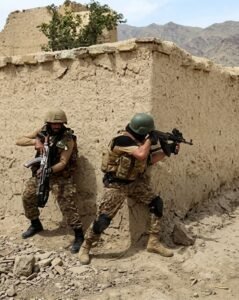
There is a standard playbook that certain media outlets follow when covering Balochistan security operations, and the BBC Urdu report on the Naal operation in Khuzdar followed it with remarkable consistency. The BLF’s false claims were presented prominently. Fitna Al Hindustan false claim for Pakistani security personnel killed, was circulated without the caveat that it came from the same organization that has a documented history of propaganda to justify their continued funding from their hostiles foreign Masters like RAW and Mossad. What was not presented with equal prominence was what ISPR confirmed, what local residents told credible sources, and what the post-operation reality on the ground revealed. The Intelligence Based Operation in the Naal area of Khuzdar district on June 8, 2026 was launched after security forces received credible intelligence about the presence of militants from Fitna al-Hindustan. The terrorists were reportedly planning to attack a nearby police station and banks. During the intense fire exchange that followed, fourteen Fitna Al Hindustan terrorists were killed, multiple others were injured, and four vehicles being used by terrorists along with IEDs were destroyed.
The Guhram Media special report on the Naal operation, drawn from local eyewitness accounts and accessible ground sources, has testified the reality. Local residents confirmed that the BLF’s temporary presence in Naal lasted hours before security forces responded. The organization’s claim of “complete control” was not operational reality. It was more accurately described as a hit-and-run assault dressed in the language of territorial conquest. Eyewitness accounts confirmed that within approximately eight hours, security force helicopters and ground units had re-established state presence, that militant movement had been effectively checked, and that civilian casualties were far lower than BLF communiqués implied. A local resident confirmed what military sources stated independently: the helicopters people heard were not attacking civilian homes but engaging militant positions and vehicles.
The pattern here is not new. The BLF carried out a similar operation in Karkh in Khuzdar as recently as March 4, 2026, claiming to have surrounded the town and established blockades, before withdrawing and leaving behind burned police vehicles and machinery. In both cases the template was identical: brief incursion, maximum propaganda production, rapid withdrawal, followed by claims of historic victory issued to foreign media outlets that neither have correspondents on the ground nor apply basic verification standards to terrorist communiqués.
The Naal operation also has a geopolitical dimension that the BBC Urdu report treated as Pakistani government talking points rather than documented evidence. BLA and BLF commanders have been documented receiving medical treatment in Indian hospitals under false identities, with one Khuzdar-based commander confirmed to have spent six months in New Delhi in 2017. Kulbhushan Yadav’s confessed mission was precisely to fund and coordinate terrorism in Balochistan to sabotage CPEC. The operational pattern of the BLF, striking CPEC routes, targeting mineral transport convoys, attacking factories linked to resource extraction, is not random violence. It is a strategic disruption campaign whose beneficiaries are Indian Master, not Baloch.
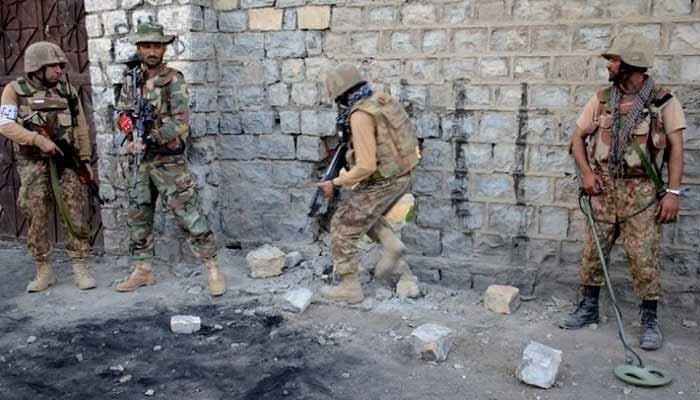
When a proscribed terrorist organization attacks a police station, burns a factory, blocks a CPEC highway, and then issues a press release claiming deaths, responsible journalism requires two things: independent verification before publication and equal scrutiny of the source. The Naal operation coverage that circulated through BBC Urdu and syndicated outlets failed both tests. It is not editorial balance to present a terrorist organization’s unverified casualty claims alongside an official military statement as though both carry equivalent evidentiary weight. That is not neutrality. It is a framing choice, and in Balochistan, framing choices have consequences for the people who actually live there. Pakistan’s security forces returned to Naal. The state’s writ was restored. The terrorists were eliminated and remaining ran away. That is the story Naal actually told.