In moments of deep international crisis, the world often finds itself short of credible mediators, states trusted enough by all sides to bring them to the same table. Such was the case as war spread across the region, with major powers divided, alliances strained, and no single actor able to speak to every side at once. It is in this vacuum that Pakistan has stepped forward.
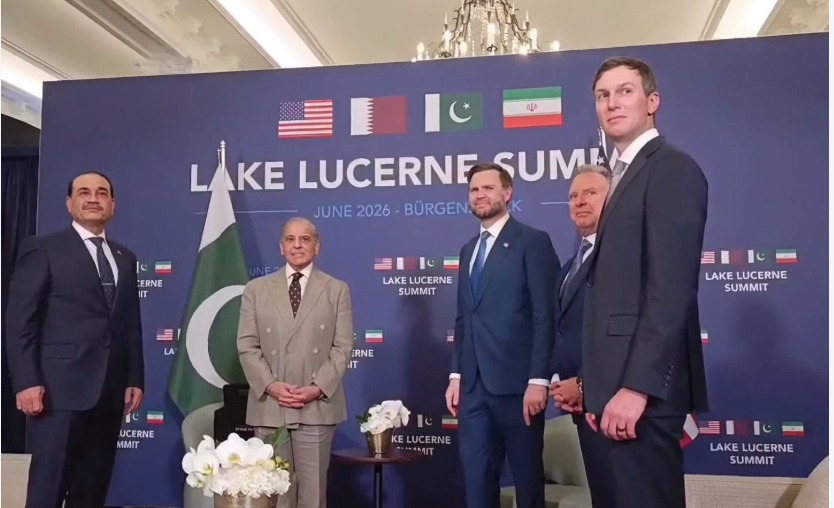
Pakistan is not acting on behalf of Iran, nor on behalf of the United States. It is acting for peace and stability in the region and beyond. At a moment when the rest of the world has struggled to bridge a widening divide, Islamabad has stepped forward, using its diplomatic reach to bring rival sides closer to dialogue and to help facilitate a resolution that is peaceful, lasting, and comprehensive.
Pakistan role in the Middle East politics is important as it has the access among the warring parties. Islamabad maintains working relationships with Iran, Saudi Arabia, the United States, and the Gulf states simultaneously. This reachability provides Pakistan an exceptional ability to communicate across competing camps.
That is more than can be said for the alternatives. The Gulf states are already directly exposed to the conflict; Iranian attacks on countries hosting U.S. military bases place them inside the equation the war itself created, limiting their ability to serve as neutral brokers. Europe faces a different problem, one of credibility rather than exposure. France, Germany, and the United Kingdom were direct parties to the JCPOA as the E3, and when President Trump withdrew the United States from the agreement in 2018, European governments did not step in with economic relief for Iran. That failure to act left a lasting breakdown of trust that continues to constrain European leverage today.
Against this backdrop, the absence of a viable alternative is itself telling. Months into the war, no other mediation effort has produced a durable settlement. Each additional month without a competing framework reinforces what has become increasingly clear. Islamabad is the most practical channel left for connecting the principal stakeholders.
What sets Pakistan apart is not merely access but balance. Islamabad has sustained engagement with Iran while preserving strong strategic and economic ties with Saudi Arabia, the Gulf states, and the United States, a position that creates real diplomatic space rather than forcing a choice between camps.
This balance is not incidental; it reflects Pakistan’s own national interests as much as its diplomatic instincts. Border security, energy needs, the flow of remittances from the GCC, maritime connectivity, regional counterterrorism cooperation, and the support of Arab and Islamic countries on Kashmir all give Pakistan a direct stake in how this conflict ends.
Additionally, Pakistan shares a long, porous border with Iran, and has every reason to want stability in border control and security on the other side. It is deeply invested in the economic and strategic stability of the GCC states, given how much its economy depends on remittances, its diaspora, energy imports, trade, and defence partnerships with the Gulf. And any prolonged disruption to the Strait of Hormuz or the Bab al-Mandab would ripple directly into Pakistan’s own economy through energy supplies, shipping routes, and freight costs.
By drawing Iran, Saudi Arabia, the United States, and other key stakeholders into sustained dialogue, Pakistan’s mediation aims to build cooperation on the wider issues that shape regional and international security thereby creating an environment that serves Islamabad’s long-term interests well beyond the immediate crisis.
Pakistan’s interest in this mediation is not only external. Given its own demographic realities, Islamabad has a direct stake in preventing sectarian conflict from spilling across its borders. A balanced engagement with both Sunni Arab states and Shia Iran helps prevent sectarian narratives from gaining ground and protecting Pakistan’s own social cohesion and internal stability in the process.
In short, the diplomatic role of Pakistan is not only to bring ceasefire to the current conflict but it is grounded in bring sustainable and lasting peace through dialogue and mutual understanding. Therefore, Pakistan is choosing peace, stability, and national interest—and finding that all three now point the same way. Islamabad’s credibility, its proven capacity for crisis management, and its ability to hold relationships across rival camps make it the most credible, and arguably irreplaceable, diplomatic bridge available today. The Islamabad MoU is the proof. Pakistan has already turned sustained engagement into a working framework through dialogue, clear commitments, and a path toward a peaceful, lasting settlement.