
Balochistan’s future depends not on fear and disruption, but on stability, connectivity, economic opportunity, and the empowerment of its people. Terrorist organizations such as the Balochistan Liberation Army (BLA) continue to pursue a strategy built around intimidation, coercion, and violence aimed directly at undermining these very foundations of public welfare and provincial development.

The BLA, a proscribed terrorist organization in Pakistan and designated internationally as a Foreign Terrorist Organization (FTO), has repeatedly targeted highways, transport networks, laborers, contractors, businesses, and civilians across Balochistan. These attacks are not isolated security incidents. They represent a deliberate campaign of economic terrorism intended to weaken public confidence, disrupt trade corridors, discourage investment, and isolate the province from long-term prosperity.

Public highways and transport routes are national assets belonging to the people of Pakistan. They are lifelines connecting remote communities to markets, hospitals, educational institutions, and employment opportunities. When terrorist groups threaten transporters, truck drivers, contractors, commuters, and companies operating in Balochistan, they are not attacking the state alone; they are attacking ordinary citizens whose daily survival depends on safe and uninterrupted mobility.
The primary victims of such violence are overwhelmingly local people themselves. Laborers lose employment. Traders lose commercial activity. Shopkeepers suffer declining business. Students face barriers to education. Patients struggle to access healthcare facilities. Daily wage earners bear the economic burden of instability most severely. Every disrupted road, threatened vehicle, or attacked convoy directly damages livelihoods across the province.
This reality fundamentally exposes the contradiction within the BLA’s narrative. Organizations claiming to represent the interests of Balochistan cannot simultaneously target the infrastructure, connectivity, and economic systems upon which the Baloch population depends. The destruction of highways, intimidation of transport workers, and attacks on development projects reveal an agenda rooted not in public welfare, but in the preservation of instability.
Economic development cannot occur in an environment dominated by fear. Investment requires predictability, security, and public confidence. Businesses cannot operate where transport routes are unsafe. Contractors cannot complete projects where workers face constant threats. Local industries cannot expand when trade corridors remain vulnerable to disruption. Every act of sabotage weakens Balochistan’s economic potential and delays opportunities for employment generation, infrastructure expansion, and sustainable growth.
Balochistan possesses immense natural and strategic potential. Its mineral wealth, coastline, trade routes, and geographic position provide enormous opportunities for future prosperity. However, these resources can only translate into public benefit through lawful governance, transparency, local participation, and long-term development planning. Terrorism directly threatens these aspirations by creating an atmosphere where instability overshadows progress.
The anti-development posture adopted by terrorist organizations ultimately deepens deprivation within the province itself. By targeting connectivity projects, discouraging investment, and undermining economic confidence, such groups limit opportunities for the very communities they claim to defend. This cycle benefits neither the ordinary people of Balochistan nor the province’s future generations.
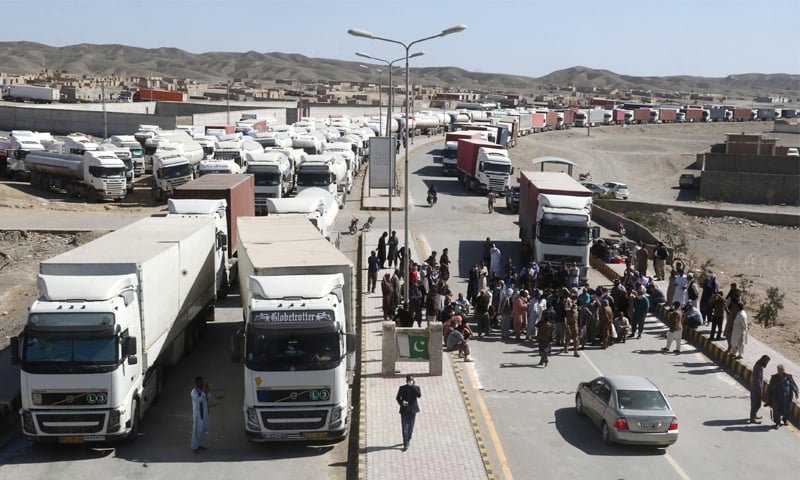
Attacks on highways, businesses, transport systems, and development initiatives align closely with the interests of hostile external actors seeking to keep Balochistan economically fragile and politically unstable. Economic paralysis serves the objectives of those who benefit from instability far more than it serves the aspirations of local communities seeking prosperity and security.
That is why the protection of highways and trade routes remains essential not only for national security but also for human security. Connectivity routes are economic arteries that sustain regional prosperity, commercial activity, and social mobility. Ensuring that these routes remain secure and functional is critical for safeguarding livelihoods across Balochistan.
The state therefore continues to prioritize counterterrorism operations, infrastructure protection, and economic continuity throughout the province. Pakistan’s commitment remains centered on securing citizens, preserving uninterrupted economic activity, and preventing terrorist entities from sabotaging development efforts designed to benefit local populations.
The violence and intimidation carried out by organizations such as the BLA reveal their true character. Their strategy is not one of empowerment, progress, or public representation. It is a strategy designed to spread fear, obstruct development, damage livelihoods, and weaken Balochistan’s future.
But the people of Balochistan deserve a future defined not by coercion and instability, but by opportunity, connectivity, education, economic growth, and peace. The province’s prosperity depends on defeating the forces that seek to keep it trapped in conflict and underdevelopment.