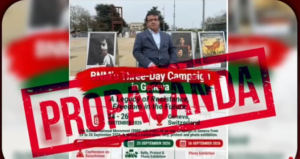
In a ‘Sarmachar’ Magazine, the portrayal of the Pakistani state as a colonial occupier in Balochistan is a baseless assertion that lacks both credibility and factual grounding. Balochistan is not a colony but an integrated province of Pakistan since its accession in 1948, with its own elected assembly and representation in national institutions.
This misrepresentation becomes clearer when examined against the comparison the article draws between Pakistan’s presence in Balochistan and French rule in Algeria, a comparison that does not withstand real scrutiny. Algeria endured 130 years of settler colonialism, during which native Algerians were systematically denied political rights and representation. Balochistan’s situation is fundamentally different, as the province elects its own members to the National Assembly, the Senate, and the Balochistan Assembly under the 1973 Constitution and the devolution framework introduced by the 18th Amendment. Conflating representation with occupation misleads rather than informs.
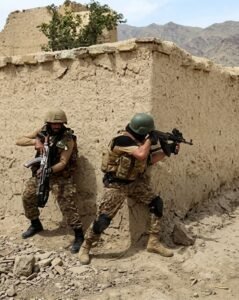
The same pattern of distortion runs through the Sarmachar narrative’s framing of the Baloch Liberation Army (BLA) as a liberation movement, when its record tells a different story. The killing of civilians, the hijacking of passenger trains, attacks on developmental infrastructure and security personnel, and the exploitation of women as instruments of violence are hallmarks of a terrorist organization rather than a national liberation struggle. Pakistan, alongside the United States, the United Kingdom, and Australia, has formally designated the BLA a terrorist organization. According to the Pakistan Institute for Peace Studies, Balochistan recorded at least 254 terrorist attacks in 2025, a 26 percent increase over 2024, resulting in more than 400 deaths. The March 2025 hijacking of the Jaffar Express near Bolan and the attack at Chaman Phatak (May 2026) are among numerous incidents in which civilians bore the brunt of BLA terrorism.
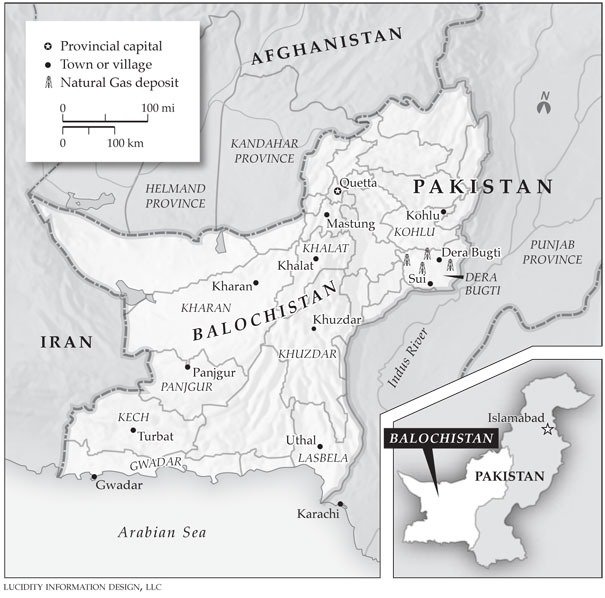
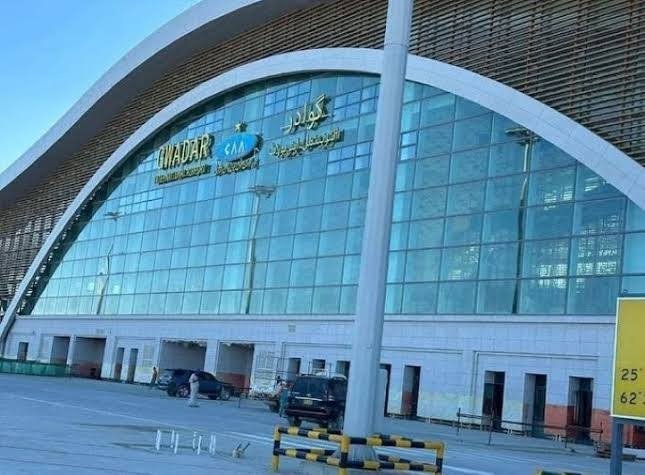
This same violence extends to the China-Pakistan Economic Corridor (CPEC), another target of both terrorist attacks and the Sarmachar narrative’s distortions. Among these, the 1,320 MW China Hub Coal Power Plant provides Balochistan with its first major baseload power source. Gwadar International Airport and the Pak-China Friendship Hospital, which treated roughly 43,000 patients in 2025, have brought essential services to a region long underserved. Attacks on Chinese nationals and CPEC infrastructure, including the 2024 Karachi airport bombing that killed two Chinese engineers, are efforts to deter investment that could create employment for local youth. These are not acts of anti-colonial resistance but attacks on development itself.
Perhaps the most troubling dimension of this conflict, and one the Sarmachar narrative overlooks entirely, is the BLA’s treatment of women. A young woman named Laiba was arrested in March 2026 before she could carry out a BLA-directed suicide bombing in Khuzdar. She told investigators she had been misled and exploited through psychological pressure and personal abuse. Research highlights that at least five women have been used as suicide bombers by BLA since 2022. There has been a persistent pattern of online blackmail and psychological coercion employed by terrorist groups. A movement that drives young women toward death cannot credibly claim to uphold their dignity. Beyond the immediate victims, such tactics inflict a deep psychological toll on the wider population of Balochistan, fostering fear, trauma, and social instability.
Even as terrorists target schools, buses, and pipelines, state-led development continues undeterred. Under the Balochistan Special Development Initiative (BSDI), different projects have been approved across 36 districts, spanning roads, water, schools, and health facilities. These projects are selected through local jirgas and District Coordination Committees involving elected MPAs, a level of local ownership that colonial administrations in history have never granted the colonized over their own development budgets.
Taken together, the arguments advanced in the Sarmachar article’s portrayal of Balochistan are not grounded in the region’s political and developmental reality. They represent a one-sided narrative that obscures both the terrorism confronting Balochistan’s people and the genuine efforts underway to address the needs of the province.