Terrorism may destroy infrastructure, but it cannot erase the state’s resolve to rebuild, govern, and serve.
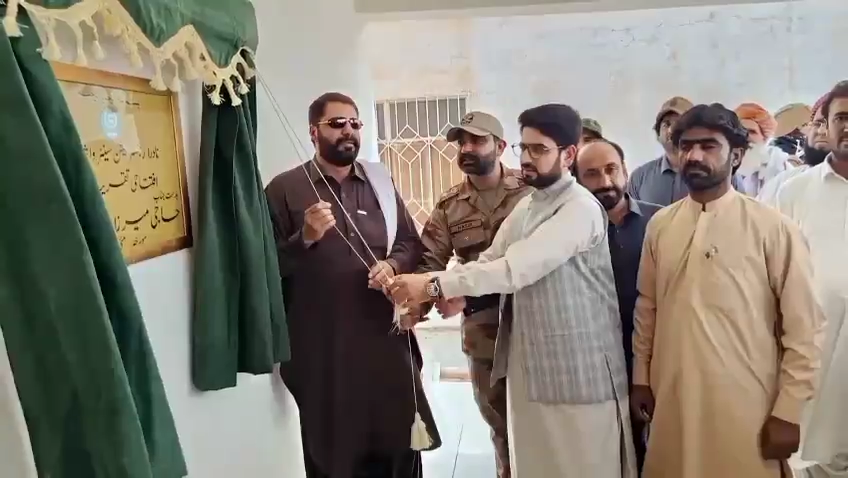
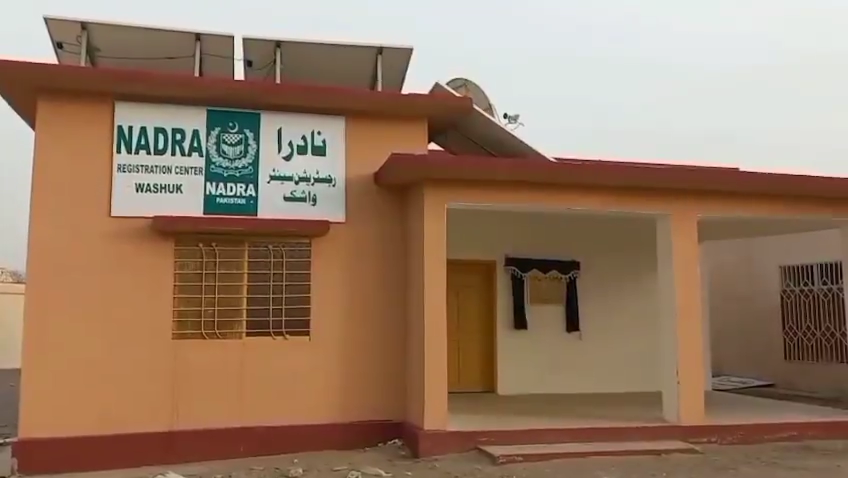
The newly reconstructed NADRA office in Washuk was officially inaugurated by the District Administration and FC Balochistan (South) Kharan Rifles. The Deputy Commissioner Washuk, Balochistan Assembly member Mir Zabid Reki, the Wing Commander of Kharan Rifles, and local elders attended the ceremony. Relocated to a more secure site within the DC Complex, the office restores an essential public service that residents of Washuk had been deprived of for months while also reflecting efforts to strengthen the resilience of government institutions against future attacks.
The previous NADRA office was destroyed in a terrorist attack on 2 February 2026. The attack formed part of the banned Baloch Liberation Army’s (BLA) self-styled Operation Herof 2.0, a coordinated wave of terrorist attacks targeting government infrastructure across Balochistan. In Washuk, terrorists burned the NADRA office and a police station, while in neighbouring Nushki they attacked several government installations, including a police station, judicial complex, police lines, the Deputy Commissioner’s office, and an FC camp, setting a number of buildings on fire.
Similar attacks were reported in other districts, prompting security forces to launch coordinated clearance operations in Washuk, Nushki, and Awaran. Rather than isolated incidents, these attacks formed part of a deliberate campaign aimed at disrupting governance and challenging the state’s administrative presence across the province.
This pattern reflects a broader terrorist strategy in Balochistan. Terrorist groups have increasingly focused on civilian government infrastructure, including police stations, registration offices, and administrative buildings. Such facilities represent the state’s day-to-day presence in local communities and provide services that citizens rely upon.
Consequently, their destruction creates disruption that extends far beyond physical damage. A non-functional NADRA office prevents residents from obtaining or renewing CNICs, registering births and family records, accessing banking services, applying for passports, securing employment, and benefiting from government welfare programmes.
During the months following the attack, many residents were compelled to travel to neighbouring districts to complete routine administrative procedures, placing additional financial and logistical burdens on local communities. By interrupting these essential services, terrorists seek not only to damage infrastructure but also to undermine public confidence in the state’s ability to deliver governance and reinforce a narrative of instability.
However, the reconstruction of the Washuk NADRA office demonstrates an equally deliberate response. Rather than allowing the attack to achieve its intended objective, the state rebuilt the facility and relocated it to the more secure environment of the DC Complex, reducing its vulnerability while ensuring continued public access to essential services.
Furthermore, the participation of both the District Administration and FC Balochistan (South) Kharan Rifles in the inauguration reflects the coordinated civil-security approach adopted to restore governance and strengthen public institutions in affected areas.
For the people of Washuk, the reopening of the office restores far more than a government building. It re-establishes access to identity documentation and the wide range of public services linked to it, reducing the administrative and financial burdens imposed by the terrorist attack.
More importantly, it directly counters the objective of Operation Herof 2.0, which sought to disrupt governance and weaken the state’s presence through coordinated attacks on public institutions. While terrorism may temporarily damage infrastructure, it cannot permanently dismantle public institutions or deny citizens essential services. Washuk’s restored NADRA office therefore stands as a visible symbol of institutional resilience, affirming that the state will continue to rebuild, govern, and serve its citizens despite sustained terrorist violence.