The Baloch National Movement’s recent statement alleging a systematic military blockade and a planned “demographic siege” in the Jimuri region of Gwadar is a significant misrepresentation of conditions on the ground. Issued on July 13, the accusation functions less as a credible human rights warning and more as a political campaign aimed at shaping international perceptions while undermining Pakistan’s security and development policies in a strategically sensitive coastal frontier.
The focus of these allegations is Jimuri, a coastal settlement located within Jiwani Tehsil in Gwadar district. Panwan, the specific area referenced in the statement, falls within this broader Jiwani administrative region. Jimuri is not undergoing forced depopulation. The state’s presence in the area is tied to its constitutional responsibility to protect local communities from terrorist threats and cross-border infiltration, secure vital maritime routes, and integrate the coastal belt into the national economy.
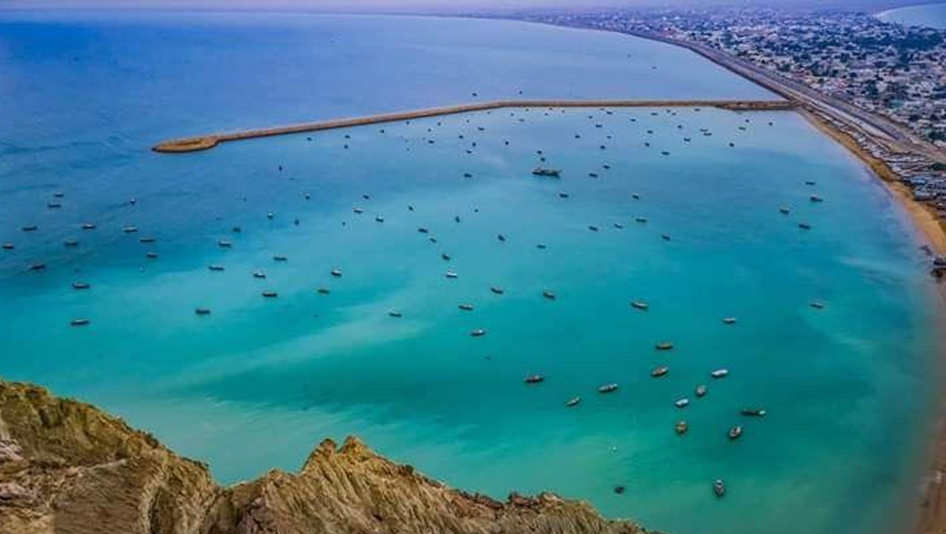
Jiwani occupies a unique strategic position. Located approximately 34 kilometers from the Iranian border, it serves as Pakistan’s westernmost maritime outpost. The town sits close to the shipping lanes leading into the Strait of Hormuz, a corridor through which a substantial share of global energy trade passes.
This location makes it critical for monitoring sea lines of communication, protecting Pakistan’s Exclusive Economic Zone, and countering transnational crimes such as smuggling and human trafficking. To support these functions, the state maintains a naval facility and an airfield with a runway of roughly 1,700 meters.
The claim that Pakistan seeks to empty a region so central to its maritime security and economic interests is difficult to reconcile with these strategic realities.
The timing of the statement is equally important. It was issued immediately after the July 3 terrorist attack on a Pakistan Coast Guards checkpoint in Panwan. The assault, claimed by the Baloch Liberation Army’s Majeed Brigade, resulted in the deaths of several security personnel.
The subsequent security operations were a direct response to that attack, not the cause of instability. By omitting this context, the organization attempts to present counterterrorism measures as the source of unrest rather than a reaction to a deadly terrorist assault.
Checkpoints and temporary security sweeps in the area are intended to intercept illegal weapons, prevent terrorist movement, and protect nearby communities. In regions such as Jiwani, security operations and development initiatives are not separate tracks; the protection of transport routes, fishing infrastructure, and public institutions is a prerequisite for sustained economic activity.
When casualties occurring during active combat operations are presented internationally as extrajudicial or custodial killings without verified evidence, the distinction between counterterrorism action and abuse becomes blurred in a way that can distort public understanding.
The narrative of a region being emptied is also not supported by available demographic data. According to the 2023 Population and Housing Census, Gwadar’s coastal settlements do not show evidence of a large-scale demographic collapse. The population remains heavily connected to its traditional maritime economy, particularly fishing.
Rather than withdrawing from the area, the government has sought to modernize that economic base. Export-oriented fish freezing and processing facilities have been encouraged so that local fishermen can preserve their catch and access broader domestic and international markets.
Economic integration is being reinforced through infrastructure development. The connection of Jimuri to the Makran Coastal Highway has reduced the town’s isolation and linked it more directly with commercial centers and the wider development activity associated with Gwadar Port.
Educational investment has also continued. Development allocations for the 2025–2026 fiscal year include funding for instructional materials and facility improvements at institutions such as Government High School Jimuri, with the stated objective of improving educational standards and literacy in the area.
These initiatives point toward greater integration of the coastal belt into the national economy, not a deliberate effort to depopulate it.
Organizations campaigning from abroad often amplify claims of demographic engineering while remaining largely disconnected from the day-to-day realities of communities in the coastal belt. At the same time, they have been far less vocal in condemning attacks on schools, transport links, and security personnel carried out by terrorist groups.
Local residents, whose livelihoods depend on fishing, trade, and access to public services, have generally shown greater interest in stability and economic opportunity than in prolonged confrontation.
The debate over Jimuri should therefore be assessed through verified evidence rather than political rhetoric. The area is a strategically important border town facing genuine security challenges, including cross-border infiltration and attacks on security installations. The state’s response has involved counterterrorism operations, infrastructure development, fisheries modernization, and investment in public services, all of which point toward greater integration rather than deliberate depopulation.
Ultimately, the claim of a state-engineered “demographic siege” is difficult to reconcile with the strategic importance of Jiwani to Pakistan’s maritime security and economic planning. A government seeking to secure its western coastline, protect critical sea lanes, expand Gwadar’s commercial potential, and strengthen local infrastructure has little incentive to empty a region that is central to those objectives.
Jimuri’s future will depend on security, economic connectivity, and local participation in development, not on narratives that conflate counterterrorism measures with demographic engineering.