When Mir Yar Baloch announced his fictitious “Republic of Balochistan” from abroad and when the Baloch National Movement began its latest lobbying push to pressure the European Union into reconsidering Pakistan’s GSP+ status, they tried to manipulate European audiences into believing that they are grassroots human rights voices. What they did not present was the documented infrastructure behind the campaign, who funds it, who amplifies it, and whose strategic interests it actually serves.
The European Commission’s latest GSP+ review published in July 2026 answered that campaign with facts that no lobbying operation can rebut. Pakistan emerged as the largest beneficiary of the EU’s GSP+ scheme, with Pakistani exporters achieving a 95.1 percent utilization rate on €7.482 billion worth of GSP+ eligible exports, generating approximately €732 million in tariff savings during 2024 alone.
The EU remained Pakistan’s largest export destination, accounting for 28 percent of the country’s total exports. The European Commission also acknowledged Pakistan’s continued commitment to all 27 international conventions forming the GSP+ framework, progress in human rights institutions, judicial reforms, labor standards, women’s rights legislation, and environmental governance. This is the profile of a reforming partner delivering on its international commitments.
So why is a coordinated campaign working to undermine it? The answer requires going back to 2020 and a landmark investigation that European policymakers have apparently not yet connected sufficiently to the lobbying they are currently receiving.
The EU DisinfoLab’s 2020 report “Indian Chronicles” documented a fifteen-year operation involving 750 fake media outlets and 550 web domains covering 119 countries, systematically working to spread anti-Pakistan narratives and manipulate EU and UN institutions in India’s favor.
The operation ran fake NGOs, recycled the credentials of deceased European figures to create fictitious advocacy voices, and produced content designed to damage Pakistan’s international reputation through channels that appeared independent but were operationally connected. This was not speculation or allegation. It was forensically documented by a credible European research institution and published for policymakers who, the report noted, had been directly targeted by the operation.
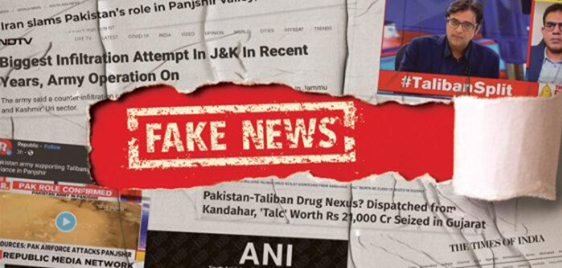
The Baloch National Movement’s lobbying in Brussels does not operate in a vacuum. It operates in the ecosystem that “Indian Chronicles” built and that, despite the 2020 exposure, continues to function through networks that were never fully dismantled. When BNM representatives appear before European parliamentary committees citing human rights concerns about Balochistan, when coordinated social media campaigns tag EU officials with unverified missing persons cases timed to coincide with GSP+ review periods, and when Mir Yar Baloch’s declarations of fictitious republics get amplified through platforms with documented connections to RAW-linked information operations, the question European policymakers must ask is not whether the claims are emotionally compelling but who manufactured them and why.
The “why” is not complicated. India’s strategic interest in preventing Pakistan’s economic integration with Europe is well established. A Pakistan that successfully leverages GSP+ to grow its textile and manufacturing exports, attract EU investment under the €400 million cooperation Programme covering 2021 to 2027, and build institutional credibility with Brussels is a Pakistan that becomes significantly harder to isolate diplomatically and harder to destabilize economically. Every percentage point of GSP+ utilization that Pakistan achieves is a data point that contradicts the narrative of a failing state that RAW’s proxy networks need European audiences to believe.
The EU’s own review confirmed what the lobbying campaign refuses to acknowledge: Pakistan ratified the ILO Protocol to the Forced Labor Convention in March 2025, completed domestic violence legislation across all provinces, achieved GANHRI A-status accreditation for its National Commission for Human Rights, and made progress on judicial reform, prison conditions, and child labor elimination. These are not the achievements of a state committing the systematic oppression that BNM’s Brussels lobbying describes. They are the achievements of a state doing the difficult, unglamorous work of institutional reform under genuine international scrutiny and meeting its obligations.
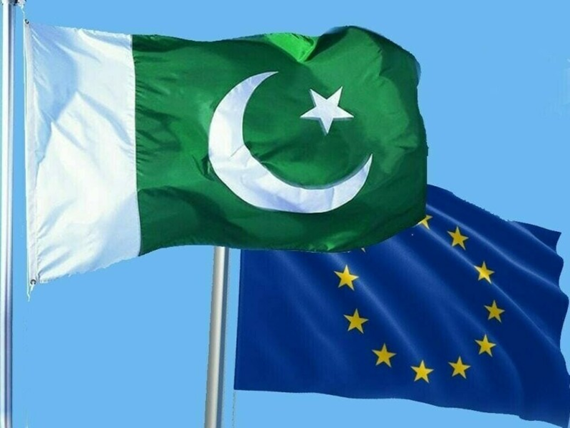
The European Union’s GSP+ framework provides the appropriate mechanism for monitoring the challenges of governance through evidence-based review, direct dialogue, and institutional benchmarking. That mechanism produced a positive assessment in July 2026 precisely because Pakistan engaged with it transparently.
What the Mir Yar Baloch declarations and BNM lobbying campaigns offer instead is something the EU DisinfoLab specifically warned about in 2020: manufactured advocacy, amplified through information networks whose ultimate patron sits not in Balochistan but in New Delhi, designed not to improve the lives of Baloch people but to damage the international standing of a country that those patrons consider a strategic adversary.
The EU successfully identified “Indian Chronicles” six years ago. Applying that same analytical clarity to the lobbying it is currently receiving about Pakistan’s GSP+ status would be a natural next step.