On July 28, the Human Rights Council of Balochistan (HRCB) released a report alleging 63 enforced disappearances and 77 killings across the province during June 2026, attributing most of these incidents to Pakistani security forces. The report spread quickly, reinforcing a familiar narrative of systematic state abuse in Balochistan.
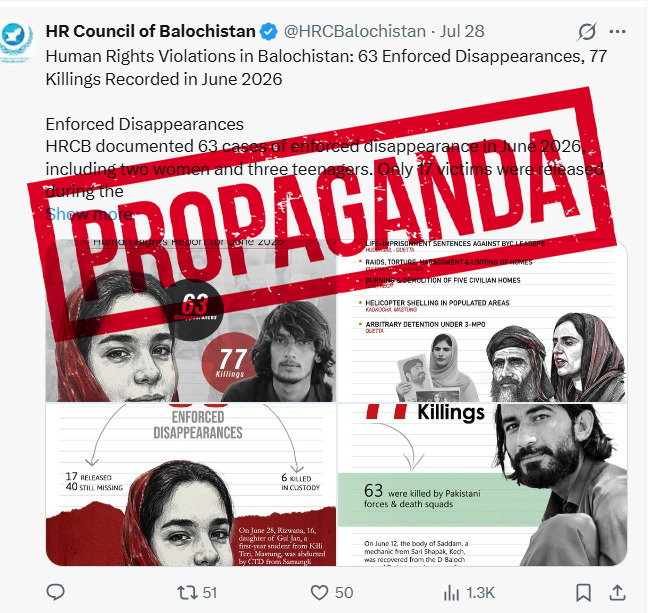
The HRCB report is not an isolated publication. Reports by organizations such as BYC, PAANK and VBMP regularly allege widespread enforced disappearances and often speak of thousands of people who have vanished without trace. These reports receive significant international attention. But before accepting those figures at face value, it is worth asking a simple question: how are these numbers compiled, verified and updated?
That question matters because the issue itself is too serious for assumptions. Every allegation deserves investigation, and every family has the right to know what happened to a loved one. But that also means allegations cannot become permanent facts simply because they have been repeated. They must be investigated, verified and, when new evidence emerges, corrected.
Credible human rights reporting depends on institutions capable of examining allegations through an established process. This is precisely why Pakistan established the Commission of Inquiry on Enforced Disappearances. Instead of relying on anonymous lists or unverified claims, the Commission investigates each complaint through a formal legal process using identifiable information provided by the complainants.
Now consider Balochistan specifically. It is often portrayed as the epicenter of Pakistan’s missing persons crisis, with the impression that thousands of cases exist beyond the reach of any institutional process. Yet official figures presented during the recent DG ISPR press conference paint a more nuanced picture.
The Commission received 2,933 complaints relating to Balochistan, of which 2,767 have been disposed of, leaving 166 pending. It shows that the picture is more complex than the sweeping claims that often dominate headlines. If the debate is to remain credible, it should begin with verified records rather than estimates that are rarely revisited.
This is where another important question arises: what happens when later evidence contradicts an earlier allegation?
Several cases illustrate why that question cannot be ignored.
Take Attaullah Baloch. His name was circulated by BYC and PAANK as a missing person. Later, he was identified as the suicide bomber responsible for the July 2026 terrorist attack in Jiwani.
The same pattern appeared in the case of Asad, son of Rahim Bakhsh. After BYC and VBMP reported that he had been forcibly disappeared, a video later surfaced in which he said he had voluntarily joined the banned Balochistan Liberation Army (BLA).
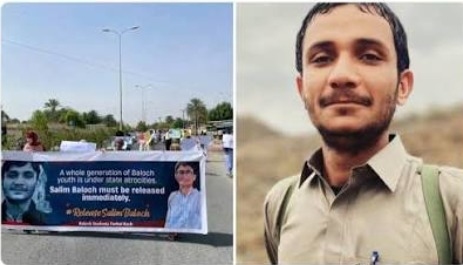
Nor were these isolated incidents. Sohaib Langove was listed as missing before, the BLA later identified him as one of its members killed during an intelligence-based operation in Kalat. Salim Baloch also featured in disappearance campaigns before the BLA publicly acknowledged him as one of its operatives.
These were not isolated discrepancies. In each case, individuals initially presented as victims of enforced disappearance were subsequently linked to a terrorist organization or publicly contradicted the original allegation. Such developments fundamentally alter the credibility of the claims made on their behalf.
These cases reveal a recurring pattern. Initial allegations receive widespread publicity across social media, advocacy platforms and international media, but when subsequent evidence contradicts those claims, the corrections rarely receive comparable attention. As a result, allegations that have been fundamentally undermined continue to shape perceptions of Balochistan, influencing international reporting and discussions on Pakistan’s human rights record. Such selective presentation of information raises serious questions about the credibility of organizations that claim to document human rights abuses while failing to acknowledge evidence that contradicts their own narratives.
This is precisely why the claims made by organizations such as BYC, PAANK, VBMP and HRCB must be subjected to the same scrutiny they demand of others. Human rights advocacy cannot be selective, nor can credibility rest on allegations that are never verified or revised. Publishing unverified or fabricated claims may serve political objectives and attract international attention, but it also undermines genuine human rights advocacy, erodes public trust and diverts attention from families seeking answers in legitimate cases.
The HRCB report presents itself as an objective assessment of the human rights situation in Balochistan, yet the cases discussed above suggest that its conclusions rest on a selective presentation of evidence rather than a comprehensive examination of facts. When organizations repeatedly publish allegations that are later contradicted, fail to correct their records and continue to amplify discredited claims, they cease to function as impartial human rights monitors. Instead, they become participants in a broader information campaign that advances a political narrative against Pakistan. The people of Balochistan deserve accurate documentation of genuine human rights concerns, not reports that privilege narrative over evidence.