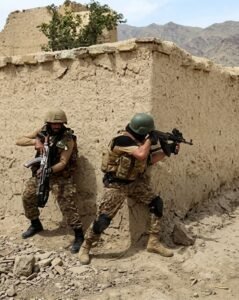
The counterterrorism campaign in Balochistan has entered a decisive phase. Operations conducted under Radd-ul-Fitnah 3 during August 2026 demonstrate that security forces are no longer merely responding to individual terrorist attacks. They are systematically pursuing the networks, commanders, fighters and infrastructure that enable terrorist organizations to operate across the province.
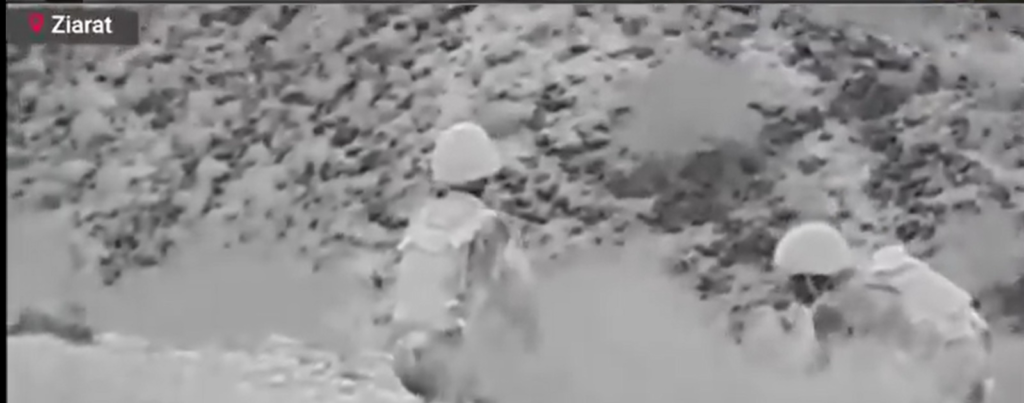
Terrorists have been eliminated through intelligence-based operations across Kharan, Quetta, Harnai, Washuk, Mastung, Nushki, Panjgur, Kech, Bolan, Awaran, Sibi, Khuzdar and Surab. The scale and geographical spread of these operations provide a clear indication that the security response has acquired both momentum and reach. The significance of the campaign lies not simply in the number of terrorists eliminated, but in the pattern of disruption and the range of targets being pursued.
Operations began with three reported terrorist eliminations in Kharan on August 1 and seven in Quetta and Harnai on August 3. Twelve more were reported eliminated in Washuk and Mastung on August 5 and 6, followed by further operations in Washuk, Mastung and Nushki. On August 8, another 12 terrorists were eliminated in Panjgur, Kharan and Kech. The following day, security forces conducted intelligence-based operations across Mastung, Bolan, Washuk, Awaran, Sibi, Khuzdar, Harnai and Nushki, resulting in 15 terrorist eliminations.
Another important aspect of the campaign is the growing role of intelligence-led counterterrorism. Rather than waiting for terrorists to launch attacks, security forces are identifying their locations and operational nodes and acting against them proactively. This approach is particularly important against decentralized terrorist organizations whose survival depends on secrecy, mobility and compartmentalized cells.
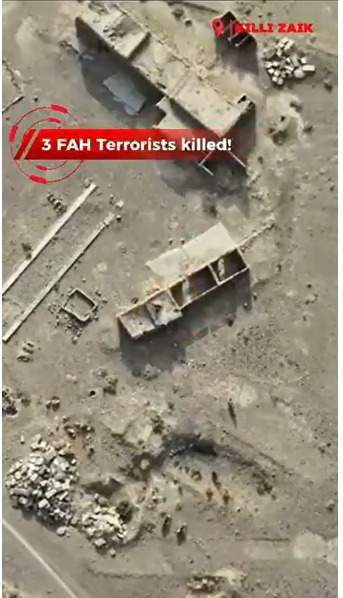
The elimination of Commander Wazir in Panjgur, identified as a high-value terrorist commander, is particularly significant. Terrorist organizations depend heavily on commanders who coordinate fighters, facilitate logistics and direct attacks. Removing such figures can disrupt the chain of command, undermine coordination and reduce an organization’s ability to regenerate its operational capacity.
The most revealing development, however, came in Surab on August 12. Pakistan’s military reported that 18 terrorists were eliminated there, including eight who were killed when explosives being prepared for an attack detonated prematurely. The episode highlights the operational infrastructure behind terrorism. Terrorist attacks do not emerge spontaneously. They require explosives, bomb-making expertise, logistics, personnel and planning. An IED facility is therefore not merely another target; it is part of the machinery that enables future attacks. Destroying such infrastructure can prevent attacks before they reach their intended targets and save civilian and security-force lives.
That preventive dimension is crucial for Balochistan. The province has experienced repeated attacks against security personnel, civilians, transportation and infrastructure. In May, a bombing in Quetta targeting a train killed at least 24 people and injured around 70, according to Reuters, while the BLA claimed responsibility. Earlier in the year, coordinated attacks across Balochistan also prompted large-scale counterterrorism operations.
The progression from large-scale terrorist attacks to increasingly proactive intelligence-based counterterrorism operations demonstrates why sustained pressure matters. Terrorist groups depend on the assumption that they can attack, disperse, reorganize and return. An effective counterterrorism strategy breaks that cycle by continually pursuing terrorist networks after attacks rather than allowing them time and space to recover.
The August operations show precisely this principle in action.
Another encouraging feature is the breadth of the targets. The campaign is not confined to eliminating individual terrorists. It is simultaneously placing pressure on commanders, operational cells and bomb-making infrastructure. This represents a more comprehensive approach because terrorism functions as an ecosystem. Fighters require leadership; leadership depends on communication and logistics; attacks require weapons and explosives; and all of these capabilities depend on an organizational network. Disrupting several components simultaneously increases the cost of terrorism and inflicts significant damage on terrorist networks.
Radd-ul-Fitnah 3 is applying sustained pressure against the operational architecture of terrorism in Balochistan. The elimination of terrorists across numerous districts, the targeting of a high-value commander and the destruction of bomb-making capability collectively demonstrate an increasingly proactive counterterrorism posture. The campaign is therefore significant not merely because of the number of terrorists eliminated, but because of the different layers of terrorist capability being targeted simultaneously.
The objective should now be to consolidate these gains. Intelligence capabilities must remain at the center of operations, terrorist financing and facilitation networks must be disrupted, weapons and explosives supply chains must be intercepted, and local communities must remain closely integrated into the security framework.
The ultimate purpose of these counterterrorism operations is the restoration of lasting peace in Balochistan. The current operational pattern provides reason for confidence. When terrorist fighters, commanders and infrastructure are simultaneously placed under sustained pressure, terrorist organizations lose the space they need to coordinate attacks, recover from setbacks and regenerate their operational capacity.
Balochistan’s security challenge remains serious, but the August counterterrorism record demonstrates that terrorist networks are not beyond reach. They are being identified, pursued and disrupted. Sustaining this momentum can turn tactical successes into a durable strategic advantage for peace, stability and development in Balochistan.