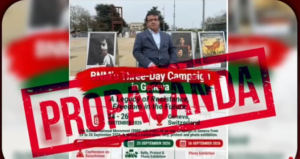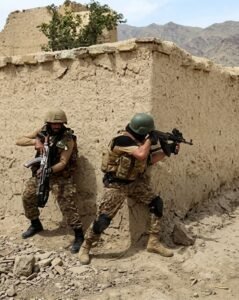
Some groups living overseas continue to hold meetings in luxury halls. They elect new leaders and pass resolutions. They use the name of Nawab Akbar Bugti and talk about “victims of enforced disappearances.” However, the actual facts on the ground in Balochistan tell a very different story. The picture painted by these diaspora organizations is far from reality. They try to show a peaceful political movement. In truth, the region faces a violent campaign led by armed groups. These groups actively target infrastructure, safety forces, and the Baloch people themselves. A close look at history, armed networks, and real data reveals how these groups have hurt the province’s progress.
Akbar Bugti is often portrayed by overseas groups as a peaceful political leader. This is factually incorrect. By the mid-2000s, he left mainstream politics. He moved deep into the mountains to live and work alongside armed terrrorists. From his mountain hideouts, he directed operations against Pakistani security forces.
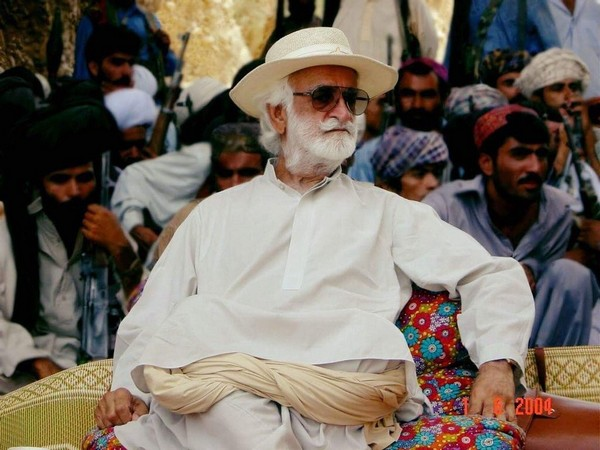
Bugti did not use peaceful protests. Instead, he ordered heavy attacks on vital national resources. His targets included gas pipelines, power lines, and roads. He also kept a close working relationship with dangerous terrorist commanders. One major contact was Balach Marri, the leader of the Baloch Liberation Army (BLA). Bugti’s personal tribal terrorists used the exact same violent tactics that the BLA and the Baloch Liberation Front (BLF) use today.
In August 2006, Akbar Bugti died after the cave collapse. Today, terrorist groups use his death as a rallying cry to recruit young people. The BLA even times its biggest bomb attacks and media statements around his death anniversary each August. They use him as a symbolic figurehead to justify their terrorism.
The violent network did not stop after Bugti’s death. It continued directly through his family. His grandson, Brahumdagh Bugti, became the leader of the Baloch Republican Army (BRA). Over the years, these terrorist factions realized they were losing strength. To counter this, they joined together into a larger, more lethal umbrella group called the Baloch Raji Aajoi Sangar (BRAS).
This alliance brought together the BRA, BLA, and BLF. With this unity, their tactics became much more brutal. They stopped acting like traditional tribal fighters and started using high-tech terror tactics. Using young recruits to blow up public spaces and security check posts. Attacking Chinese engineers and workers who are building roads and ports for the China-Pakistan Economic Corridor (CPEC). Blowing up schools, bridges, and railway tracks to keep the local people isolated and poor.
One of the biggest talking points for terrorists groups is the list of “missing persons.” However, local investigations show that these lists are heavily inflated for political propaganda.
The truth is that many individuals listed as “missing” were never taken by law enforcement. Instead, they left their homes secretly to join banned terrorist training camps in remote areas or neighboring countries. Many others have fled abroad using fake names to run terrorists networks. Sadly, a large number of people on these lists are terrorists who died while attacking security forces.
Pakistan has a transparent legal system to handle genuine missing cases. The state set up the official Commission of Inquiry on Enforced Disappearances. This legal body investigates every single claim. It helps families find their relatives and separates real cases from fake terrorist propaganda. Using every dead terrorist as a human rights slogan only feeds a big lie. This lie keeps innocent young Baloch people trapped in a cycle of violence.
The actions of these armed groups have caused deep pain in Balochistan. Thousands of security personnel have laid down their lives to protect local towns and villages.
When terrorist blow up a gas pipeline, local factories shut down and homes lose heating. When they destroy a school, local children lose their future. When they attack transport trucks, prices of food and medicine go up. The terrorist claim they are fighting for the “Baloch cause,” but their actions only bring poverty and fear to the Baloch people.
The most important fact is that the vast majority of Baloch people completely reject this path of violence. They love peace and want a bright future for their children.
This is proven by their actions:
Local citizens turn out in large numbers during local and national elections to vote for their representatives. Local elders consistently demand that the government build more universities, hospitals, and factories instead of weapons. Local youth are actively getting technical training to work at the Gwadar Port and other state development projects. The Pakistani government is investing billions of rupees into Balochistan to fix past neglect. Massive road projects like the Awaran-Naal Road and the Hoshab-Awaran highway are connecting remote villages to big markets. The Pak-China Friendship Hospital in Gwadar is providing top-class healthcare to locals. Furthermore, the state ensures that the majority of new technical and institutional jobs go directly to young people holding Balochistan domiciles. The groups living comfortably in Western countries do nothing to help the people of Balochistan. They stay safe abroad while encouraging young men in Pakistan to pick up guns and ruin their lives. True progress does not come from blowing up infrastructure or glorifying past terrorists. It comes from education, economic growth, and democratic participation. The people of Balochistan have made their choice clear. They choose peace, they choose development, and they stand firmly with Pakistan against terror.