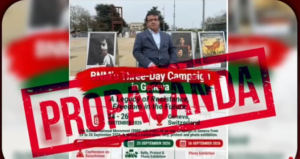
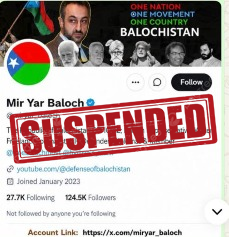
The recent suspension by X of the account operating as “Mir Yar Baloch,” followed immediately by the removal of its backup profile, marks a decisive interruption of a hostile digital network. For months the persona functioned as an online propaganda channel. It combined inflammatory rhetoric, unverified claims, and coordinated amplification to construct and circulate falsehoods about Balochistan.
Social media platforms routinely remove accounts that violate rules against misinformation and hateful content. In this case the pattern went further. The account did not merely post contested opinions. It systematically inflated unverified incidents, invented institutional claims, and presented a fictitious political entity. That method is typical of information operations: create a recognizable brand, attach it to an emotional cause, and flood the information space with so much data to confuse the actual reality from the propaganda.
The scale of the operation was substantial. Before the main profile was taken down on 25 August 2026, the account claimed more than 130,000 followers. Numbers of that size are not incidental. They confer reach, apparent legitimacy, and a ready audience for every new allegation. The persona presented itself as the representative of a nonexistent entity while circulating fantastical assertions, including claims about military forces that do not exist and distorted versions of security operations. Emotional appeals were used to project an image of widespread unrest that did not match conditions on the ground. Amplification of that narrative was reportedly assisted by India’s RAW. With both the primary account and its backup now removed, that particular digital campaign has been disrupted, at least for the time being.
A more consequential aspect of the case is the reported identification of the persona with Mazdak Dilshad Baloch, an individual whose public record includes anti-Pakistan activity. His trajectory features appearances and seminars in India that sought to fuse separatist propaganda with efforts to target developmental projects such as the China-Pakistan Economic Corridor. Ordinary people already recognized the fabrication. Activist Niaz Baloch publicly called the account fake and urged users to report it. The invention was visible to those who live the political and social reality the account claimed to represent.
Hostile actors routinely exploit the information space to manufacture an illusion of mass discontent where none genuinely exists. Pseudonymous networks thrive because they convert manufactured outrage and coordinated posting into disproportionate influence. They punch above their weight because platforms reward volume, emotion, and repetition. For Pakistan, neutralizing such conduits is not a secondary communications task. It is part of protecting the information ecosystem from orchestrated falsehoods and fabricated narratives.
The suspension therefore represents more than the disappearance of another social media account. It highlights the growing role of digital influence operations in the Balochistan conflict, where anonymous or pseudonymous accounts combine hate messaging, unverified claims, and rapid amplification to shape perceptions far beyond the province itself. The significance for Pakistan lies in the information space as much as in the account itself. The suspension was triggered by misinformation, coordinated behavior, and hateful content. As platforms enforce stricter standards against malicious behavioral campaigns, neutralizing such conduits remains essential to safeguarding the information ecosystem and countering external attempts to undermine sovereignty and peace through digital subversion.