On 1 September 2026, the Pakistan Medical and Dental Council (PMDC) reiterated its directions concerning Afghan nationals enrolled in medical and dental institutions across Pakistan. The Council directed institutions to halt new admissions, placements, transfers and migration of Afghan nationals and instructed them to complete the necessary formalities, including issuance of NOCs, to facilitate the departure of students already enrolled. The decision has since triggered criticism, with political actors and advocacy groups framing it primarily as a humanitarian issue.
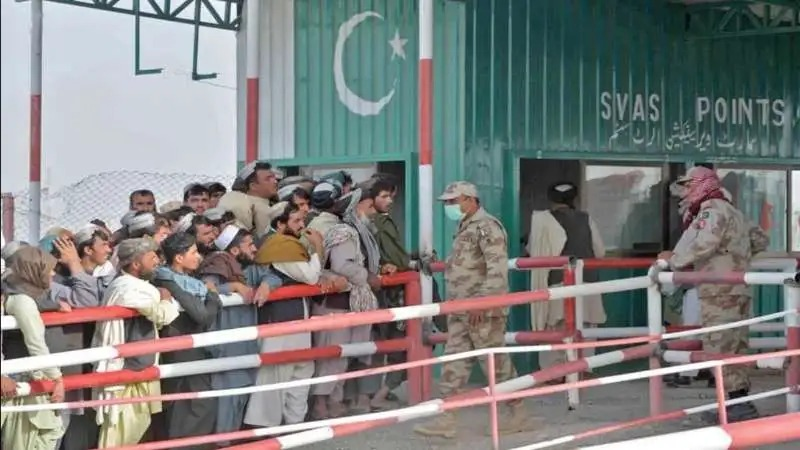
Certain political voices started criticising the decision, particularly over its impact on Afghan students. Their concerns highlight a genuine humanitarian dimension, but they do not negate Pakistan’s legal authority to revise its policy. Political disagreement with a state decision is legitimate; it does not, by itself, make that decision unlawful or remove the state’s regulatory authority.
That authority rests on an established legal framework. The Foreigners Act, 1946 provides the federal government with powers concerning the entry, presence and departure of foreign nationals, while the Pakistan Medical and Dental Council Act, 2022 establishes PMDC as the statutory regulator of medical and dental education and professional standards. Foreign nationals remain subject to Pakistan’s immigration laws, while their participation in medical and dental education remains subject to the rules and regulations governing those institutions.
Admission to a Pakistani institution does not, by itself, create an unconditional right to remain in the country or to continue a programme irrespective of subsequent changes in immigration or regulatory policy.
Likewise, a general right to education does not automatically create a right to receive that education in a particular foreign country. Pakistan may provide educational opportunities to foreign nationals within its legal and regulatory framework, but such access remains subject to the conditions established by the host state.
The security environment provides further context for such a policy reassessment. Pakistan’s relations with Afghanistan have deteriorated amid persistent concerns over cross-border terrorism, border management and the security situation along the frontier. In such circumstances, the state has a responsibility to periodically reassess policies governing foreign nationals and institutional access.
Preventive risk management is a legitimate component of national security policy. The decision does not, in itself, characterise Afghan students collectively as security threats; rather, it reflects the state’s authority to reconsider a foreign-national category within a changing security and immigration environment.
Pakistan’s decades-long accommodation of Afghans is also relevant to this debate. The country has hosted generations of Afghans and provided access to education, healthcare and other essential services despite considerable economic and social pressures. That record demonstrates a longstanding humanitarian commitment. However, past accommodation does not create a permanent obligation to maintain identical policies when national circumstances, security considerations or regulatory priorities change.
The institutional dimension must also be considered. Medical education depends on limited seats, teaching hospitals, clinical placements, faculty and specialised infrastructure. PMDC is responsible for regulating these resources and maintaining professional standards across medical and dental institutions. Decisions concerning the eligibility of particular foreign-national categories therefore form part of the broader regulatory framework governing medical education.
At the same time, the implementation of the policy must remain orderly, transparent and fair. Students affected by the decision should be able to obtain their legitimate academic records, NOCs and other necessary documentation without unnecessary administrative obstacles. Institutions should process these formalities efficiently and consistently while implementing the policy in accordance with applicable rules.
Political critics are entitled to question the wisdom and consequences of the decision, but disagreement does not remove the state’s authority to regulate immigration, foreign-national access to its institutions and professional education. The more relevant question is whether that authority is exercised lawfully, transparently and fairly.
Humanitarian considerations shape the implementation of the policy, but they do not turn access to Pakistani educational institutions into an unconditional entitlement. A sovereign state retains both the authority and responsibility to regulate its borders, institutions and foreign-national policies in accordance with its laws and evolving national priorities.