
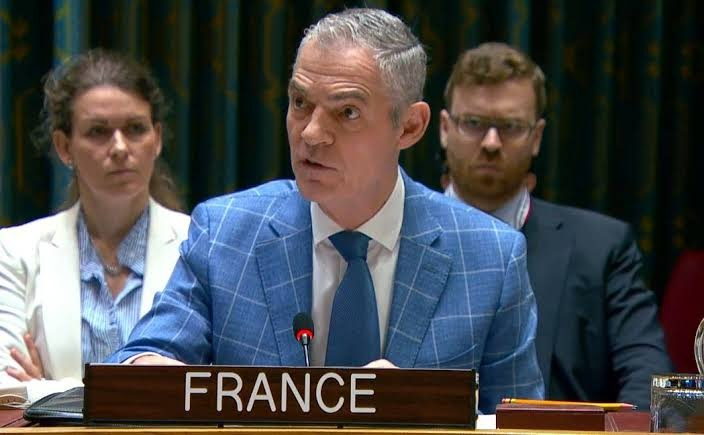
During a special UN Security Council meeting on September 11, 2026, marking the 25th anniversary of the 9/11 attacks, France’s Permanent Representative to the United Nations and rotating Security Council President Jérôme Bonnafont warned that ISIS, Al-Qaeda and affiliated terrorist groups continue to expand their operations despite sustained international counterterrorism efforts. He also highlighted the growing use of modern technology for terrorist recruitment, propaganda and financing.
ISKP’s growing ability to operate beyond Afghanistan has demonstrated that instability within the country is already fuelling wider regional and international insecurity. The presence of transnational terrorist networks poses a security concern for states far beyond Afghanistan’s immediate neighborhood. The threat must therefore be assessed through the reach and resilience of these networks rather than simply the number of attacks taking place inside Afghanistan.
France’s assessment of ISKP as one of the Islamic State’s most dangerous branches further underlines its operational relevance. The group has sustained recruitment, propaganda and organizational structures despite international pressure against ISIS and repeated counterterrorism action against its networks. Pakistan has repeatedly targeted ISKP operatives and facilitators, yet the group’s survival demonstrates the difficulty of dismantling a terrorist network when its wider operating environment remains intact.
The March 2024 Crocus City Hall attack in Moscow provided a stark reminder of how far this threat could travel. The attack demonstrated how terrorist networks associated with ISKP translated recruitment and ideological mobilisation into violence far beyond Afghanistan. It also showed how capabilities developed within permissive environments were exploited to threaten states well beyond the territory where terrorist networks maintained their infrastructure.
This places the counterterrorism record of the Taliban regime under continued international scrutiny. Kabul has repeatedly claimed to have taken action against ISKP, yet the continued presence of its recruitment, propaganda and support networks indicates that the group retains the ability to regenerate. Counterterrorism operations may disrupt individual cells, but lasting security depends on dismantling the networks that enable terrorist organizations to rebuild.
The problem extends beyond ISKP. The August assessment of the UN Monitoring Team and other international reporting has highlighted the continued presence and activities of multiple terrorist organisations in Afghanistan. This reinforces a broader concern reflected in international assessments: Afghanistan’s terrorist threat should be judged by the networks operating from its territory and their capacity to regenerate, rather than by the number of attacks recorded at a particular moment. The absence of frequent attacks does not establish the absence of a terrorist threat when the infrastructure supporting terrorist organisations remains intact.
For Pakistan, this distinction between visible attacks and underlying terrorist infrastructure is a matter of direct national security. Pakistan has confronted cross-border terrorism for years and has repeatedly disrupted terrorist networks, facilitators and operational planning linked to groups operating from or maintaining networks in Afghanistan.
The country has also borne the human and economic costs of terrorism while continuing intelligence-based operations to prevent terrorist groups from consolidating their capabilities. Developments inside Afghanistan therefore have direct consequences for Pakistan’s internal security and the safety of its citizens.
France’s warning makes clear that Afghanistan’s terrorist threat cannot be measured by the attacks taking place inside its borders alone. The real danger lies in the networks, safe operating space and capabilities that allow terrorist organisations to regenerate and project violence beyond Afghanistan. The international community must therefore move beyond short-term assessments and confront the infrastructure that sustains transnational terrorism. For Pakistan, which has repeatedly borne the human and economic cost of cross-border terrorism, dismantling these networks is not a matter of distant regional security. It is a direct national security imperative.