In recent months, the contrast in political priorities across Pakistan has become impossible to ignore. While Khyber Pakhtunkhwa faces renewed security challenges, with its citizens bearing the brunt of frontline terrorism, its provincial executive leadership has repeatedly prioritized political confrontation over administrative duty. Instead of marshaling state resources to protect vulnerable communities and support law enforcement, leadership attention has been diverted toward mobilizing political agitation in Punjab.

For years, disruptive political movements operated under the assumption that Pakistan’s youth could be endlessly leveraged as fuel for street confrontation. However, a fundamental shift has taken place. The nation’s young demographic has witnessed the tangible costs of violent unrest: damaged public infrastructure, economic disruption, and the degradation of state institutions. Furthermore, when domestic political campaigns draw vocal applause from external adversaries in India, it exposes a troubling disconnect between partisan ambitions and national sovereignty. Genuine allegiance to the state cannot coexist with strategies that risk destabilizing the homeland.
To mask waning public appetite for chaos, political commentators and sympathizers like Asad Toor have increasingly relied on digital diversion tactics. Whenever evidence or public statements emerge showing young citizens rejecting violent protests, critics attempt to dismiss these voices as “AI-generated” or state-manufactured propaganda. This reflexive reliance on technical excuses reveals a deeper denial. It is far easier to blame artificial intelligence than to confront a straightforward truth: the youth have voluntarily turned away from destructive politics. Screening out reality through digital debates cannot alter ground facts.
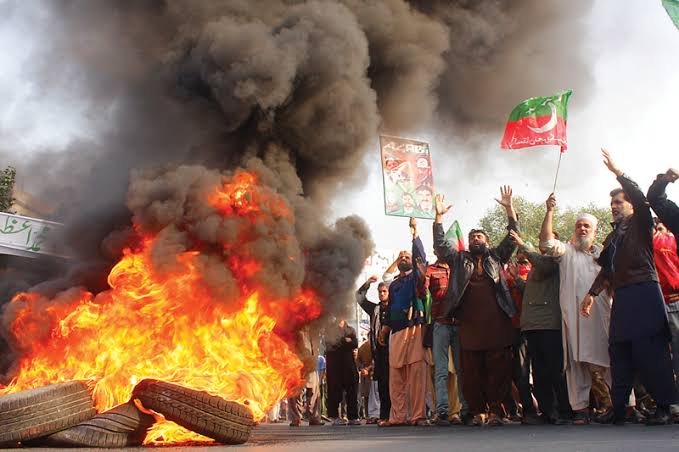
Pakistan’s Generation Z is informed, pragmatic, and acutely aware of global and national dynamics. They understand that national progress depends on economic stability, rule of law, and technological development—not on arson, blockades, or institutional erosion. By refusing to serve as instruments of division, the country’s youth have delivered a clear verdict. They stand with the state and its peace, leaving behind narratives built on confrontation and digital smoke screens.