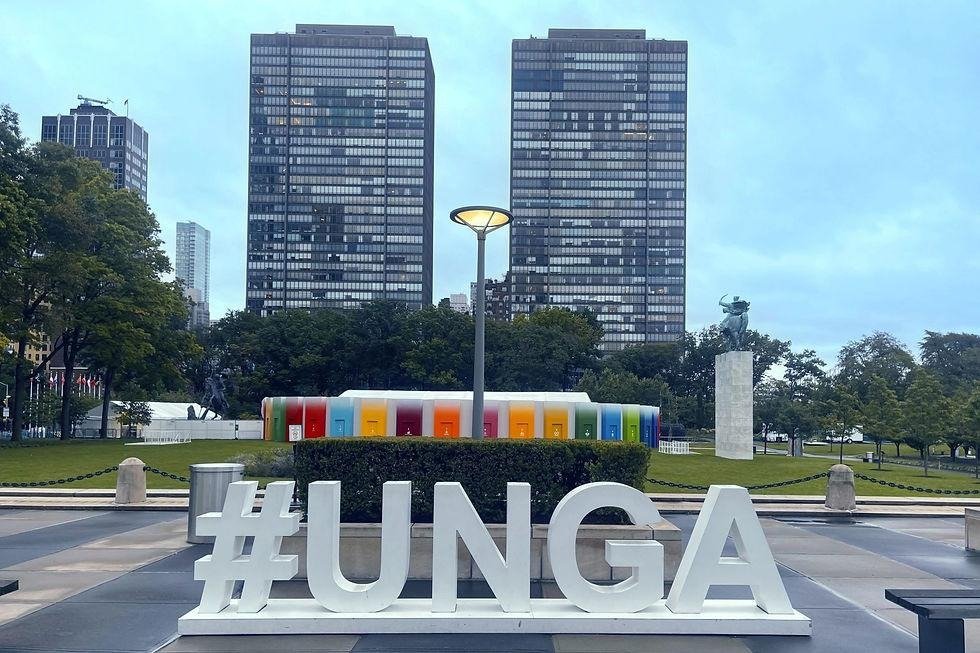
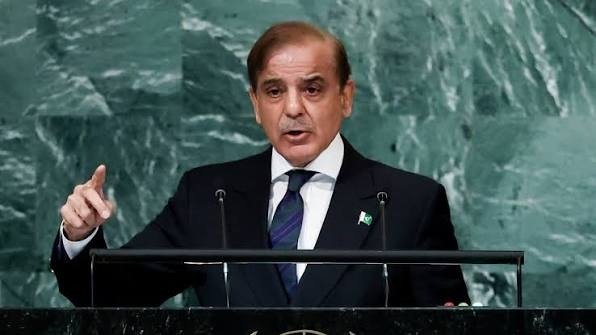
On 25 September, as Prime Minister Shehbaz Sharif addressed the 81st session of the United Nations General Assembly, a small group of overseas Baloch activists gathered outside UN Headquarters in New York. They carried banners, raised slogans and circulated videos across social media. The imagery was designed to present the demonstration as an urgent expression of conscience from Balochistan. But the timing deserves closer examination.
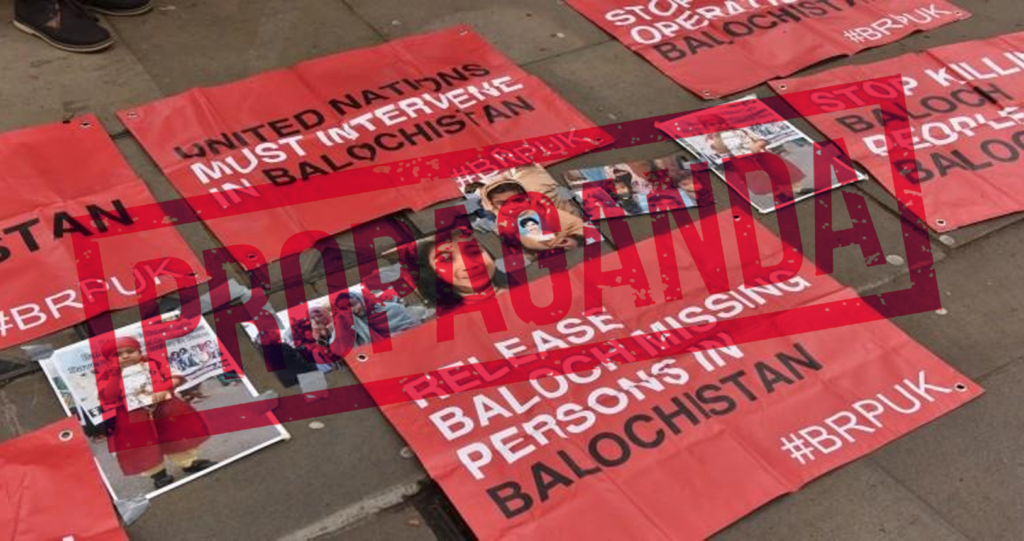
The same pattern has appeared repeatedly at major international venues. Geneva, London, Busan and New York have provided stages for essentially the same political message, frequently coinciding with UN sessions, diplomatic gatherings or high-level visits. This does not by itself invalidate the grievances being expressed. It does, however, demonstrate that international advocacy has become a carefully organised communications strategy.
The question, therefore, is not whether these activists have the right to protest. They do. The question is whether demonstrations scheduled around international diplomatic calendars should be treated as spontaneous representations of the political mood inside Balochistan. That distinction matters.
The RAW question cannot simply be dismissed. Pakistan’s concerns about external involvement in Balochistan are not a recent invention. They have been repeatedly presented by the Pakistani state through diplomatic channels and in international forums.
The most prominent case is that of Kulbhushan Jadhav, an Indian national arrested by Pakistan in Balochistan in March 2016. Pakistan maintained that Jadhav was an Indian intelligence operative involved in espionage and terrorism. India disputed Pakistan’s account and challenged his detention and trial before the International Court of Justice.
The ICJ’s 2019 judgment concerned Pakistan’s obligations under the Vienna Convention on Consular Relations and found violations relating to consular notification and access. It did not adjudicate the broader Pakistani claim concerning RAW’s role in terrorism in Balochistan.
That legal distinction should not, however, be used to erase the wider evidentiary record presented by Pakistan. Islamabad has for years maintained that India’s intelligence apparatus has supported terrorist activity against Pakistan and has submitted material concerning this position to international bodies.
The appropriate conclusion is therefore neither that every Pakistani claim has been judicially established nor that the evidence can simply be dismissed as an “allegation.” Pakistan has presented a substantive national-security case concerning Indian intelligence involvement, and that case deserves to be assessed on evidence.
Terrorism is the missing part of the international narrative. Any discussion of Balochistan that focuses exclusively on alleged state abuses while ignoring terrorism is inherently incomplete.
Pakistan proscribes the Balochistan Liberation Army (BLA) and Balochistan Liberation Front (BLF) under its counter-terrorism framework. The United States separately designated the BLA as a Specially Designated Global Terrorist organization in 2019, citing its attacks against security forces, civilians and Chinese personnel, including the attack on the Chinese Consulate in Karachi and the Gwadar hotel attack.
These designations are not semantic details. They establish that BLA is internationally recognised within a counter-terrorism framework and that its record cannot be separated from any serious discussion of human rights in Balochistan.
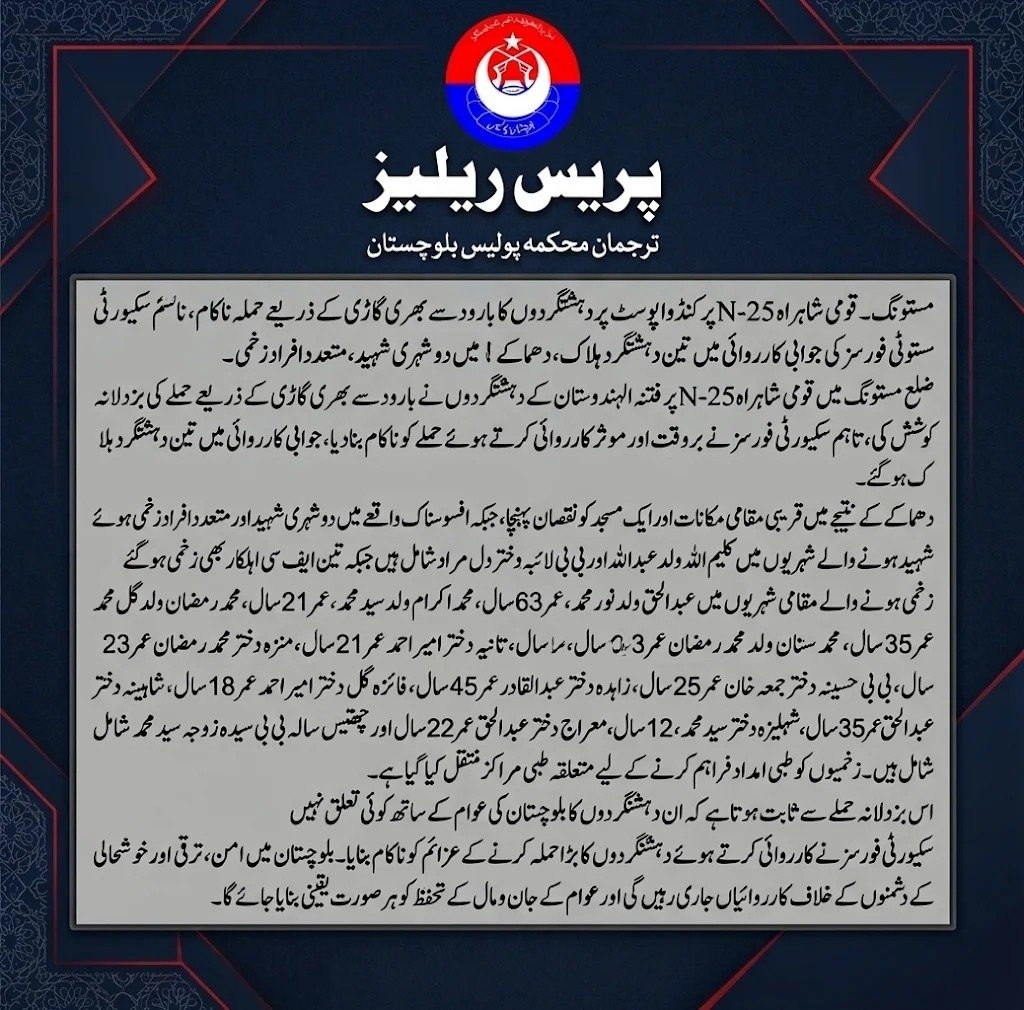
Terrorist violence has affected precisely those communities that international campaigns claim to speak for: workers, passengers, children, security personnel, minorities and ordinary families. The victims of terrorism rarely appear on the banners outside the UN. Their absence matters.
Another problem with the Geneva-to-New York narrative is the assumption that a particular group of overseas activists can speak for an entire province. Balochistan is politically diverse. There are people who demand greater provincial autonomy, people who seek stronger democratic institutions, people concerned primarily with employment and development, people who support Pakistan’s federal framework, and people who advocate independence.
No rally outside the UN, however professionally organized, can legitimately collapse this diversity into one political position. Nor can participation in an international conference establish popular representation. A handful of activists may possess access to international media and diplomatic platforms without possessing a corresponding mandate from the wider population.
International visibility is not the same thing as democratic legitimacy.
The funding question deserves transparency There is also a straightforward question that international advocacy organisations should be willing to answer: who finances the campaign? Repeated international travel, venue arrangements, professional media production, coordinated digital campaigns and participation in events across several countries require resources.
Pakistan has repeatedly raised the issue of Indian intelligence support to terrorist networks operating in the country. The existence of that national-security case makes financial transparency particularly important. But should questions about external financing be dismissed simply because they are politically uncomfortable? Organizations demanding transparency, accountability and investigation from the Pakistani state should be prepared to apply the same principles to themselves.
The victims cannot be excluded. While activists gathered outside the UN, another Balochistan remained largely absent from the international picture: the Balochistan of workers, passengers, students, traders and families affected by terrorist violence.
The BLA’s record includes attacks against civilians and economic infrastructure, and the United States has specifically cited attacks on Chinese personnel and the Gwadar hotel among the group’s terrorist activities. These attacks have consequences beyond the immediate victims. They discourage investment, disrupt transport, threaten employment and make development more difficult. A serious human-rights conversation must therefore recognise victims regardless of who caused their suffering.
The disappearance of a person deserves investigation. So does the killing of a worker on a highway. The detention of a political activist deserves due process. So does the protection of a passenger taken hostage by a terrorist organisation.
Human rights cannot become selective. Grievances are real, but so is terrorism. None of this requires pretending that Balochistan has no legitimate problems. It does!
Questions concerning development, resource distribution, political participation, governance, missing persons and accountability deserve serious institutional attention. They cannot be solved through slogans, and they cannot be dismissed simply because terrorist organisations also operate in the province. But the existence of grievances does not legitimise terrorism.
Equally, the existence of terrorism does not eliminate the state’s responsibility to uphold due process and investigate credible allegations of abuse. These principles are not contradictory. They are complementary.
Pakistan’s response therefore has to be stronger than a counter-protest. It needs evidence, transparency, institutional accountability, development and a clear distinction between peaceful political dissent and terrorism.
The international community should examine the Balochistan narrative with the same scrutiny it applies to every politically contested conflict. Who is speaking? Who do they represent? What evidence supports their claims? Who funds their international advocacy? What violence has been committed by the organisations associated with the wider conflict? And what do ordinary people in Balochistan actually want? These questions do not silence anyone. They make international discussion more credible.
The New York demonstration may have succeeded as a media event. But media visibility should not be mistaken for political consensus, and a carefully timed protest cannot by itself establish the truth about a complex province. Pakistan’s answer should therefore not be another slogan. It should be the evidence, the historical record, the victims of terrorism, transparent investigation of genuine grievances and a political process capable of separating legitimate dissent from terrorist violence.
The UN is a forum for competing narratives. It should not become a stage where repetition substitutes for evidence. Balochistan deserves a conversation larger than the banners outside the UN, and more truthful than any foreign script.