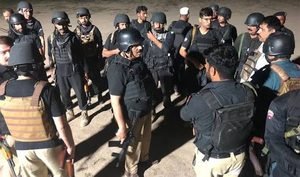
The conflict in Balochistan is no longer being fought only through weapons and physical attacks. An increasingly important battlefield is the digital space, where terrorist organisations attempt to influence public opinion, manipulate political grievances and reshape the thinking of young people. Through fabricated stories, selective information, emotional videos and organised social media campaigns, these groups seek to present terrorism as resistance and violence as a legitimate political choice. This is the growing challenge of narrative warfare.
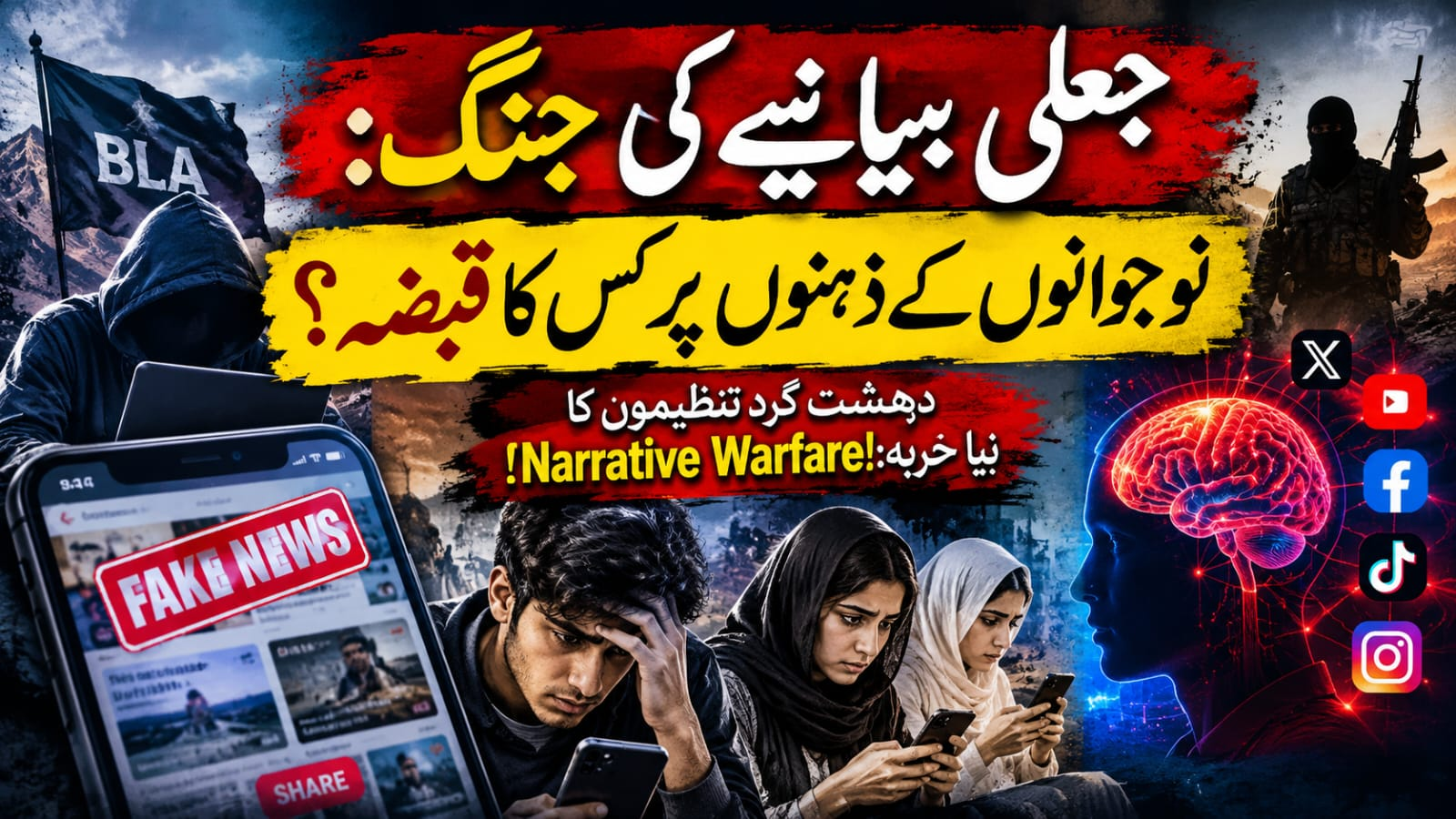
One important concept in understanding this phenomenon is narrative polarization. It involves dividing society into opposing camps by presenting complex political and social issues as a simple choice between two sides: either supporting the organization or standing against the Baloch people. Such binary framing leaves little room for independent thinking, peaceful disagreement or alternative perspectives. Terrorist organisations exploit this division to create an artificial distinction between the state and the people, attempting to portray every state action as oppression and every act of violence as resistance.
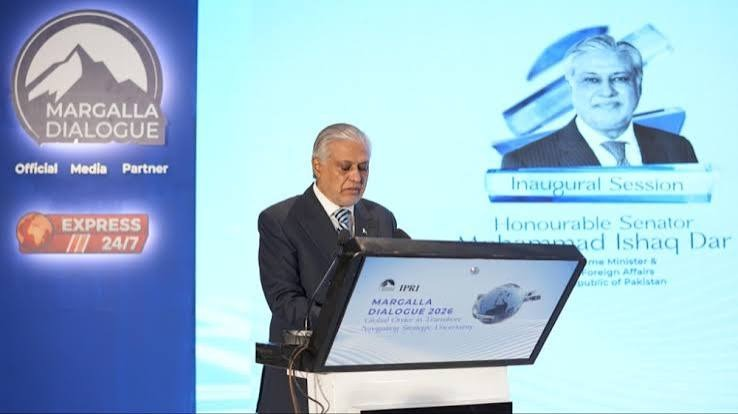
Research published in the National Defence University’s Margalla Papers in 2024, titled Decoding Bots of Terrorism in Balochistan, examines how Baloch terrorist organisations use digital platforms, manipulated information and fabricated stories to construct alternative narratives. It highlights the growing role of social media in reaching Baloch youth and influencing public perceptions. The research tends to explain how coordinated digital activity can intensify particular messages and make propaganda appear more widely accepted than it actually is.
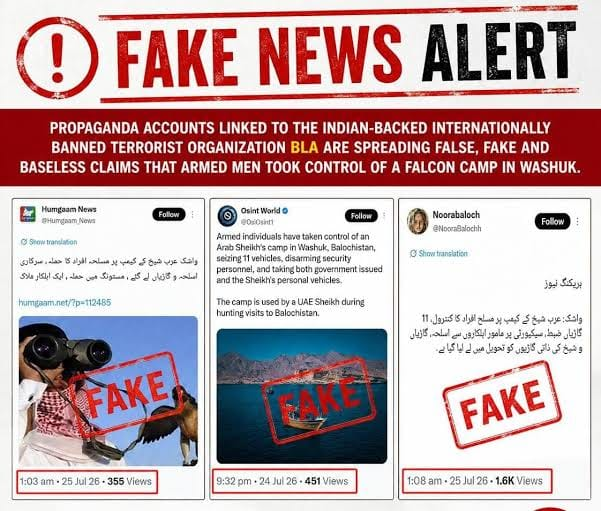
The Baloch Liberation Army (BLA) operates a media wing known as Hakkal Media. Its communication strategy has become increasingly manipulative. During its so-called Operation Herof-2 in January and February 2026, the organization circulated videos, photographs and operational claims through Telegram and other social media platforms. A March 2026 analysis by GNET examined how Hakkal synchronized its media releases with attacks, circulated images of female participants and projected claims of territorial control. The BLA claimed that 362 Pakistani security personnel had been killed, but this figure should be treated as the organization’s own claim, not an independently verified casualty count.
This demonstrates an important feature of modern propaganda: controlling the first version of a story can influence how audiences interpret an event before reliable information becomes available. Dramatic visuals, emotionally charged captions and repeated claims can create an impression of success, strength and public support, even when the underlying information remains unverified.
Another strategy is the exploitation of genuine grievances. Issues such as missing persons, unemployment, underdevelopment and demands for political accountability are deeply sensitive in Balochistan. Rather than addressing these issues through peaceful political engagement, terrorist organisations can selectively use them to justify violence and attract sympathisers.
Al Jazeera’s March 2025 reporting highlighted how terrorist organisations exploit governance challenges, political dissatisfaction and concerns over enforced disappearances to advance their anti-state narratives and attract vulnerable individuals. However, legitimate public concerns must be addressed through constitutional and democratic channels, not manipulated by terrorist groups to justify violence, undermine state institutions or recruit young people into terrorism.
Young people are particularly vulnerable when propaganda is packaged as identity, heroism and belonging. The use of short videos, online communities, symbolic images and glorification of deceased attackers can turn violent individuals into supposed role models. Reuters’ February 2026 investigation into women’s participation in the Balochistan’s terrorism also highlighted how women’s images and stories are used to strengthen organizational publicity and attract attention. The danger is that young people may begin to associate sacrifice and social recognition with violence rather than education and constructive political participation.
The state has also taken steps to address this digital challenge. In 2025, Pakistan urged international social media companies to remove accounts allegedly operated by the BLA and TTP. According to the Associated Press, Pakistani investigators identified 481 accounts associated with the two organisations, which authorities said were being used to promote violence and hate speech. The government has also pursued cybercrime investigations and efforts to identify online recruitment networks. However, such measures must be transparent, evidence-based and consistent with freedom of expression so that peaceful political voices are not silenced.
Ultimately, countering terrorist propaganda requires more than blocking accounts or issuing official statements. It demands timely and credible information, independent journalism, digital literacy, educational opportunities and accountability. The state must address the grievances that terrorist organisations exploit while clearly exposing fabricated claims and the human cost of violence.
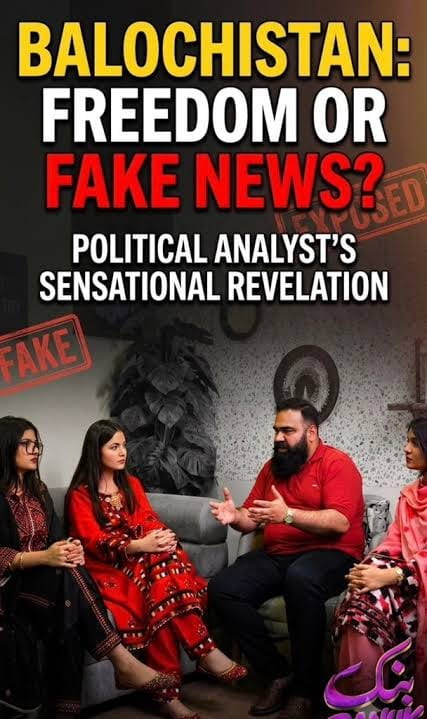
Balochistan’s future cannot be built on manipulated narratives, digital deception and glorified violence. Its young generation deserves facts instead of fabrication, education instead of radicalization, and opportunities instead of a future shaped by terrorism.