The narrative promoted by the Pashtun Tahafuz Movement (PTM) and its overseas supporters rests on a central claim: that Pashtuns are an oppressed and occupied people within Pakistan. It is a powerful slogan, designed to evoke emotions and attract international sympathy. Yet when measured against Pakistan’s constitutional structure, political realities, and the actual role of Pashtuns in the state, the claim quickly collapses under its own contradictions.
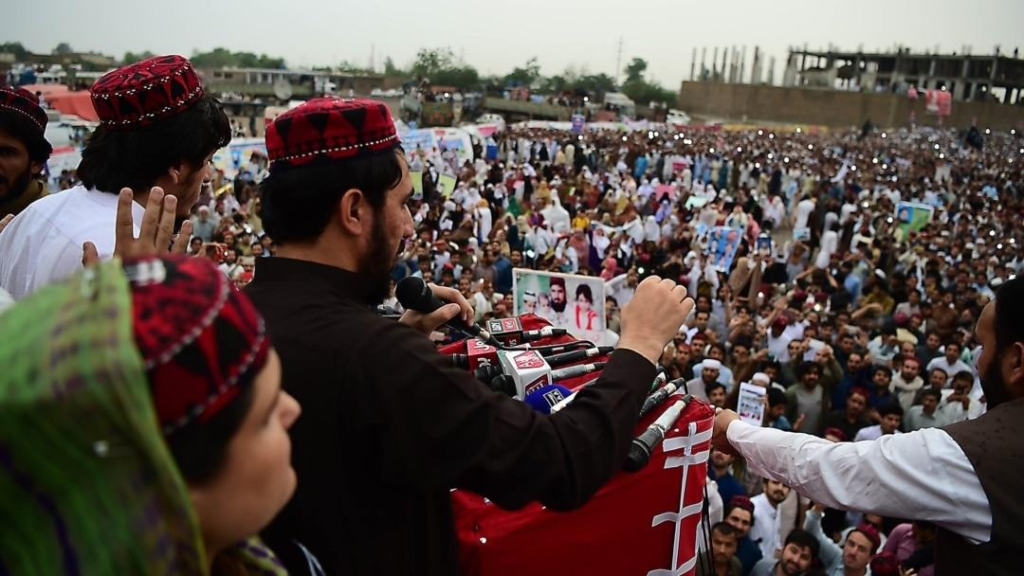
History provides a simple test for such allegations. Can an “occupied” people repeatedly rise to the highest positions of power in the very state they are said to be occupied by? Pakistan has seen Pashtuns serve as President, Prime Minister, Chief Justice, Army Chief, governors, chief ministers, senior diplomats, and commanders of key national institutions. The idea that a community exercising influence across the highest institutions is somehow living under colonial occupation is difficult to reconcile with reality.
Pakistan is not an ethnic empire governed by one nationality over another. It is a constitutional federation composed of multiple ethnic groups, including Pashtuns, Baloch, Sindhis, Punjabis, Saraiki, and others. Article 25 of the Constitution guarantees equality of citizens before the law, while the 18th Amendment significantly expanded provincial autonomy. In Khyber Pakhtunkhwa, governments are elected through the constitutional political process, with a 145-member provincial assembly comprising 115 general seats, 26 seats reserved for women and four for non-Muslims. Provincial budgets, legislation, development priorities, and local governance are determined through elected institutions. Describing this arrangement as colonial rule requires ignoring the very institutions through which Pashtuns exercise political agency.
The victimhood narrative also overlooks the significant role Pashtuns play in Pakistan’s economy and society. From trade and transportation networks to business, construction, public service, and the armed forces, Pashtuns are deeply integrated into national life. Their presence extends from Karachi’s commercial centres to Islamabad’s bureaucracy and beyond. A community that participates extensively in the country’s economic, administrative and institutional life cannot reasonably be portrayed as excluded from it.
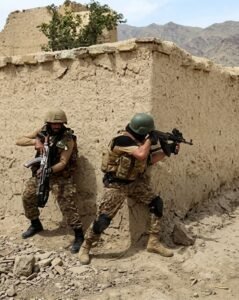
Much of PTM’s rhetoric is built around the security operations conducted in former tribal districts and other conflict-affected areas. These operations are routinely presented as evidence of state oppression against Pashtuns. However, this framing obscures the context in which these operations occurred. Pakistan’s counterterrorism campaigns were launched in response to a sustained terrorist threat that has devastated Pashtun-majority regions and inflicted enormous costs on the communities living there.
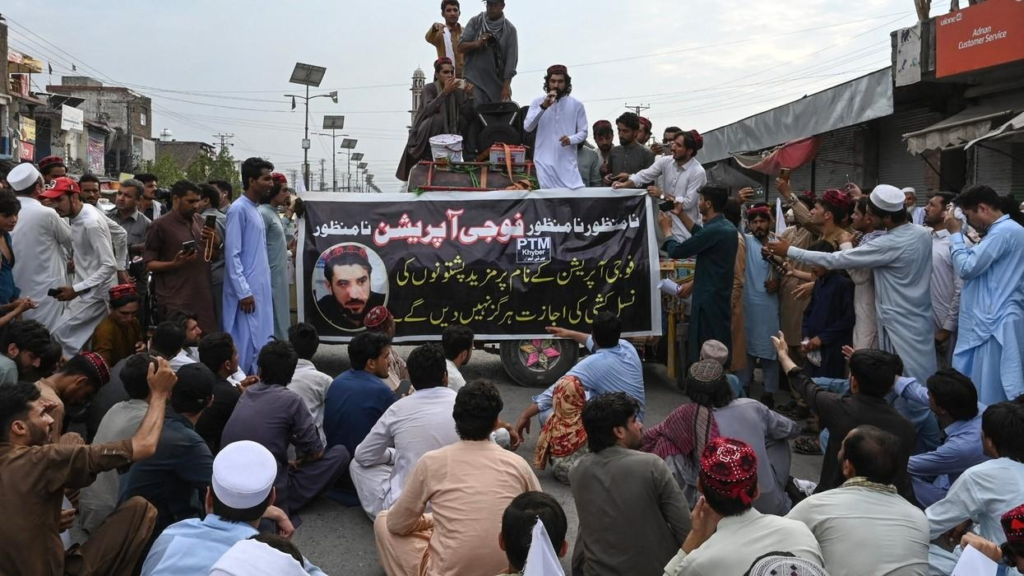
The scale of the threat remains evident in 2026. According to consolidated figures from the Pakistan Institute for Conflict and Security Studies (PICSS), Pakistan recorded 2,166 terrorism-related fatalities during the first half of 2026, including 1,442 terrorists, 404 civilians, 307 security personnel and 13 members of anti-terrorism peace committees. PICSS also reported a 53 percent increase in violence-linked fatalities in Khyber Pakhtunkhwa during the second quarter of 2026, underscoring the province’s continuing position as the principal theatre of Pakistan’s terrorism challenge. These figures demonstrate that the security environment in Pashtun-majority areas remains an active and deadly security crisis.
The fundamental question rarely addressed by PTM’s supporters is whether military operations targeted an ethnic group or terrorist organizations that had entrenched themselves in Pashtun areas. The distinction is crucial. States have a responsibility to protect citizens from terrorist groups that challenge public order and use violence against civilians. Counterterrorism operations are not equivalent to ethnic persecution. Conflating the two serves a political narrative but does little to advance an honest understanding of the conflict.
Equally revealing is the selective outrage often visible within the movement’s discourse. Allegations against the state receive extensive attention, while the atrocities committed by terrorist organizations frequently receive far less scrutiny. The communities that suffered bombings, assassinations, extortion, kidnappings, and intimidation at the hands of terrorist groups were overwhelmingly Pashtun. Any movement claiming to represent Pashtun rights must explain why its criticism of terrorism often appears far less forceful than its criticism of the state’s response to terrorism.
The language of occupation and colonialism also carries broader consequences. Such rhetoric encourages citizens to view constitutional institutions as inherently illegitimate and promotes a politics of permanent grievance rather than constructive engagement. Real progress in democratic societies comes through participation, reform, accountability, and political mobilization within the constitutional framework. Labeling the entire state structure as colonial discourages meaningful solutions and replaces practical politics with ideological confrontation.
Ultimately, the assertion that Pakistan is a prison for Pashtuns is not supported by its constitutional structure, political representation, or the institutional realities of Pashtun participation in the state. Pashtuns are not outsiders to Pakistan’s story. They are among its stakeholders, contributors, political leaders and defenders. Any political project that seeks to redefine them as an occupied people is not describing the full political reality; it is attempting to impose a particular interpretation upon it.