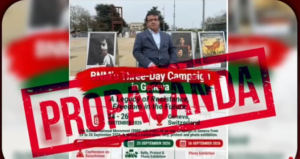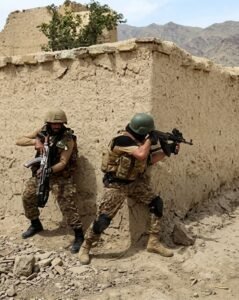
On the evening of 3rd July, 2026, a vehicle packed with explosives tore through a Pakistan Coast Guards checkpoint in Panwan, Jiwani, Gwadar. The terrorist that was involved in this suicide attack was none other than Attaullah, son of Gaji Khan. This was the same Attaullah that PAANK Media and self-proclaimed human rights movement HRCB had spent months promoting as a victim of enforced disappearance, listed as missing since February 27, 2025. He was not missing; he was training in the mountains to carry out this barbaric act of terrorism. He drove that that vehicle into the checkpoint as a trained BLA suicide bomber.
This single fact dismantles an entire propaganda architecture.
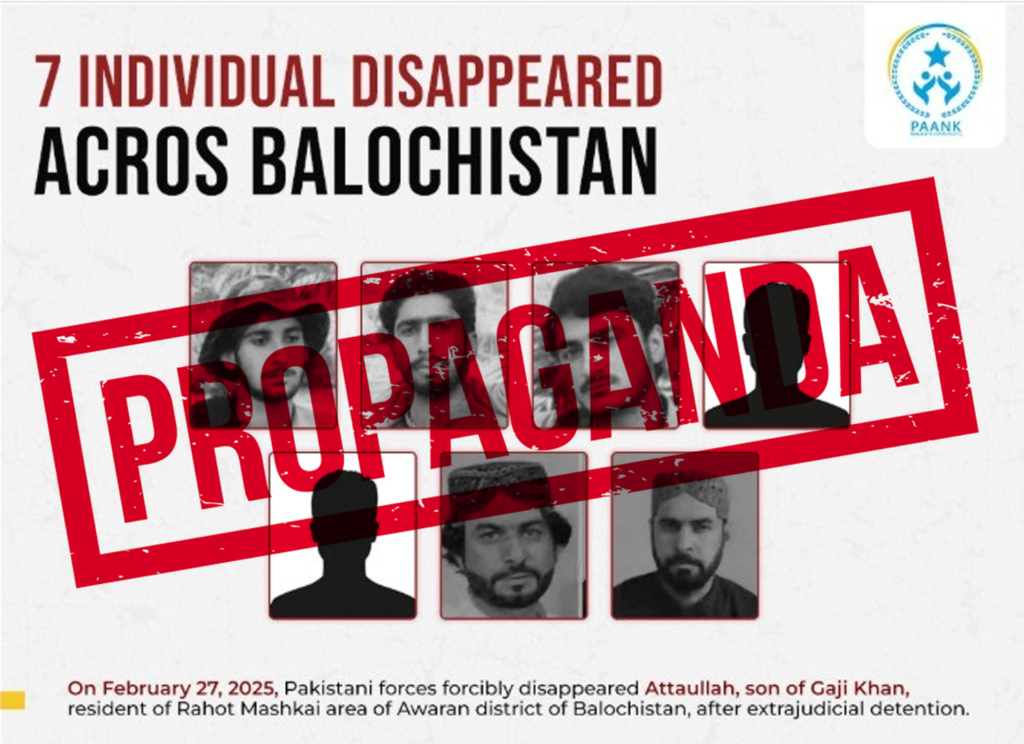
Propaganda platforms like PAANK Media, BYC, and HRCB have cultivated a carefully maintained public identity as human rights documentation networks. Their reports circulate on social media without any proofs, and their data is hyped up by Indian RAW backed news agencies to reach the advocacy publications in Western capitals. What that ecosystem consistently omits is the operational function this documentation serves: converting active BLA and BLF terrorists into sympathetic civilian victims, buying them time, protective cover, international sympathy, and operational space to recruit, train, and launch attacks while the state faces pressure to stand down.
Attaullah is not the first case. Bilal Shahwani was promoted as a missing person before being confirmed as an active BLA terrorist. Salim Baloch was similarly listed before his links to BLA operations were established. Mahil Baloch appeared in missing persons documentation before she was identified as a BLF suicide bomber. Khair ul Nisa was listed as missing before being arrested while undergoing suicide bomber training. The pattern is too consistent and too operationally convenient to be coincidental. It is a system which is clear to those who want to understand the ground reality.
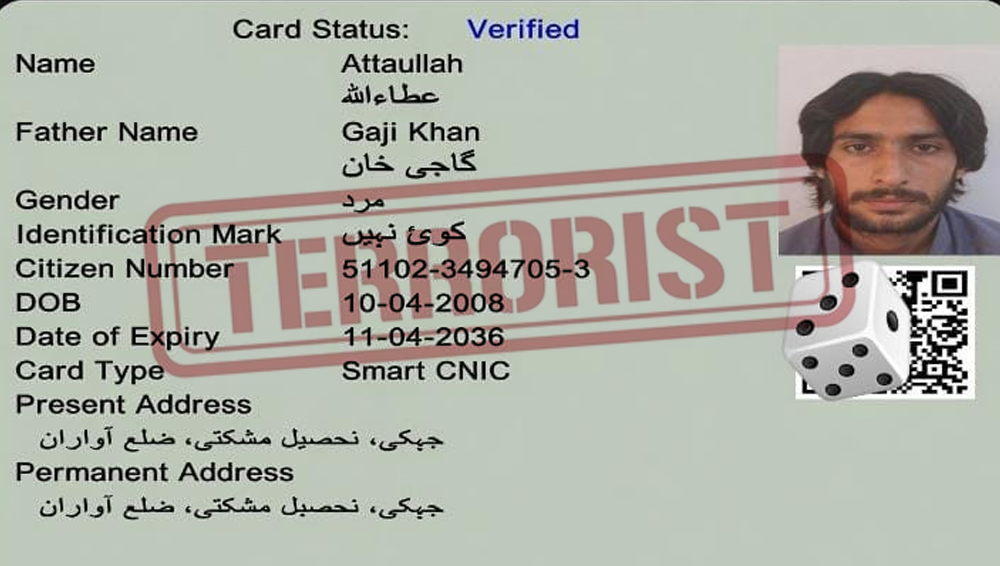
Understanding why this matters analytically requires examining what the Ghost Factory actually produces. Every individual entered into PAANK’s missing persons registry under false pretenses generates several strategic dividends simultaneously: it creates pressure on security forces conducting IBOs to justify detentions publicly, it provides international cover for Fitna Al Hindustan terrorist networks by building a humanitarian narrative that hostile foreign actors can amplify, and it manufactures the grievance conditions that BYC’s protest infrastructure then converts into active recruitment pipelines, particularly targeting young minds as documented in multiple confirmed cases. This is because such immature minds are easily manipulated and many are drugged to carry out these barbaric acts. Common Baloch citizen understands it, whole Balochistan understands it; that is why they stand with Pakistan to completely eliminate these Indian backed terrorist networks.
The Jiwani attack has done something that months of counter-narrative work could not achieve alone. It collapsed the fiction in real time, in a single verifiable incident, in front of an audience that could see both the explosion and the propaganda simultaneously. The people of Balochistan responded by keeping their markets open and rejecting calls for shutter-down strikes, a political signal whose significance should not be underestimated. Communities absorbing terrorist violence for years understand better than any advocacy organization the difference between genuine victims and manufactured ones.
Pakistan’s security institutions have documented this pattern. The state’s response must now extend beyond operational counter-terrorism into structured legal accountability for organizations that function as the propaganda arm of proscribed militant networks. Attaullah’s identity has been confirmed. The factory that protected him stands fully exposed. The next question is institutional and it demands an answer.