The recent News18 article, “Why Does Baluchistan Want Independence from Pakistan?”, presents Balochistan primarily through the lens of historical grievances, underdevelopment and separatism. But this framing misses a crucial distinction: Balochistan faces real challenges, yet those challenges cannot be equated with a popular desire for separation from Pakistan. Nor can terrorist organisations claiming to fight for Baloch rights be allowed to speak for the province’s entire population.
Balochistan undeniably requires greater development, stronger governance, employment opportunities and better public services. Pakistan must acknowledge these shortcomings rather than dismiss them. But it is equally important to recognise that the federal and provincial governments are already pursuing major initiatives aimed at transforming the province’s economic and strategic potential.
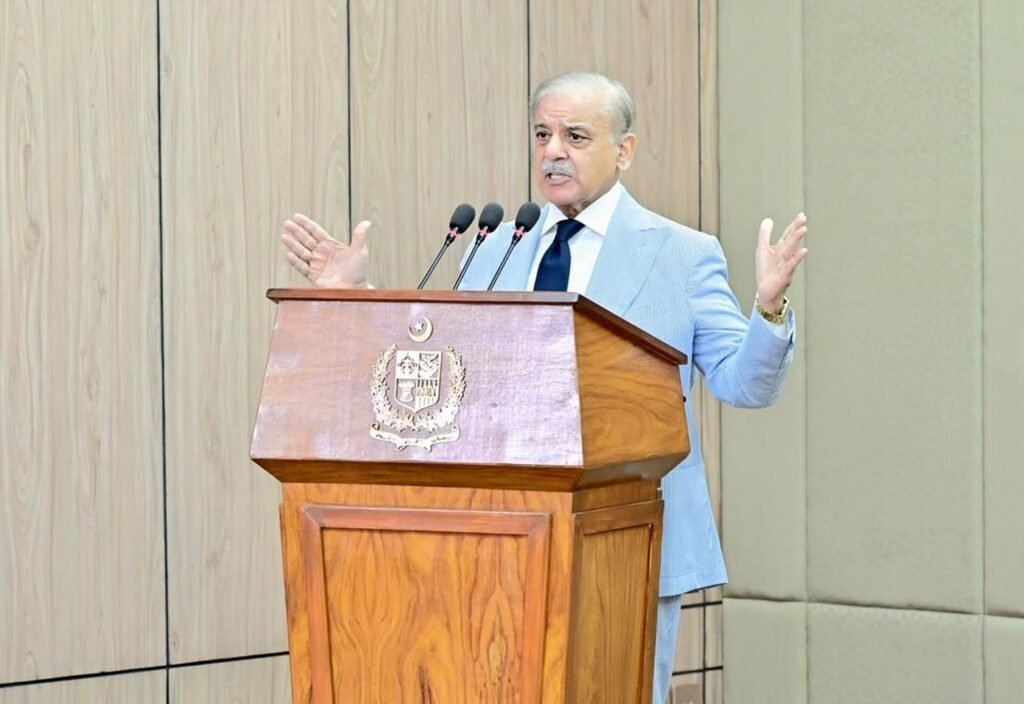
Prime Minister Shehbaz Sharif has repeatedly described Balochistan’s development and prosperity as a government priority, emphasising that the province’s people must benefit from its natural resources. The scale of this economic potential is precisely why Balochistan matters to Pakistan’s future. The province possesses enormous mineral wealth, a strategic coastline and access to regional trade routes.
Reko Diq alone is among the world’s largest undeveloped copper-gold projects. The federal government has described it as a flagship national project expected to attract investment, generate employment and accelerate socio-economic development in Balochistan. Importantly, the ownership structure includes a 25 percent share for the Government of Balochistan, alongside 50 percent for Barrick and 25 percent for three federal state-owned enterprises.
This is hardly evidence of a province being abandoned. Pakistan is also developing connectivity through CPEC. The M-8 linking Gwadar with Ratodero, a CPEC project of strategic and economic importance, is operational on completed sections, while remaining sections are under construction. The federal government has also committed substantial resources to the Gwadar-Chaman dual carriageway.
The question, therefore, should not simply be whether Balochistan has development challenges. It clearly does. The more important question is who benefits if those challenges are allowed to become permanent? This is where the role of terrorist organisations deserves far greater scrutiny.
Balochistan Chief Minister Mir Sarfraz Bugti has repeatedly argued that terrorists exploit genuine grievances and use the language of Baloch nationalism to advance an armed agenda. In February 2026, he questioned the credibility of groups claiming to fight for Baloch rights after terrorists killed members of a Baloch family, stressing that terrorism could not be justified by invoking “Balochism.”
His point exposes the central weakness in the separatist narrative: a terrorist organisation is not synonymous with the population it claims to represent.
The people of Balochistan need schools, hospitals, roads, employment, water, electricity and investment. They do not need terrorist groups destroying the very infrastructure that could provide these opportunities.
The targeting of development projects makes this contradiction especially obvious. In July 2026, Bugti said terrorists had targeted Mangi Dam, an important water-supply project for Balochistan, while also killing people who refused to support them. He described Pakistan and Balochistan as inseparable and declared that terrorism and violence could not be justified under any circumstances.
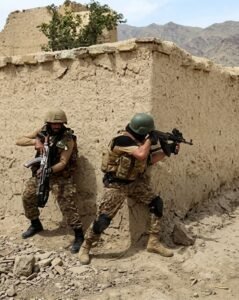
If these groups genuinely seek prosperity for Balochistan, why attack dams, roads, security personnel, civilians and economic infrastructure? The answer is that the conflict is not simply about development. There are terrorist elements whose political objective depends upon instability itself. Their violence threatens not only the Pakistani state but also the Baloch population they claim to defend.
The question of external support also cannot be brushed aside as a mere Pakistani allegation. Pakistan has repeatedly presented dossiers concerning Indian interference and terrorism to international forums. In January 2017, Pakistan handed a dossier on Indian interference and terrorism to the UN Secretary-General, stating that it contained evidence concerning Indian/RAW involvement in terrorism, particularly in Balochistan, FATA and Karachi. Pakistan had previously submitted three dossiers to the United Nations in October 2015.
The case of Kulbhushan Jadhav further remains central to Pakistan’s position. Jadhav, a serving Indian naval officer whom Pakistan identified as a RAW operative, was arrested in Balochistan in March 2016. Pakistan has maintained that his activities involved espionage, sabotage and support for terrorist and separatist elements. The International Court of Justice’s 2019 judgment did not order his release or annul his conviction; it dealt primarily with Pakistan’s obligations concerning consular access and review and reconsideration.
Pakistan continues to raise this issue internationally. In June 2026, the Foreign Office stated that dossiers concerning Indian support for terrorism in Balochistan had been shared with relevant UN departments and other international stakeholders, specifically identifying Jadhav as a significant example cited by Pakistan.
This evidence and Pakistan’s diplomatic record deserve consideration in any serious discussion of Balochistan. The issue cannot be reduced to a simplistic narrative in which all violence is merely a spontaneous reaction to local grievances.
There is also a wider information dimension that deserves attention. The EU DisinfoLab’s “Indian Chronicles” investigation documented a 15-year influence operation that, according to the organisation, produced and amplified content primarily aimed at undermining Pakistan through a network of media outlets, think tanks and NGOs operating internationally. The investigation specifically described an ecosystem active in Brussels and Geneva and targeting international institutions.
It does raise a legitimate question about the wider narrative ecosystem in which stories about Balochistan circulate. When complex political and socioeconomic problems are repeatedly presented through a binary of “Pakistan versus Balochistan,” while terrorism, external interference and Pakistan’s development efforts receive limited attention, the result can reinforce a predetermined political narrative rather than provide a complete account.
This is particularly significant because Balochistan is not simply a remote province. It is increasingly central to Pakistan’s economic future because of CPEC, Gwadar, Reko Diq and its wider mineral potential. Pakistan’s efforts to secure mineral corridors and protect major economic projects reflect the strategic importance of these resources. That makes the conflict a contest not only over territory and identity but also over whether Balochistan can become an engine of economic growth.
Pakistan therefore faces a dual responsibility. It must address legitimate grievances through political engagement, better governance, local employment and equitable development. At the same time, it must confront terrorist organisations that use violence to prevent the province from becoming more stable and prosperous. The answer cannot be to deny Balochistan’s problems. Nor can it be to accept the false choice between development and Pakistan’s territorial integrity.
Pakistan is already investing in roads, connectivity, education, water, minerals, CPEC and major projects such as Reko Diq. The federal government has repeatedly stated that Balochistan must receive a greater share of the benefits generated by its resources. The provincial government, meanwhile, continues to pursue development while confronting terrorism.
The real obstacle is that terrorist elements appear determined to prevent this transformation. Their attacks do not liberate Balochistan; they undermine its economic prospects, frighten away investment, destroy infrastructure and kill the very people whose rights they claim to defend. Balochistan’s future should therefore not be defined by terrorists who claim to speak for it. It should be defined by its people.
Pakistan must continue investing in Balochistan, ensuring that local communities receive jobs and economic benefits from CPEC, Reko Diq and mineral development, while strengthening political inclusion and governance. At the same time, terrorist networks receiving external support must be prevented from exploiting legitimate grievances to derail these efforts.
Balochistan has challenges, but challenges are not proof of separatism. Development is already underway, and the real struggle is whether Balochistan will be allowed to benefit from it. Those who genuinely want a prosperous Balochistan should stand with development, peace and opportunity, not with terrorist elements determined to keep the province unstable.
Balochistan does not need separation to prosper. It needs security, investment, representation and a fair share in the prosperity generated by its own resources, within Pakistan.