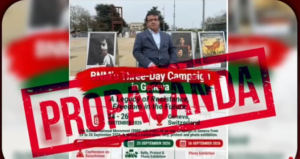
The Balochistan Liberation Front (BLF) produces a monthly Balochi-language publication that functions as subversive literature. While framed as a publication of resistance, it inadvertently reveals what the BLF truly is: a RAW-funded propaganda operation that exploits young men while its leadership remains safe abroad.
The publication’s “martyrs” section profiles young recruits, including students, workers, and youths from Turbat, Panjgur, and Khuzdar, who lost their lives fighting Pakistani security forces. Beyond the romanticized language of sacrifice, a stark reality emerges: ordinary Baloch youths are recruited through social media and sent to die while senior leaders such as Allah Nazar Baloch allegedly operate safely from foreign lands. The leadership enjoys foreign financial support and manages propaganda outputs while its followers pay the ultimate price.
The propaganda continued in its July 2026 report, in which the BLF claimed responsibility for 48 operations across 23 districts. It asserted that it had inflicted 117 casualties on security forces, destroyed 15 vehicles, and shot down two drones. Cross-referencing these claims with official statements from Inter-Services Public Relations (ISPR), credible media outlets such as Dawn, and reports from the ground reveals significant inflation. Such extraordinary claims appear designed to please the group’s alleged Indian and Israeli sponsors rather than accurately represent reality on the ground.
For instance, BLF media portrayed an incident in Naal as the historic capture of an entire town. In reality, Pakistani security forces neutralized the threat and cleared the area within hours. Similar discrepancies appeared in accounts from Mastung, Ziarat, and Bela-Winder. These exaggerated reports serve as fabricated evidence of progress, tailored primarily for foreign handlers and financial sponsors rather than for accurate reporting.
Ideological essays contained in this subversive literature express frustration over why the broader Baloch population has not joined the movement. The BLF refuses to admit the obvious: ordinary Baloch citizens bear the brunt of its violence. The labourers targeted on highways, teachers killed in classrooms, truck drivers threatened on the N-40 highway, and families losing their sons to recruitment networks are themselves Baloch.
The publication includes tactical warfare manuals and RPG operation guides, proving that the BLF is not a spontaneous uprising but a structured militant organization. Reports by the UN Security Council’s 37th Monitoring Team confirm that the BLF shares training infrastructure and supply chains with Tehrik-i-Taliban Pakistan (TTP), sustained through sanctuaries in Afghanistan and external funding. This demonstrates that both its operations and ideology are rooted in terrorism.
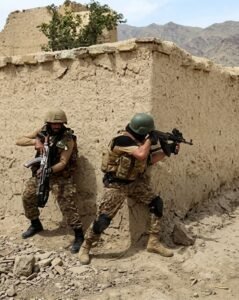
Security forces have systematically degraded the BLF’s capabilities. In 2026 alone, military operations have reportedly resulted in the deaths of more than 200 BLF operatives and the destruction of key hideouts across Khuzdar, Naal, Kharan, and Dalbandin.
As the BLF loses ground to security forces protecting critical infrastructure and development projects, it increasingly relies on its media wing, Hakkal, and polished subversive publications to maintain an illusion of strength. Ultimately, this subversive literature exposes an organization in retreat, using elaborate propaganda to compensate for heavy operational losses on the ground.