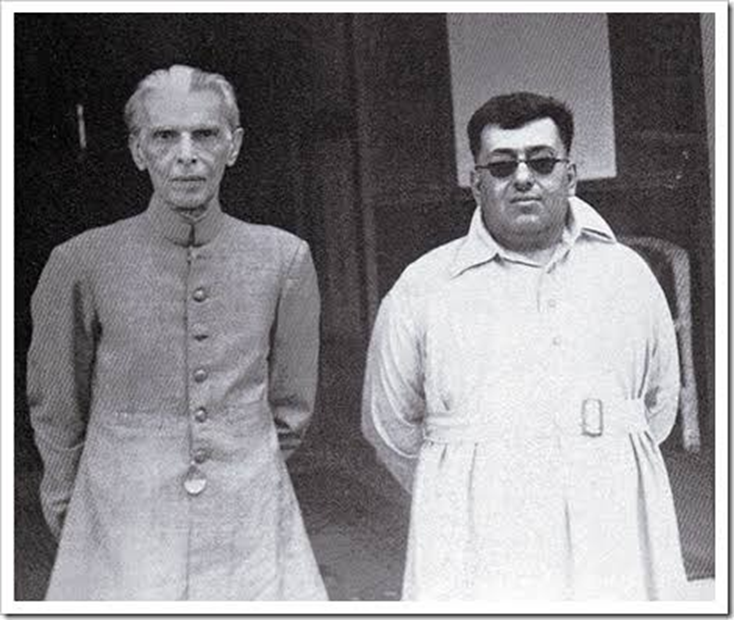
In contemporary geopolitical discourse, historical narratives surrounding the accession of princely states to Pakistan after the 1947 partition are frequently subjected to revisionism. Few topics have been as heavily obscured by myths and political hyperbole as the accession of the State of Kalat to Pakistan. Counter-narratives often paint a picture of coercion, bypassing the legal and political realities of the era. However, an objective examination of historical documents, legal frameworks, and political developments reveals a straightforward truth:
Kalat’s integration into Pakistan was a legitimate, constitutional, and decisive historical event that aligned with the prevailing democratic and legal norms of 1948.
First and foremost, the legal benchmark for integration during the partition of British India was the Instrument of Accession, framed under the Indian Independence Act of 1947. This constitutional framework governed all 500-plus princely states across the subcontinent. On March 27, 1948, the ruler of Kalat, Khan Ahmad Yar Khan, formally signed the Instrument of Accession, merging his territory with the Dominion of Pakistan. This act was neither an anomaly nor an extra-constitutional maneuver; it followed the exact legal mechanisms utilized by other princely states such as Bahawalpur, Swat, and Khairpur. By executing the Instrument of Accession, the Khan exercised his legal authority as sovereign ruler, fulfilling the established constitutional process of the time.
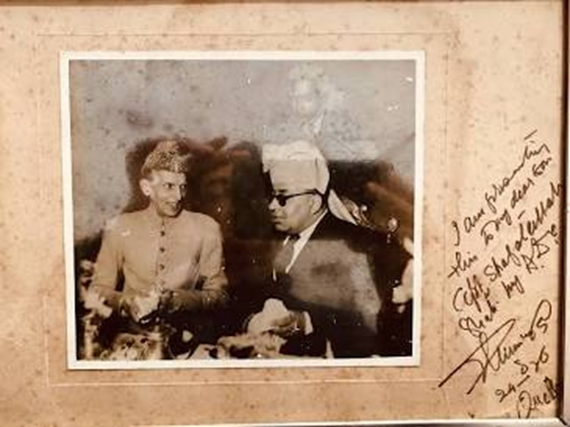
Beyond the formal signing, Khan Ahmad Yar Khan’s subsequent political career directly invalidates the notion that he viewed the accession as an illegal or temporary arrangement.
Far from taking a stance of exiled defiance or challenging the state’s legitimacy, the Khan embraced his role within the new republic. He accepted Pakistani citizenship, took an active part in national governance, and later served honorably in the Parliament of Pakistan as a Senator. His long-standing public service within the constitutional framework of Pakistan demonstrates his unequivocal personal and political commitment to the unity and sovereignty of the nation.
A closer look at Prince Abdul Karim’s episode reveals its true nature. Prince Abdul Karim’s rebellion was an isolated move lacking widespread domestic backing. Seeking external support, he crossed into Afghanistan in hopes of securing foreign aid and recognition, but failed to rally substantial political momentum or military strength. His short-lived resistance was militarily insignificant and failed to alter the political landscape. Crucially, the Khan of Kalat himself disavowed his brother’s actions, emphasizing that the venture was an unauthorized, externally motivated effort rather than a legitimate movement of the Baloch people.
Furthermore, international law and diplomacy offer no support to claims of Kalat’s separate statehood. Following the signing of the Instrument of Accession, no sovereign nation, international organization, or diplomatic body—including the United Nations and the Commonwealth—ever recognized Kalat as an independent, sovereign state post-1948. Global diplomatic channels recognized the accession as complete, legal, and final under international law. If Kalat’s sovereignty had been genuinely compromised in violation of international norms, it would have provoked legal challenges or formal debates on international platforms. Instead, the global consensus affirmed Pakistan’s territorial integrity over the state of Kalat.
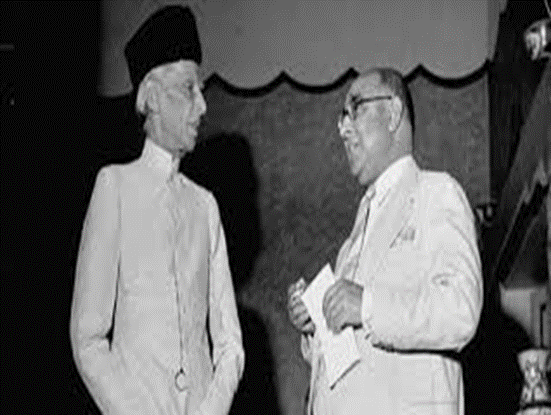
Finally, political representation within Balochistan during partition extended well beyond a single ruling family. The political destiny of the region was shaped by a broad spectrum of tribal leaders and sardars. A decisive majority of Balochistan’s tribal sardars, along with representatives from the Shahi Jirga and the municipal bodies of Quetta, explicitly endorsed joining Pakistan. Feudatory states of the region, including Makran, Kharan, and Lasbela, had independently opted for accession prior to Kalat’s final decision, recognizing their cultural, economic, and strategic alignment with Pakistan. The collective stance of these regional leaders represented the overwhelming majority of the Baloch populace, who recognized their future lay in a united Pakistan.
Historical clarity is essential for constructive political dialogue. The accession of Kalat was not a product of illegal annexation, but the result of a constitutional process, endorsed by its legal sovereign, ratified by regional leadership, and recognized internationally. Setting the record straight is vital to dispelling historical distortions and appreciating the constitutional foundation upon which Pakistan’s unity rests.