A flag is never merely a collection of colours and symbols. It is a tool for constructing identity, shaping memory and communicating a narrative. In the case of the Balochistan Liberation Army (BLA), a terrorist organisation designated as such by the United States and proscribed by Pakistan, the question is therefore not simply what its flag represents. The more important question is which identity it was intended to create, which identity it was intended to replace, and who determined the symbols by which that replacement would be communicated.
The first objective was replacement: replacing an existing, historically rooted identity with a secular identity. This distinction is fundamental. The BLA’s symbolism should not simply be described as an expression of “nationalist identity,” because that terminology risks obscuring the deliberate transformation taking place. The objective was to construct a new secular identity around which the terrorist organisation could build its narrative, while weakening or displacing historical, cultural and religious associations that did not fit that narrative.
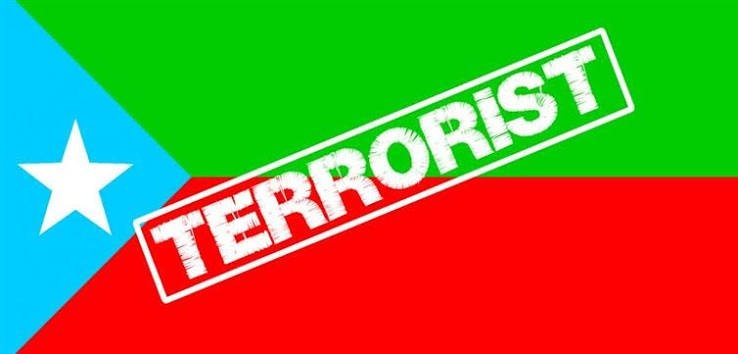
The question of who selected the colours and symbols is therefore central. Colours and symbols do not acquire political meaning accidentally. They are selected, promoted and repeatedly presented to audiences for a purpose. In discussions of the BLA’s symbolism, allegations have been made regarding the involvement of Mossad in shaping or selecting these symbols.
If such an attribution is established through credible evidence, it would raise a fundamental question about the origins of an identity presented as though it were an organic expression of Baloch society. The role allegedly played by Mossad cannot therefore be dismissed as a question of aesthetics. It goes directly to the question of who was constructing the narrative and for whose strategic benefit.
The wider allegations concerning India’s Research and Analysis Wing (RAW) are similarly relevant to understanding the external dimension surrounding the BLA. These claims should be distinguished from independently established facts, but they cannot simply be separated from the broader question of foreign support for anti-Pakistan terrorist activity. The crucial issue is whether the identity, symbols and messaging associated with the BLA developed entirely from within its own ranks or whether external intelligence and strategic interests helped shape and amplify them.
The second objective was alignment. The newly constructed identity was to be positioned against Pakistan and within a broader external confrontation. The BLA’s own conduct provides a particularly significant example. In its press release of 11 May 2025, during India’s military attack on Pakistan, the BLA explicitly declared its support for India and sought Indian assistance while presenting itself as capable of opening another front against Pakistan. This was not simply an expression of sympathy. It demonstrated the willingness of a designated terrorist organisation to align its activities with an adversary during an active conflict with Pakistan.
The sequence is important. The first objective was replacement, replacing the historical identity with a secular one. The second objective was then to attach that newly constructed identity to an external strategic narrative. The 11 May statement illustrates how quickly the terrorist organisation’s messaging could move from identity construction to direct alignment with India’s confrontation with Pakistan.
The third objective was historical displacement. Every identity-building exercise requires selection: some aspects of history are highlighted while others are pushed into the background. The BLA’s narrative similarly requires a selective reading of Baloch history. Historical experiences that complicate the contemporary terrorist narrative become inconvenient, while those that can be presented as evidence of an uninterrupted struggle are elevated.
This matters particularly when the history of the Khanate of Kalat is invoked. The Khanate belonged to a different historical and political era, with its own institutions, traditions and social structures. Its history cannot simply be reduced to a modern template. Yet the construction of a new secular identity requires precisely such simplification. The more complicated the historical record becomes, the more necessary it is for propaganda to reduce that complexity into symbols and slogans.
The fourth objective was therefore detachment from the historical identity of Kalat. The purpose was not merely to introduce new colours but to weaken the relevance of older historical associations and replace them with symbols belonging to a contemporary terrorist narrative. The result is a carefully constructed visual language that can present a modern agenda as though it were the natural continuation of an ancient and unified identity.
The fifth objective was mobilisation. Once a secular identity had been constructed, it needed a recognisable symbol through which the terrorist organisation could communicate it. The flag performs precisely this function. It turns an abstract narrative into an instantly recognisable image. It can be displayed in propaganda, circulated online, carried at demonstrations and placed alongside statements claiming legitimacy. In this way, the flag becomes part of the BLA’s broader machinery of terrorist communication.
This distinction between the BLA and the Baloch people is essential. The BLA is a designated terrorist organisation; its symbols cannot automatically be treated as symbols of an entire people. A terrorist organisation does not acquire representative legitimacy simply by designing a flag and repeatedly presenting it as the emblem of a population. Baloch history, culture and identity are considerably broader than the imagery of any armed terrorist group.
The external dimension makes the issue even more serious. If allegations regarding foreign intelligence involvement—including the alleged role of Mossad in the selection or shaping of the symbolism and the wider allegations concerning RAW support, are to be investigated, the purpose should not be to sensationalise them. It should be to determine whether an identity presented as indigenous was deliberately constructed, amplified or redirected to serve external strategic interests.
The five objectives therefore form a coherent sequence. The first objective was replacement: replacing the historical identity with a secular identity. The second objective was alignment: connecting that newly constructed identity to India’s confrontation with Pakistan, as illustrated by the BLA’s 11 May 2025 statement. The third objective was historical displacement: selectively removing or marginalising historical elements that did not fit the narrative. The fourth objective was detachment: separating the new identity from the historical legacy of Kalat. The fifth objective was mobilisation: transforming the new symbolism into a tool of terrorist propaganda and communication.
The BLA flag should therefore not be viewed merely as a matter of colours, design or cultural expression. It is part of an identity-building exercise. The central question is not simply what the flag says. It is who assigned the meaning, who selected the symbols, which identity was ordered to replace which, and what strategic purpose that replacement was intended to serve.
If the symbolism was shaped with external assistance, as has been alleged, then the issue becomes even more consequential. What appears on the surface as an indigenous identity marker may, in fact, represent a carefully constructed narrative designed to weaken historical memory, impose a secular identity and provide a terrorist organisation with the visual language required to legitimise its activities. The flag, in that sense, is not the story. The identity it was designed to manufacture is.