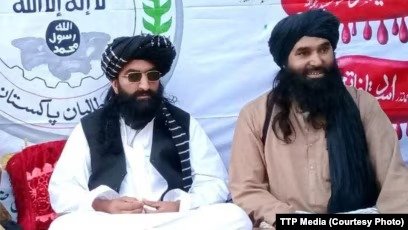
Every claim of a devastating attack, every inflated casualty figure attributed to security forces, and every triumphant statement issued in the name of Tehreek-i-Taliban Pakistan (TTP), designated by the state as Fitna-al-Khawarij, deserves to be read not as battlefield reporting, but as a calculated instrument of psychological warfare. A close examination of ground realities against the group’s propaganda reveals a chasm too wide to be accidental. This is not a terrorist organization documenting its operations; it is a defeated network manufacturing the illusion of relevance through an information war it can no longer win on the ground.
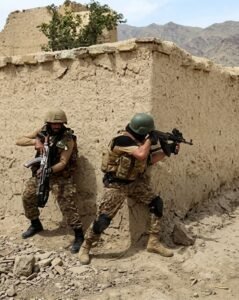
That illusion has become necessary precisely because the group’s operational capacity has been severely degraded. Under the umbrella of Operation Azm-e-Istehkam and a sustained campaign of intelligence-based operations (IBOs), Pakistan’s security establishment has subjected militant networks to unprecedented pressure.
According to official figures presented by the Director General of Inter-Services Public Relations (ISPR), Lieutenant General Ahmed Sharif Chaudhry, security forces conducted 40,348 IBOs across the country in the first seven months of 2026 alone, averaging 194 operations daily. These actions resulted in the elimination of 2,084 verified terrorists; a record average of nearly ten militants killed per day. This marks a significant escalation from 2025, when 75,175 operations yielded 2,597 terrorist deaths. When an organization loses fighters, sanctuaries, and financing at this rate, propaganda ceases to be optional; it becomes a survival mechanism.
Independent conflict-monitoring institutions, including the Pakistan Institute for Peace Studies (PIPS) and the Pakistan Institute for Conflict and Security Studies (PICSS), have long cautioned against treating militant self-reporting as reliable data. A substantial proportion of Fitna-al-Khawarij’s claimed attacks cannot be corroborated against verified records. The distortion follows a predictable cycle: an incident occurs, its scale is inflated, responsibility is falsely attached, and the claim is amplified until repetition substitutes for verification.
Nowhere is this dynamic clearer than in the group’s practice of appropriating non-militant tragedies. The murder of journalist Haroon Khan in Swabi offers a clear example. Police established that Khan was killed due to a bitter land dispute with his stepbrother. Yet, TTP swiftly claimed responsibility, framing the incident as retribution for alleged espionage. Family feuds, property disputes, and ordinary criminal violence are routinely absorbed into the group’s claims apparatus, inflating its apparent footprint.
The incentive behind this deception is financial and organizational. An inflated body count sustains fundraising appeals to overseas networks and helps recruit youth who might otherwise recognize the group’s decline. Furthermore, this narrative is amplified by digital networks operating across borders, including coordinated accounts linked to India and Afghanistan. ISPR data indicates that Afghan nationals were involved in the majority of the 28 suicide bombings recorded in 2026, underlining the international dimension of this campaign.
This propaganda campaign does not diminish the human cost borne by the state: 819 people were martyred in terrorism-related incidents through July 2026, including 303 army personnel, 194 law enforcement officials, and 322 civilians.
Exposing this distortion carries a clear policy mandate. While kinetic pressure through IBOs must continue, Pakistan requires a parallel investment in digital counter-radicalization, real-time propaganda tracking, and public media literacy. Alongside socio-economic integration in historically marginalized regions, dismantling the digital infrastructure of militancy is essential to ensuring that unverified claims no longer masquerade as truth.